TL;DR
- In the Philippines, a prescription boundary includes a valid prescription, a licensed pharmacist, and an FDA-licensed retail drug outlet; it is more than a counter asking for paperwork.1
- In one study of 400 popular TikTok videos under four related hashtags, views and likes did not have a significant link with the researchers’ information-quality scores.2
- FDA Philippines provides a Verification Portal for checking licensed establishments and registered or notified health products, but the agency says portal information is not regulatory advice.3
- A careful reader can value a personal story while separating that experience from professional review, official verification, and evidence that applies beyond one person.4
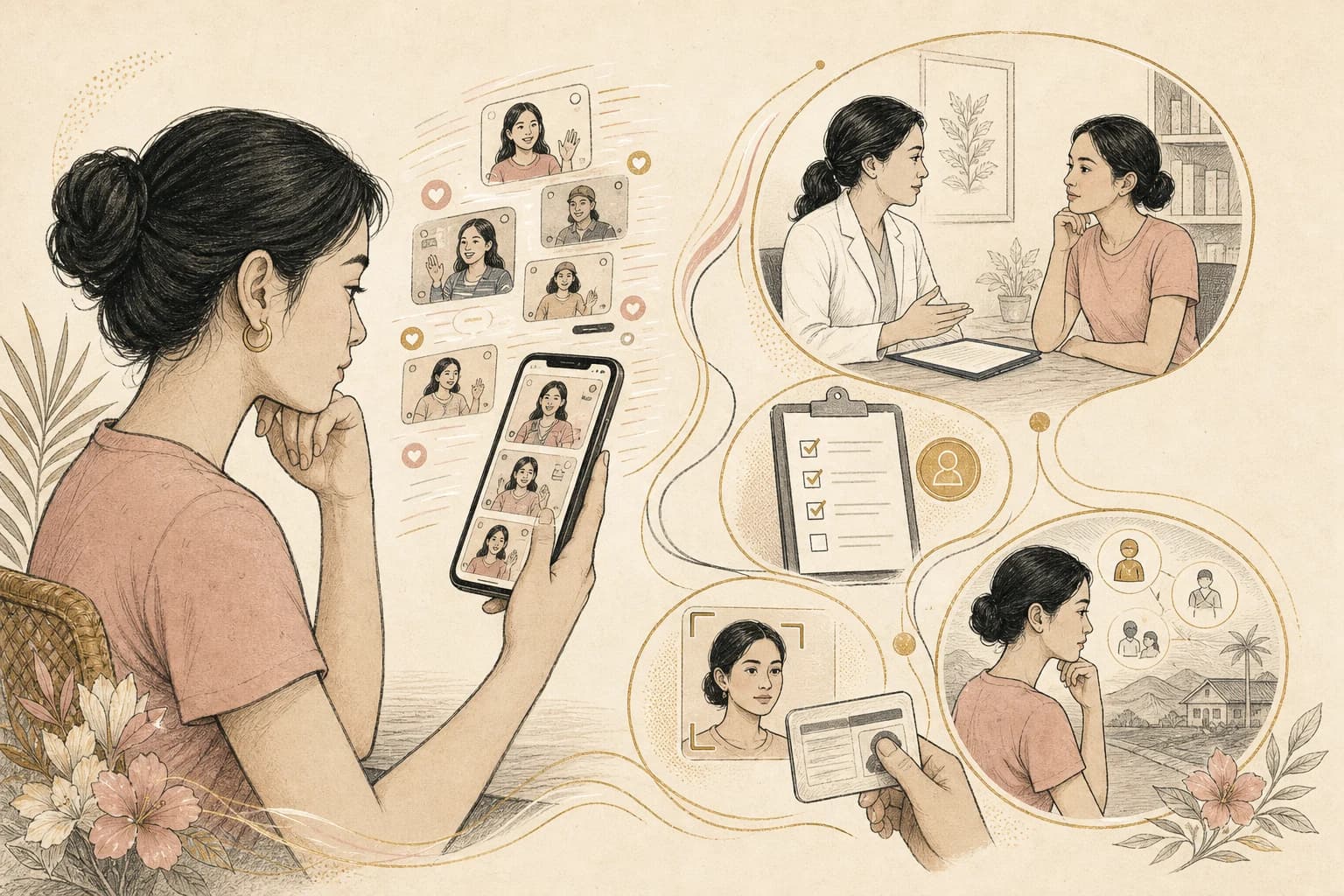
For Filipino readers, a medicine trend can arrive through a barkada chat, a creator’s before-and-after clip, and a checkout link within minutes. That speed makes the story feel settled before the questions have begun. Research on popular short videos shows why a pause matters.2 Philippine rules also show that a prescription is part of a professional process, not a decorative obstacle.5 The first task is to slow the claim down.6 A trend may feel close to home, yet the check stays the same.7
A prescription is a process, not a permission slip
The Philippine Pharmacy Act defines prescription medicines through three linked parts: the medicine is dispensed by a pharmacist, the patient presents a valid prescription from an authorized prescriber, and pharmacist advice is necessary.8 The same law describes dispensing as more than handing over a box.5 It includes reading, validating, and interpreting the prescription, then handling steps such as labeling, records, calculations, and counseling.5
That process creates checkpoints.5 A prescriber brings clinical judgment to the decision, while a pharmacist reviews the medicine order within a regulated role.8 A viral clip cannot perform those tasks for the person watching it.5 Popularity may start a question, but it does not complete the professional work built into dispensing.5
Each step asks who is responsible and what was checked.5
The guardrails work as a chain, not as a single gate.5
The key is to ask what each step can prove.5
For readers looking for the exact topic, the semaglutide card below opens its live catalog details.
TikTok popularity measures attention, not reliability
A 2026 cross-sectional study examined 400 popular TikTok videos under four hashtags connected with GLP-1 medicines.9 Individual users or influencers created 98% of that selected sample.9 Their reliability-based information score was lower than the score for health-care professional accounts.4
The sharper finding concerns the numbers visible on screen.2 Views and likes had no significant correlation with information quality in that sample.2 A large audience therefore was not a dependable shortcut to a well-supported explanation within the study.2
The limit matters too.9 Researchers sampled selected popular videos under specific hashtags at one period.9 They did not measure Filipino viewing patterns, every video, or how any one viewer acted afterward.9 The study supports a modest rule: treat engagement as attention data, then assess the actual claim separately.2
A high count can draw the eye, but it cannot do the check.2
Count the facts, not just the hearts on screen.2
Personal stories answer a narrower question
A creator can accurately describe what they noticed, what surprised them, or why they sought care.4 That account still represents one person rather than a comparison across many people.4 It may also omit information that was not central to the creator’s story.4
The 400-video study reported risky or misleading material, especially around side effects and safe usage.4 A separate analysis evaluated 200 TikTok and Instagram videos about GLP-1 medicines and weight-loss surgery.10 Non-medical professionals made 68.5% of that sample, and the overall mean DISCERN score was 28 out of 80.10
DISCERN is a tool for judging the quality of consumer health information.10 It does not decide whether a creator is sincere.10 The useful distinction is between honesty and reach: a sincere personal account may be meaningful, yet it cannot automatically answer a stranger’s clinical question.4
That keeps space for empathy without giving one story too much weight.4
A story can be true and still be too small.4
The Philippine boundary has several checkpoints
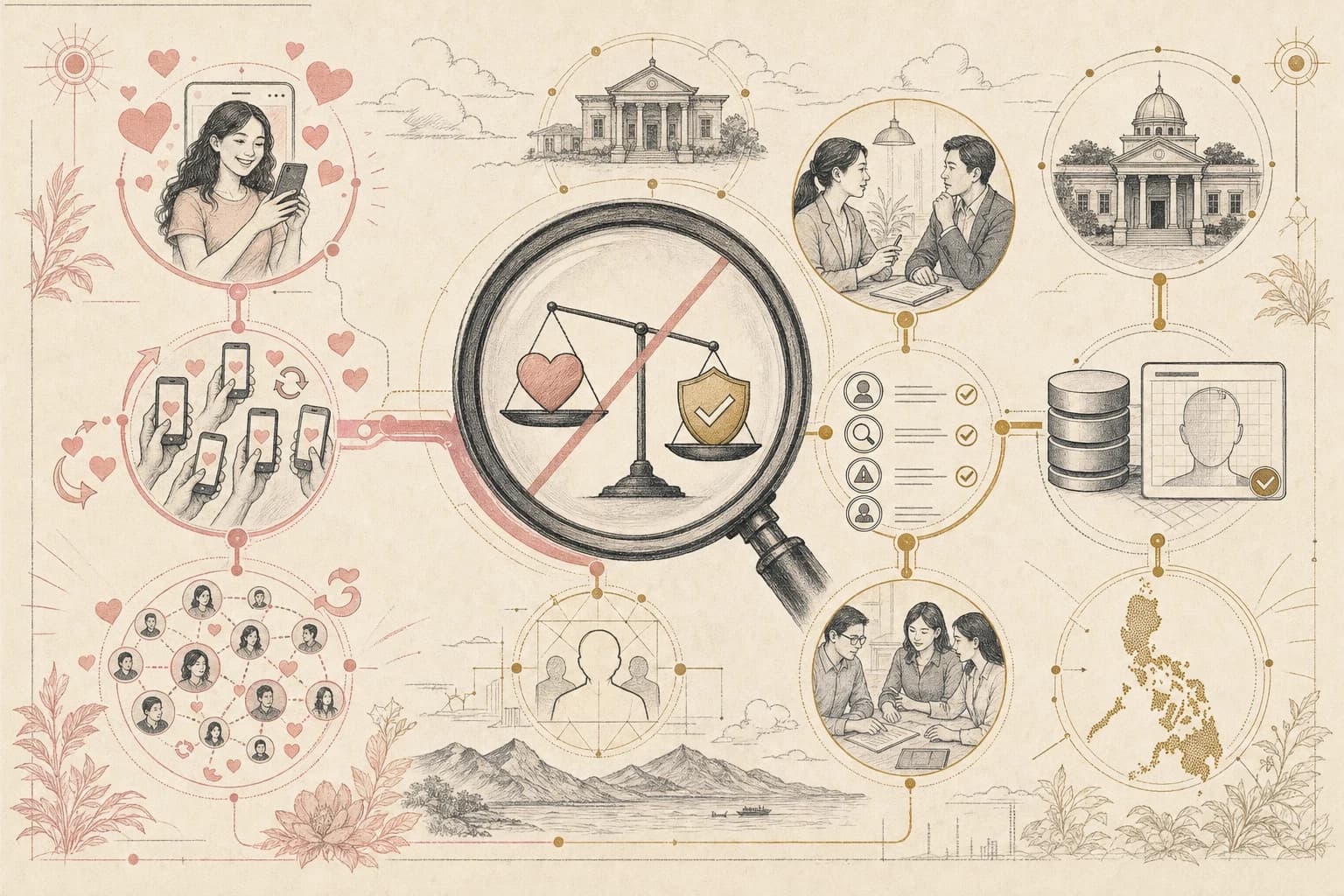
Philippine law places the retail outlet and pharmacist inside the dispensing boundary.1 Pharmaceutical products offered to the public must pass through a retail drug outlet licensed by FDA Philippines.1 Prescription drugs and pharmacist-only over-the-counter medicines are dispensed by registered and licensed pharmacists, apart from a narrow emergency exception described in the law.1
Section 33 adds the prescription itself.11 It says prescription medicines may be dispensed only by a registered and licensed pharmacist and with a valid prescription from a physician, dentist, or veterinarian.11
These checkpoints answer different questions.8 The prescription records an authorized professional decision, the pharmacist performs the dispensing process, and the licensed outlet anchors the transaction in a regulated establishment.5 A polished profile, high follower count, or familiar marketplace logo does not establish all three.12 Each checkpoint needs its own evidence.7
One check cannot stand in for the rest.7
The role of each part is plain and distinct.5
Verification should follow the exact identity
FDA Philippines says its public Verification Portal contains lists of licensed establishments and registered or notified health products.7 The portal can therefore support two separate checks: who the establishment is and what product record is displayed.7 The agency advises users to search with the correct establishment or product name.7
The portal also publishes categories such as product information materials, approved clinical trials, and certified manufacturers.13 Those categories are useful because a label, business name, and study record are not interchangeable.13 A creator mentioning research does not prove that the item in a link matches that research.13
FDA’s disclaimer keeps the check in proportion.3 Portal information is provided for verification, not as regulatory advice, and it does not replace agency certifications.3 Read the exact fields and dates shown, then avoid extending them to a different account, seller, or product name.3
Small name changes can point to a different record.7
A close match is not the same as an exact match.7
Online ordering still needs an official trail
The FDA Verification Portal maintains a searchable list of drugstores whose licensed activities include online ordering and delivery.12 Its fields include the license number, establishment name, address, region, activity, and validity dates.12 This makes the official record more useful than a screenshot of a profile bio.12
The check should stay exact.12 A listed establishment is not automatically the same as a similarly named page, creator account, chat contact, or marketplace post.12 Likewise, an online platform is not itself proof that the seller behind an offer is the establishment shown in the portal.12
The practical reading sequence is simple.7 Match the establishment identity first, inspect the displayed licensed activity, and keep the portal’s disclaimer in view.3 If identities do not line up, a trend has not supplied the missing verification.12
The official trail should match the offer in front of you.12
The page and the record must point to the same place.12
For readers looking for the exact topic, the tirzepatide card below opens its live catalog details.
A better pause is curious, not suspicious
WHO describes an infodemic as an overload of information, including false or misleading material, during a disease outbreak.14 A TikTok medicine trend outside an outbreak is not automatically an infodemic.14 Still, WHO’s communication framework explains why speed matters: digitization can spread information quickly and amplify harmful messages.14
WHO’s response is not simply “trust nothing online.”6 Its framework includes listening to community questions, explaining risk and expert advice, building resilience to misinformation, and engaging communities.6 That approach leaves room for people to say what they saw and why it appealed to them.6
For a Filipino reader, the pause can be practical rather than fearful.7 Write down the exact claim, separate the personal story from the general promise, identify the seller, and compare those details with official records and professional review.5 Curiosity opens the conversation; verification keeps its boundaries visible.3
A good pause makes room for both care and doubt.6
Clear questions can turn a fast trend into a calm talk.6
Bottom line
A trending video can be the beginning of a useful question, but it cannot complete the Philippine dispensing process.5 That process connects a valid prescription, a licensed pharmacist, and an FDA-licensed retail drug outlet.1 Research on selected popular TikTok videos also found that visible engagement was not a reliable stand-in for information quality.2
The calm response is to separate layers.6 Keep personal experience in its proper frame, inspect the exact claim, and verify the establishment and product identity through the FDA portal.7 Then bring the question to the relevant licensed professional.8 A boundary is valuable because it slows a fast story long enough for identity, evidence, and professional judgment to catch up.5
This article is educational research context, not medical advice. Catalog links are neutral references and do not imply a treatment or human-use recommendation.
Frequently asked questions
Why does a prescription still matter after I have researched a trend?
Philippine law places the prescription inside a larger dispensing process handled by licensed professionals.8 Your reading can help you form better questions, but it does not perform prescription validation, interpretation, record keeping, or counseling.5 Those steps are distinct from collecting posts, testimonials, and search results.5
Do many likes make a medicine video more trustworthy?
Not in a dependable way. In a study of 400 popular TikTok videos under four related hashtags, researchers found no significant correlation between views or likes and information quality.2 The finding applies to that selected sample, so it supports caution rather than a universal rule about every post.2
Are personal TikTok stories useless?
No. A personal story can explain one creator’s experience and the questions that mattered to them.4 The boundary is scope: one account does not replace a wider comparison or a professional review.4 Read it as an experience first, then check any broader claim on its own terms.10
What can I check on the FDA Verification Portal?
FDA Philippines says the portal includes licensed establishments and registered or notified health products.7 It also lists categories such as product information materials, approved clinical trials, and certified manufacturers.13 The agency says the portal is for verification, not regulatory advice or a replacement for formal certifications.3
How can I check an online seller?
The FDA portal publishes a list of drugstores with online ordering and delivery among their licensed activities.12 Compare the exact establishment name, address, license details, activity, and displayed dates.12 Do not assume that a similar social handle, page name, or marketplace post belongs to the listed establishment.12
What is a useful first response to a viral medicine claim?
Start by writing the claim in plain words and noting whether it comes from personal experience, a professional explanation, or an official record.6 WHO’s framework emphasizes listening, understanding risk, resilience to misinformation, and community engagement.6 That supports a curious pause instead of shame or instant acceptance.6
Sources
Footnotes
-
Republic Act No. 10918: Philippine Pharmacy Act. Section 30 of Republic Act No. 10918 on dispensing and sale. The statute includes an emergency exception with reporting duties; this claim does not determine whether a particular seller or transaction complies. ↩ ↩2 ↩3 ↩4 ↩5
-
TikTokfluence: The rise of GLP-1 receptor agonists in the age of social media health trends. Cross-sectional comparison of engagement metrics and assessed information quality. A null correlation in this selected sample does not prove that engagement and quality are unrelated in every platform, topic, or period. ↩ ↩2 ↩3 ↩4 ↩5 ↩6 ↩7 ↩8 ↩9 ↩10 ↩11
-
FDA Advisory No. 2023-2238: Utilization of the Food and Drug Administration Verification Portal. Disclaimer in FDA Advisory No. 2023-2238. Portal entries are useful checks but must be read within their stated fields, dates, and disclaimer. ↩ ↩2 ↩3 ↩4 ↩5 ↩6 ↩7
-
TikTokfluence: The rise of GLP-1 receptor agonists in the age of social media health trends. Comparison using JAMA internet health criteria and DISCERN-based evaluation. Account category is not a complete test of whether any single video is accurate. ↩ ↩2 ↩3 ↩4 ↩5 ↩6 ↩7 ↩8 ↩9 ↩10 ↩11
-
Republic Act No. 10918: Philippine Pharmacy Act. Statutory definition of dispensing in Republic Act No. 10918. The list describes a professional process; it is not a promise that every interaction has the same format or duration. ↩ ↩2 ↩3 ↩4 ↩5 ↩6 ↩7 ↩8 ↩9 ↩10 ↩11 ↩12 ↩13 ↩14 ↩15 ↩16
-
Infodemic. WHO's four activity areas for infodemic management. The framework guides communication at community and public-health levels; it does not verify a particular post or replace individual professional review. ↩ ↩2 ↩3 ↩4 ↩5 ↩6 ↩7 ↩8 ↩9 ↩10
-
FDA Advisory No. 2023-2238: Utilization of the Food and Drug Administration Verification Portal. FDA Advisory No. 2023-2238 describing the portal and its public purpose. A portal search must use the correct establishment or product identity and should not be generalized beyond the displayed record. ↩ ↩2 ↩3 ↩4 ↩5 ↩6 ↩7 ↩8 ↩9 ↩10 ↩11 ↩12
-
Republic Act No. 10918: Philippine Pharmacy Act. Statutory definition in Republic Act No. 10918. This is a general Philippine legal definition and does not establish the classification or registration status of any named catalog product. ↩ ↩2 ↩3 ↩4 ↩5
-
TikTokfluence: The rise of GLP-1 receptor agonists in the age of social media health trends. Cross-sectional content analysis of selected popular TikTok videos. The sample was platform- and hashtag-specific and captured content at one research period; it does not measure Filipino users or all TikTok videos. ↩ ↩2 ↩3 ↩4 ↩5
-
Evaluation of social media videos on weight-loss surgery and GLP-1 agonists: a content quality and reliability analysis. Cross-sectional content-quality analysis across two platforms and two topic groups. DISCERN assesses consumer health information quality; the selected videos and collection window do not represent all posts or Philippine viewing patterns. ↩ ↩2 ↩3 ↩4 ↩5
-
Republic Act No. 10918: Philippine Pharmacy Act. Section 33 of Republic Act No. 10918 on filling prescriptions. This states the general statutory boundary and does not classify any named catalog reference. ↩ ↩2
-
FDA Verification Portal: Drugstore - Online Ordering and Delivery. Current public FDA Philippines verification list for online ordering and delivery. The list changes over time, and a listing does not evaluate a separate social-media account, post, or offer. ↩ ↩2 ↩3 ↩4 ↩5 ↩6 ↩7 ↩8 ↩9 ↩10 ↩11 ↩12 ↩13
-
FDA Advisory No. 2023-2238: Utilization of the Food and Drug Administration Verification Portal. The advisory's list of information categories available through the portal. A category being present does not mean every entry contains every kind of supporting document. ↩ ↩2 ↩3 ↩4
-
Infodemic. WHO public-health framework for information overload and misinformation during outbreaks. A medicine trend outside an outbreak is not automatically an infodemic; the framework is used here only to explain how speed and volume can complicate judgment. ↩ ↩2 ↩3