TL;DR
- A catchy blend nickname cannot replace an ingredient list, because evaluating a combination starts with the established name and stated amount of every active part.1
- Findings about separate ingredients cannot simply be added together; evidence for a combination must show what each component contributes within that tested combination.2
- A 2025 BPC-157 review found broad preclinical work but only three pilot human studies, showing why one ingredient needs its own clearly bounded evidence summary.3
- Filipino readers can use the Philippine FDA Verification Portal to check specific establishments and health-product records, but the portal is not regulatory advice or formal certification.4
In the Philippines, a memorable nickname can travel faster than a careful ingredient list. That creates a reading problem before it creates any scientific question. “Recovery” may sound like one measurable result, while a blend name may hide several distinct compounds and evidence trails.2 A useful review therefore begins with exact identities, then asks what model, outcome, route, and combination were actually studied.
A nickname is a cover, not a contents page
A blend nickname works like a magazine cover: easy to remember, but incomplete. For a combination drug, FDA labeling guidance calls for the established name of every active ingredient.1 It also calls for the quantity of each therapeutically active ingredient where that rule applies.1 Those details turn a slogan into something that can be checked.
The difference matters because similar nicknames can point to different ingredient sets.1 A name alone does not reveal the stated amount, route, or manufacturer.1 It also cannot show whether batch and expiry details agree across packaging.5 Without exact identifiers, a reader cannot reliably match a description to a paper or regulator record.1 The first question asks what the name describes.
Glow is named here only as the neutral catalog reference below.1
The blend needs evidence of its own
Research on one component answers a question about that component under a specific protocol. It does not automatically answer what happens when several components appear together.2 FDA’s combination-development guidance focuses on showing how each investigational drug contributes to the combination’s observed effects.6
That principle blocks a common shortcut. One cannot take a tendon result from an animal study, a cell signal from another paper, and a safety note from a third source, then call the total “blend evidence.”2 Those separate studies may differ in species, route, outcome, and time.2
A proper combination study keeps the ingredients together inside one design.6 It also uses a comparator that can help separate the combined result from the contribution of its parts.6 Until that exists, the honest description is a set of ingredient-level clues, not a demonstrated blend outcome.2
Recovery must be translated into an endpoint
“Recovery” can refer to very different questions. A paper may measure cells, tissue structure, pain reports, joint movement, return to activity, or an adverse event. Those endpoints are not interchangeable, and a broad nickname does not choose among them.
The BPC-157 literature shows why the distinction matters. A 2025 musculoskeletal review described findings across many preclinical models, but it identified only three pilot human studies.3 Those studies concerned knee pain, interstitial cystitis, and intravenous safety or pharmacokinetics.3 The review also said rigorous, large-scale trials were lacking.3
This record cannot be compressed into a general recovery verdict. Animal tissue findings remain animal findings, while a small human safety study does not become proof of healing.3 Readers should write down the precise outcome beside every headline. If the paper measured something else, it cannot settle the question being asked.
Similar-looking peptides can sit on different evidence levels
KPV offers a clear model check. One published study examined cellular responses and two induced colitis models in mice.7 It did not measure muscle, tendon, or post-training recovery in human participants.7 The finding may still inform a biological hypothesis, but its boundaries must stay visible.
The U.S. FDA adds a separate safety context. Its compounding page says its review did not identify human exposure data for KPV drug products and that key safety information was lacking.8 That statement stays limited to the agency’s review.8
BPC-157 sits differently. Its review located three pilot human studies, alongside much broader preclinical work.3 Placing both names inside one blend label can hide that mismatch. A fair comparison keeps cells, mice, pilot studies, and larger human trials in separate columns. It never upgrades the earlier column because the nickname sounds complete.
Names can conceal important identity differences
TB-500 illustrates why aliases need close attention. FDA identifies it as the LKKTETQ fragment of thymosin beta-4.9 A fragment is not the full-length protein, so evidence about full thymosin beta-4 should not be silently reassigned to TB-500.9 FDA reports that its review did not identify human exposure data for drug products containing that fragment.9
GHK-Cu raises a different distinction: route. For injectable GHK-Cu, FDA notes possible immune-response concerns linked to aggregation and peptide-related impurities.10 The agency also describes human safety data for that route as limited.10 A topical paper would therefore not answer an injectable safety question.
These details are easy to lose beneath a friendly blend name. Exact sequence, full molecule versus fragment, route, and formulation can change what source is relevant. Matching only a nickname or acronym is not enough to establish scientific identity.
Klow is named here only as the neutral catalog reference below.
Product quality is another evidence lane
A publication about a named molecule does not establish the result of a blend that the study did not test.2 Product quality and biological research are separate questions. FDA flags impurity and active-ingredient characterization concerns for compounded drugs containing BPC-157.11 For injectable GHK-Cu, it separately notes aggregation and peptide-related impurity concerns.10
The U.S. regulator also states that compounded drugs are not FDA approved.12 It does not review their safety, effectiveness, or quality before marketing.12 That statement belongs to the U.S. framework; it does not decide Philippine status.12
Basic package checks still have value. WHO advises confirming that the received medicine matches the order and comparing batch numbers and expiry dates across inner and outer packaging.5 Matching details do not prove composition or sterility.5 They simply provide another layer of information. A polished nickname, a cited paper, and consistent packaging each answer different questions.
A Philippines-first check starts with identifiers
The Philippine FDA says its Verification Portal gives the public access to lists of licensed establishments and registered or notified health products.4 It includes registered drugs and biologicals, approved clinical trials, and manufacturers with Good Manufacturing Practices certification.4 The portal is a practical starting point when a specific identity is supplied.
Searches should use the brand, product name, registration number, or establishment details shown on the item. A nickname may be too vague to match the correct record.
Portal information is for verification and is not regulatory advice or a substitute for formal FDA certification.4 It can confirm listed details, while a regulator or qualified professional handles other questions.
Use a five-line comparison card
A simple note can make blend research easier to audit. Line one records every stated active ingredient and amount, because the nickname is not the full identity.1 Line two records the exact molecule, fragment, and route; TB-500 and injectable GHK-Cu show why those fields matter.9
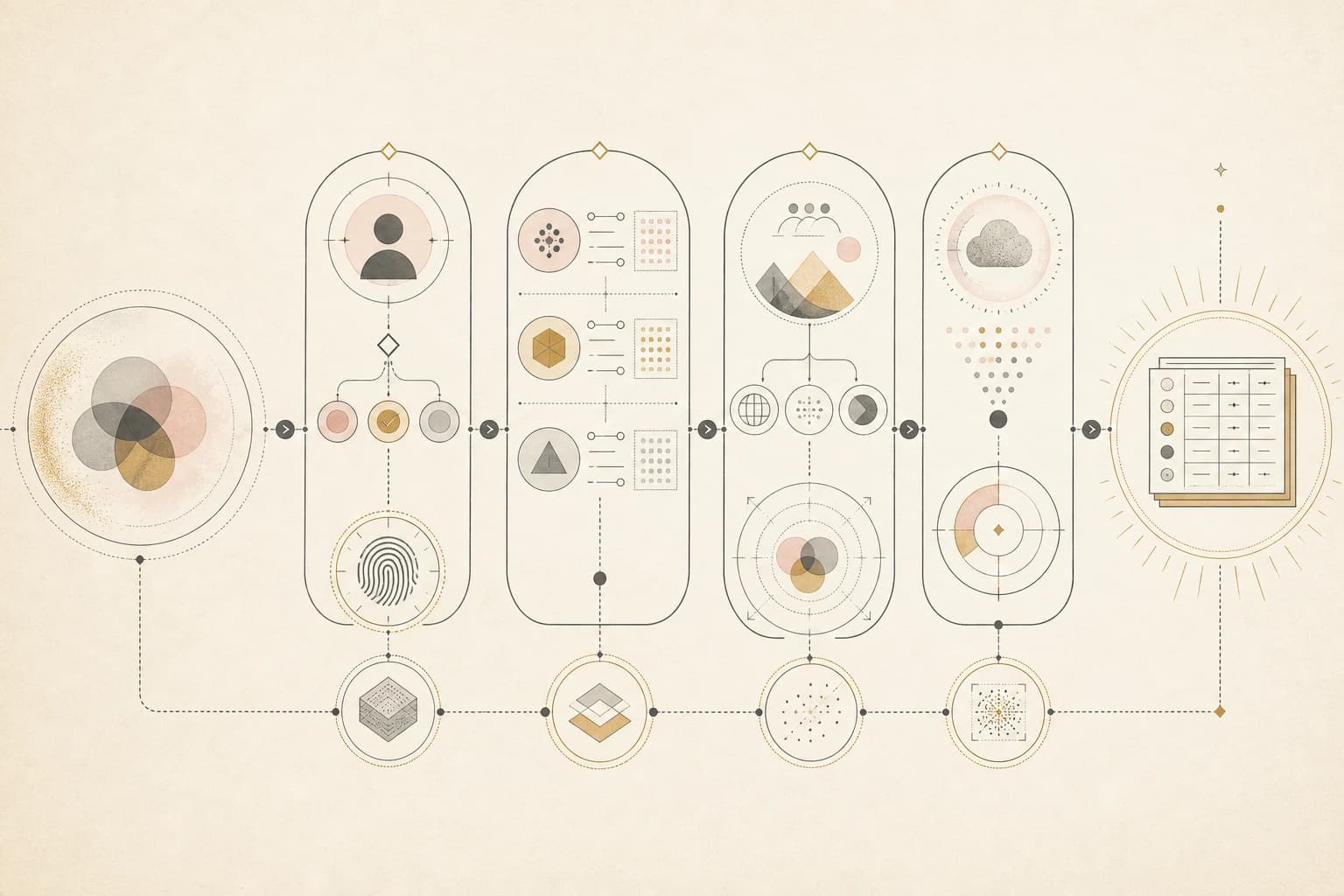
Line three names the model: cells, animals, or people. The KPV study belongs in the cell-and-mouse row, while the BPC-157 review describes a small human pilot layer beside broader preclinical work.7 Line four records the endpoint, comparator, and follow-up. Those fields prevent one type of “recovery” measure from standing in for another.
Line five asks whether the whole blend was tested. Separate ingredient papers do not establish a combined result.2 Add the Philippine FDA record and matching identifiers as separate checks.4 This card shows what each source can support.2
Bottom line
Blend nicknames are useful navigation labels, but poor scientific summaries. A sound evaluation begins with each active ingredient, its stated amount, exact identity, route, and product identifiers.1 It then separates cell, animal, pilot human, and combination evidence instead of merging them into one recovery claim.2 BPC-157 has a broad preclinical record beside three pilot human studies.3 KPV has cell-and-mouse evidence in the paper discussed here.7 FDA gives distinct safety context for injectable GHK-Cu and the TB-500 fragment.10 None should borrow certainty from a neighbor inside a nickname. For readers in the Philippines, the local FDA portal provides a verification step when specific identifiers are supplied, while its advisory explains the tool’s limits.4
This article is educational research context, not medical advice. Catalog links are neutral references and do not imply a treatment or human-use recommendation.
Frequently asked questions
Why is a blend nickname not enough to search the evidence?
A nickname may not state every active ingredient, amount, route, or formulation. FDA labeling guidance illustrates why these fields matter for identifying a combination.1 Search each established ingredient name separately, then look for a study of the complete combination.1 Otherwise, unrelated products or papers may appear to match.
Can I add the results from separate ingredient studies?
No. Separate studies may use different species, routes, outcomes, comparators, and timelines. FDA’s combination guidance focuses on showing each component’s contribution within the tested combination.6 Ingredient papers can explain the background, but they cannot be added together to manufacture a result for a blend that was never studied.2
Does animal evidence count?
Yes, when it is described as animal evidence.7 The KPV paper discussed here used cellular work and two mouse colitis models.7 Those findings do not report human recovery.7 Keep the species, disease model, route, and measured endpoint attached to every result.
Are TB-500 and thymosin beta-4 the same name?
Not in the FDA source used here. The agency identifies TB-500 as the LKKTETQ fragment of thymosin beta-4.9 That identity difference prevents evidence about the full protein from being automatically assigned to the fragment.9 Exact identity still matters when matching a source to a product description.9
What does the BPC-157 human record show?
A 2025 musculoskeletal review found three pilot human studies amid a much larger preclinical record.3 The human topics were knee pain, interstitial cystitis, and intravenous safety or pharmacokinetics.3 The authors said rigorous large-scale trials were lacking, so the record cannot support a broad conclusion about recovery blends.3
How can Filipino readers check a local regulatory record?
Use the Philippine FDA Verification Portal with specific identifiers such as the product name, registration number, or establishment details. The portal lists licensed establishments and registered or notified products.4 The FDA says the information is for verification, not regulatory advice or a substitute for formal certification.4
Sources
Footnotes
-
Electronic Drug Registration and Listing Instructions. U.S. FDA drug-listing instructions used here as an example of the identity details needed to evaluate a combination. This U.S. labeling guidance does not determine the legal classification or registration status of a product in the Philippines. ↩ ↩2 ↩3 ↩4 ↩5 ↩6 ↩7 ↩8 ↩9 ↩10 ↩11
-
Codevelopment of Two or More New Investigational Drugs for Use in Combination. Inference from FDA's requirement to demonstrate each investigational drug's contribution within a combination. This principle does not mean a combination has no effect; it means the combined result must be tested rather than reconstructed from unrelated studies. ↩ ↩2 ↩3 ↩4 ↩5 ↩6 ↩7 ↩8 ↩9 ↩10 ↩11
-
Regeneration or Risk? A Narrative Review of BPC-157 for Musculoskeletal Healing. Narrative review of BPC-157 preclinical and clinical literature in musculoskeletal medicine. A review summarizes the literature available to its authors; it does not test a blend or establish an outcome for any catalog product. ↩ ↩2 ↩3 ↩4 ↩5 ↩6 ↩7 ↩8 ↩9 ↩10
-
FDA Advisory No. 2023-2238: Utilization of the Food and Drug Administration Verification Portal. Philippine FDA advisory describing the portal's contents, access, and limitations. A portal search must use specific identifiers and should not be used to infer absence, approval, legality, or availability from a nickname alone. ↩ ↩2 ↩3 ↩4 ↩5 ↩6 ↩7 ↩8
-
Substandard and falsified medical products: Advice to patients and consumers. WHO consumer advice on substandard and falsified medical products. These checks can reveal inconsistencies but cannot prove composition, sterility, effectiveness, or regulatory status. ↩ ↩2 ↩3
-
Codevelopment of Two or More New Investigational Drugs for Use in Combination. Final U.S. FDA guidance for codevelopment of two or more new investigational drugs intended for combination use. The guidance has a defined drug-development scope and is used here for its general evidence principle, not as a regulatory ruling on a catalog item. ↩ ↩2 ↩3 ↩4
-
PepT1-mediated tripeptide KPV uptake reduces intestinal inflammation. Laboratory cell work and two induced colitis models in mice. The disease model, species, and endpoints do not establish musculoskeletal recovery or a human blend outcome. ↩ ↩2 ↩3 ↩4 ↩5 ↩6 ↩7
-
Certain Bulk Drug Substances for Use in Compounding that May Present Significant Safety Risks. Current U.S. FDA compounding safety summary for KPV. This is limited to FDA's search and assessment and should not be expanded beyond that scope. ↩ ↩2
-
Certain Bulk Drug Substances for Use in Compounding that May Present Significant Safety Risks. Current U.S. FDA identity and safety summary for thymosin beta-4 fragment LKKTETQ. FDA's search finding is limited to the agency's review, and the fragment should not be treated as the full-length protein. ↩ ↩2 ↩3 ↩4 ↩5 ↩6 ↩7
-
Certain Bulk Drug Substances for Use in Compounding that May Present Significant Safety Risks. Current U.S. FDA compounding safety summary limited to injectable routes of GHK-Cu. The route limitation matters, and the statement does not establish the effects or quality of any blend. ↩ ↩2 ↩3 ↩4
-
Certain Bulk Drug Substances for Use in Compounding that May Present Significant Safety Risks. Current U.S. FDA compounding safety summary for the named bulk drug substance. This is a U.S. compounding assessment, not a claim about Philippine registration or a test of a specific product. ↩
-
Human Drug Compounding. U.S. FDA overview of human drug compounding. This describes the U.S. regulatory framework and does not determine Philippine product status. ↩ ↩2 ↩3