TL;DR
-
A national shortage and an empty shelf are related but not identical: supply may look stable at the manufacturer level while some local pharmacies still experience gaps as products move through the distribution chain.1
-
WHO says prolonged GLP-1 shortages can create space for falsified products, especially through unregulated outlets, but that global warning is not proof of a Philippine shortage or of wrongdoing by any local seller.2
-
A Philippine FDA registration record can verify a named product and its regulatory details, yet the portal is not presented as a live inventory map for every pharmacy.3
-
Small studies outside the Philippines show that stock gaps can differ by pharmacy and can contribute to fill failures, but their percentages cannot be reused as Philippine market estimates.4
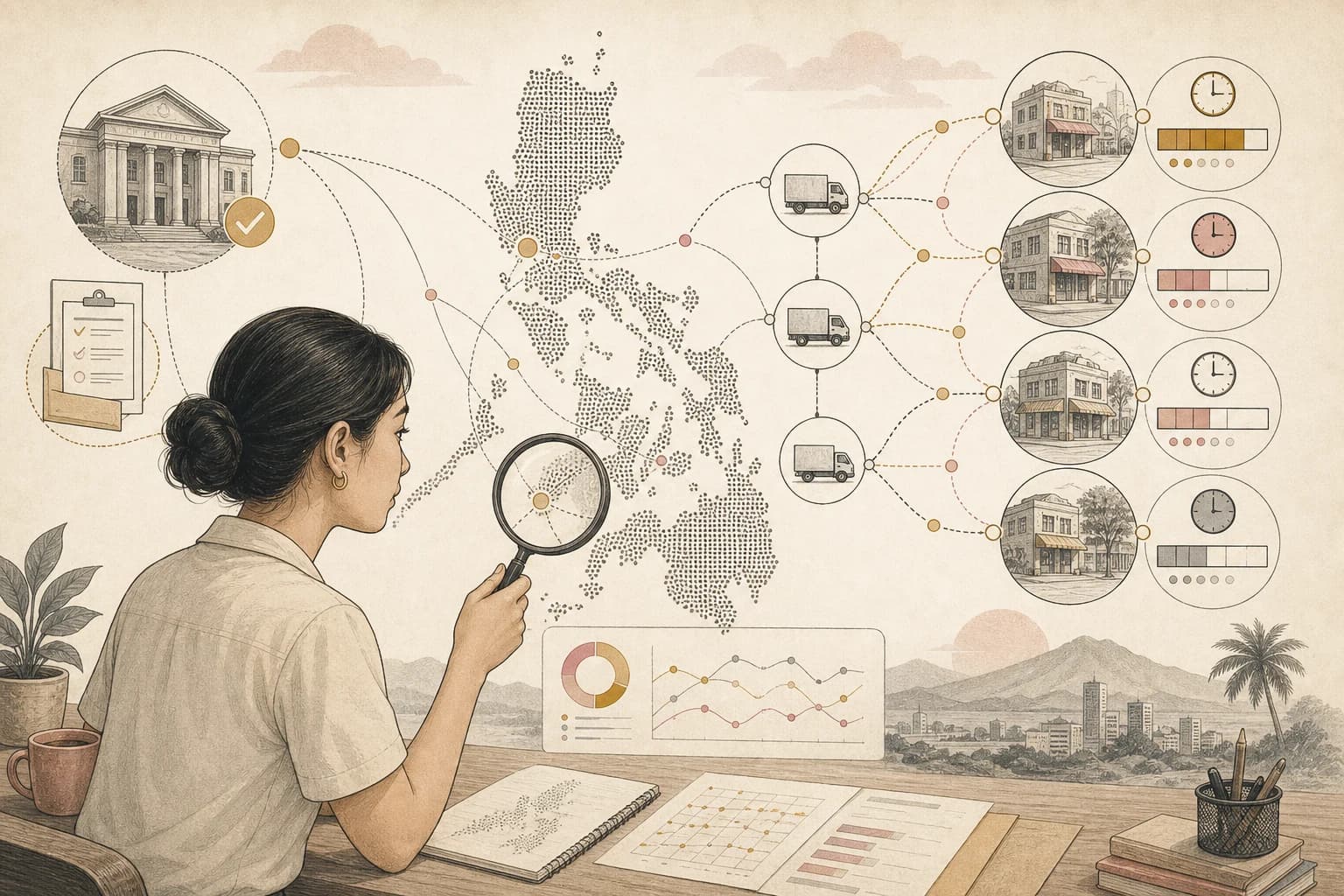
For Filipino readers, a GLP-1 “shortage” can seem obvious when one branch has no stock or a social post says supplies have arrived. The market picture is more complicated. Registration, national supply, distributor movement, and a pharmacy shelf are separate checkpoints.1 Reading them separately helps explain why confident online claims may conflict without turning an overseas report into a Philippine fact.5
A shortage is not one empty shelf
A shortage is a broad supply problem, while a stockout is the moment a particular outlet or system has none to dispense.5 The terms are often used loosely, which makes market talk sound more certain than the underlying data.5 A product can be moving through a distributor even while one pharmacy has a gap.1 The opposite can also happen: a branch may still have units after a wider supply warning begins.1
This matters in an archipelago, where readers naturally compare reports from different cities, chains, and online channels. Those reports can describe different points in time and different parts of the supply chain. WHO has called for clearer definitions, transparent reporting, and better information from the edges of medicine distribution.5 Without that discipline, “sold out here” can quickly become “gone everywhere,” even though the first statement does not establish the second.
Semaglutide is named here only as the neutral catalog reference below.6
Demand can magnify a narrow supply gap
Medicine shortages can begin for several reasons. The U.S. FDA lists manufacturing or quality problems, delays, and product discontinuations among common causes.7 For GLP-1 products, WHO has also described high demand meeting limited access.8 When many buyers look for the same item at once, even a temporary bottleneck can become highly visible across calls, chats, and social feeds.
The result is a feedback loop in attention. A restock notice can send more people toward one outlet, while a sold-out notice can redirect them to another. That behavior is a plausible market response, not a measured Philippine trend. What is documented globally is the more serious risk: WHO says unmet demand may be filled by falsified semaglutide products sold through unauthorized channels.8
The careful reading is therefore specific. Demand can intensify pressure, but it does not identify which factory, importer, distributor, or pharmacy caused a particular local gap.7
Uneven stock makes anecdotes look national
The clearest official example of unevenness comes from outside the Philippines. When the U.S. FDA determined that a national tirzepatide shortage had resolved, it still warned that local gaps might appear while products moved through the supply chain.1 The agency also separated manufacturer-reported availability from its own shortage decision.1
A small English pharmacy study shows how local pictures can vary.4 Across three study days at four community pharmacies, researchers recorded 76 shortages among 3,734 prescription-item requests.4 Rates differed by site, and Ozempic represented more than 10% of the shortages recorded in that sample.4
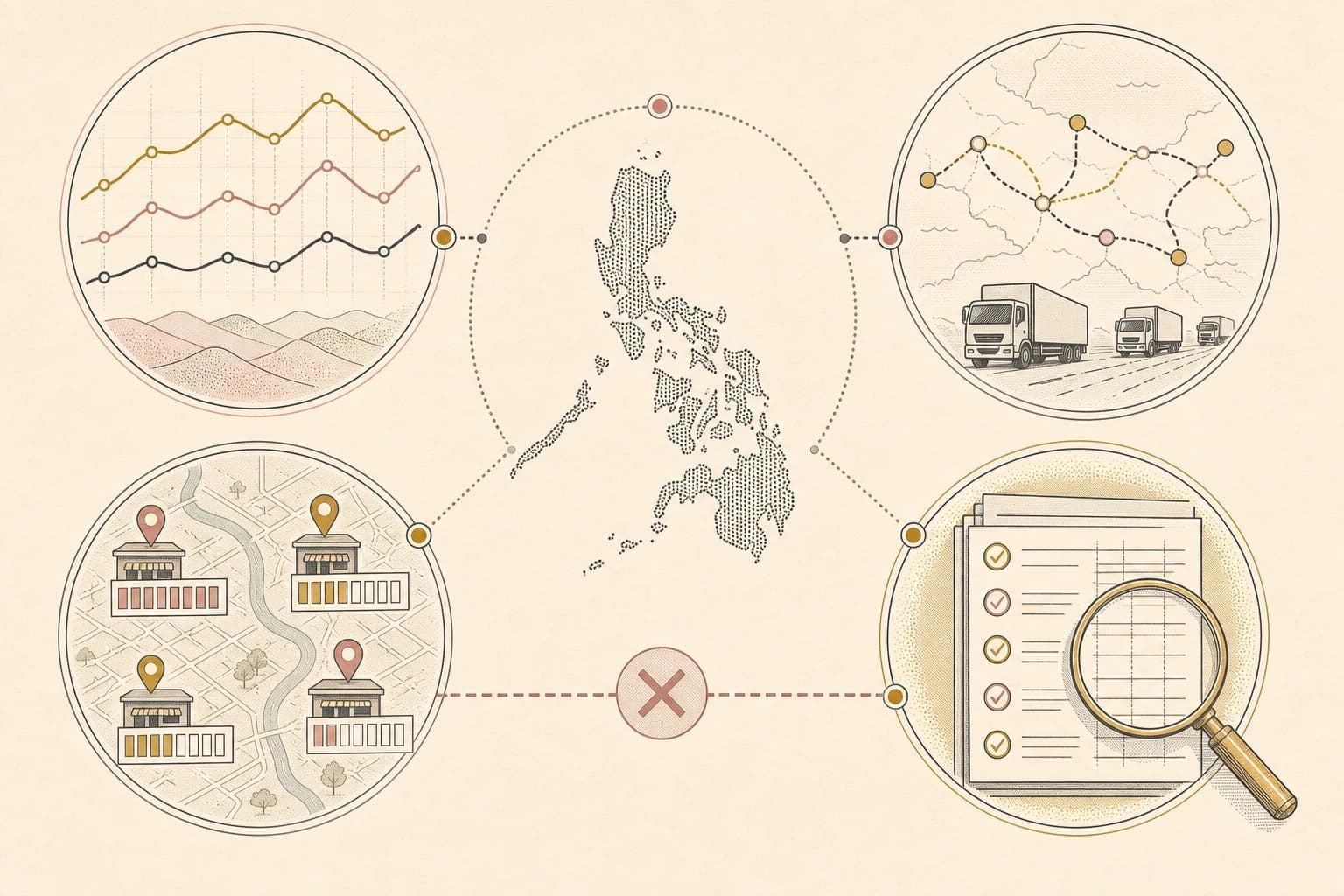
Neither record measures the Philippines.1 Together, they explain why branch-level reports should stay branch-level. A screenshot, phone call, or waiting list may be useful to one reader at one moment, but it is not a national stock survey.
Fill failures can interrupt continuity
Uneven stock is not only a communications problem. A missed fill can become a break in an established care plan, although the reason for any change remains individual. In a U.S. clinical-practice review, researchers examined 288 people who had discontinued semaglutide or tirzepatide used for obesity.9 Electronic records attributed 34 discontinuations, or 11.8%, to an inability to fill the medicine because of shortages.9
That percentage needs firm borders. The study looked at selected discontinuers in one U.S. health system, not all users, and it relied on reasons recorded in charts.9 It is not a Philippine estimate.9 It does show how a supply problem can appear later as a continuity problem in clinical records.9
Substitution is also not a simple market swap. U.S. FDA guidance says possible alternatives depend on the individual patient and should be discussed with a health professional.7 An empty shelf does not make two products interchangeable.
Scarcity can create a trust problem
WHO reported that prolonged GLP-1 shortages were associated with more reports of falsified versions, often distributed through unregulated outlets such as social media.2 The organization describes a vacuum: genuine supply is hard to obtain, demand remains, and unauthorized sellers move in.8 Scarcity can therefore change not only where people look, but how much verification work a buyer must do.
The danger is documented, but geography must stay exact. WHO’s 2024 medical alert confirmed three falsified Ozempic batches detected in Brazil, the United Kingdom, and the United States.10 Some entered regulated supply chains in those countries.10 The alert did not report those batches in the Philippines.10
A U.S.-focused American Diabetes Association statement adds another market response: temporary shortages contributed to compounded GLP-1 formulations that bypassed regulatory measures and raised several product concerns.11 That statement cannot define Philippine compounding law or prove local behavior.11
Registration tells one part of the story
The Philippine FDA Verification Portal gives Filipino readers a canonical place to check named regulatory records. It lists a Wegovy product with semaglutide as the generic name under BR-1473 and classifies that named product as prescription-only.6 It also lists a Mounjaro KwikPen product with tirzepatide as the generic name under DR-XY49503 and classifies that named product as prescription-only.12
These are narrow product records, not endorsements of a seller, listing, or catalog item.6 They also do not answer whether a branch has stock today.3 Philippine FDA Circular No. 2023-008 describes the portal as a public list of establishments and products with licenses or certificates and as a place for approved product information.3
That distinction prevents a common mistake. Registration can answer “is this named record present?”3 Live inventory asks a different question about a particular outlet and time.
Tirzepatide is named here only as the neutral catalog reference below.
Better market reading starts with smaller claims
The most useful Philippine market language is precise about scale. “This branch reported no stock this morning” is smaller and more testable than “the Philippines has run out.” A national claim needs national evidence, while a registration claim needs a product-specific Philippine FDA record.6
It also helps to label overseas evidence before using it. The English pharmacy study shows that shortages varied across four sites, but it cannot supply a Philippine rate.4 The U.S. discontinuation review shows that fill failures appeared in some records, but its 11.8% cannot describe Filipino patients.9 WHO’s global warning establishes a shortage-to-falsification risk, not a local accusation.2
Good reporting should name the level: manufacturer, importer, distributor, chain, branch, or individual fill. WHO’s technical consultation emphasized transparent reporting and better peripheral supply-chain data because loose definitions hide where a problem actually sits.5 Smaller claims produce a more honest market picture.
Bottom line
Shortages and uneven stock can make the Philippine GLP-1 market look more chaotic than any single data point can explain. Global records show three credible effects: local gaps may remain when headline supply improves, fill failures can disrupt continuity, and unmet demand can attract falsified products.1 None of those records measures a current nationwide Philippine shortage.2 For local context, the Philippine FDA Verification Portal can confirm specific registration details, but it is not described as a real-time shelf map.3 The sound approach is to match every claim to its scale: verify the named product, identify the outlet and date, label overseas evidence, and resist turning one branch report into a national verdict.5
This article is educational research context, not medical advice. Catalog links are neutral references and do not imply a treatment or human-use recommendation.
Frequently asked questions
Does one sold-out pharmacy prove a Philippine shortage?
No. A local stock gap and a national shortage describe different levels of the supply chain.1 The U.S. FDA has documented that local disruptions may continue even after a national shortage is resolved.1 That mechanism is useful context, but it does not establish the present Philippine situation.1
Can the Philippine FDA portal show live stock?
The Philippine FDA describes its Verification Portal as a list of licensed establishments, registered products, and approved product information.3 That function can confirm a named regulatory record.3 The portal is not presented in the cited circular as a real-time inventory service for individual pharmacies.3
What can a verified semaglutide record establish?
The portal record for BR-1473 identifies a named Wegovy product, semaglutide as its generic name, and prescription classification.6 It does not establish the identity, quality, price, or current stock of a separate listing.6 It also does not describe any Majiko catalog item.6
Why can shortages attract falsified products?
WHO says high demand and limited access can leave unmet demand, creating room for falsified semaglutide products from unauthorized channels.8 Its 2024 alert confirmed falsified batches in three named countries, not the Philippines.10 The risk pathway is global; any local accusation requires its own evidence.10
Are semaglutide and tirzepatide automatic substitutes?
No automatic substitution follows from a stock gap. U.S. FDA shortage guidance says possible alternatives depend on the individual patient and should be discussed with a health professional.7 The Philippine FDA portal also gives semaglutide and tirzepatide separate named product records.6 Those records do not make them interchangeable.12
How should readers assess a restock post?
Start with the outlet, location, date, and exact named product. Then use the Philippine FDA portal to check the relevant product and establishment records.3 Treat the post as a momentary branch-level report, not proof of nationwide supply. WHO recommends transparent, clearly defined shortage reporting.5
Sources
Footnotes
-
FDA clarifies policies for compounders as national GLP-1 supply begins to stabilize. U.S. regulatory account of tirzepatide supply stabilization. This describes the U.S. supply chain and illustrates a mechanism; it does not establish Philippine stock conditions. ↩ ↩2 ↩3 ↩4 ↩5 ↩6 ↩7 ↩8 ↩9 ↩10 ↩11
-
Shortages impacting access to glucagon-like peptide 1 receptor agonist products; increasing the potential for falsified versions. WHO global public-health notice published in January 2024. The notice does not measure the size, timing, or location of a Philippine GLP-1 shortage. ↩ ↩2 ↩3 ↩4
-
FDA Circular No. 2023-008: Guidelines on publishing drug information in the Philippine FDA Verification Portal. Philippine FDA Circular No. 2023-008 defines the portal and its publication role. The stock-tracker distinction follows from the portal's stated registration and information function; it does not prove that no separate inventory data exist. ↩ ↩2 ↩3 ↩4 ↩5 ↩6 ↩7 ↩8 ↩9
-
A multi-site repeated prevalence study of medicine shortages in community pharmacies. Three study days at four community pharmacies in England. The small English sample cannot estimate Philippine pharmacy shortages or national market conditions. ↩ ↩2 ↩3 ↩4 ↩5
-
Technical consultation on notification systems for shortages and stockouts of medicines and vaccines. Global technical consultation on medicine and vaccine shortage notification systems. The consultation is general and does not provide a current Philippine GLP-1 inventory series. ↩ ↩2 ↩3 ↩4 ↩5 ↩6 ↩7
-
Philippine FDA Verification Portal record for Wegovy (semaglutide), BR-1473. Current product-specific Philippine FDA registration record. A registration record does not show current pharmacy inventory, price, or nationwide availability and does not describe any Majiko catalog item. ↩ ↩2 ↩3 ↩4 ↩5 ↩6 ↩7 ↩8
-
Frequently Asked Questions about Drug Shortages. U.S. FDA general drug-shortage guidance. The guidance does not identify the cause of any Philippine GLP-1 stock gap or endorse a particular substitute. ↩ ↩2 ↩3 ↩4
-
Semaglutide injection products. WHO global questions-and-answers page on semaglutide injection products. This is a global risk pathway, not evidence that a particular Philippine seller or product is falsified. ↩ ↩2 ↩3 ↩4
-
Reasons for Discontinuation of Obesity Pharmacotherapy With Semaglutide or Tirzepatide in Clinical Practice. Retrospective electronic-health-record review of discontinuers at one U.S. health system. The denominator includes only selected discontinuers, reasons depended on clinical documentation, and the result is not a Philippine prevalence estimate. ↩ ↩2 ↩3 ↩4 ↩5 ↩6
-
Medical Product Alert N°2/2024: Falsified OZEMPIC (semaglutide). WHO Medical Product Alert N°2/2024. The alert names those three countries and does not document detection of the batches in the Philippines. ↩ ↩2 ↩3 ↩4 ↩5
-
Compounded GLP-1 and Dual GIP/GLP-1 Receptor Agonists: A Statement from the American Diabetes Association. U.S.-focused professional statement on compounded GLP-1 and dual GIP/GLP-1 products. U.S. compounding law and market behavior cannot be transferred to the Philippine legal or regulatory setting. ↩ ↩2
-
Philippine FDA Verification Portal record for Mounjaro KwikPen (tirzepatide), DR-XY49503. Current product-specific Philippine FDA registration record. A registration record does not show current pharmacy inventory, price, or nationwide availability and does not describe any Majiko catalog item. ↩ ↩2