TL;DR
- A biomarker records a biological process or response, but it does not directly record how a person feels, functions, or survives.1
- WHO frames healthy ageing around functional ability, including mobility, basic needs, relationships, decisions, and participation in society.2
- Philippine longevity stories become more useful when they also ask how primary care, local coordination, and community support shape daily life.3
- One small randomized pilot raised blood NAD+ without changing cognition, showing why a moving laboratory number and a meaningful outcome must remain separate.4
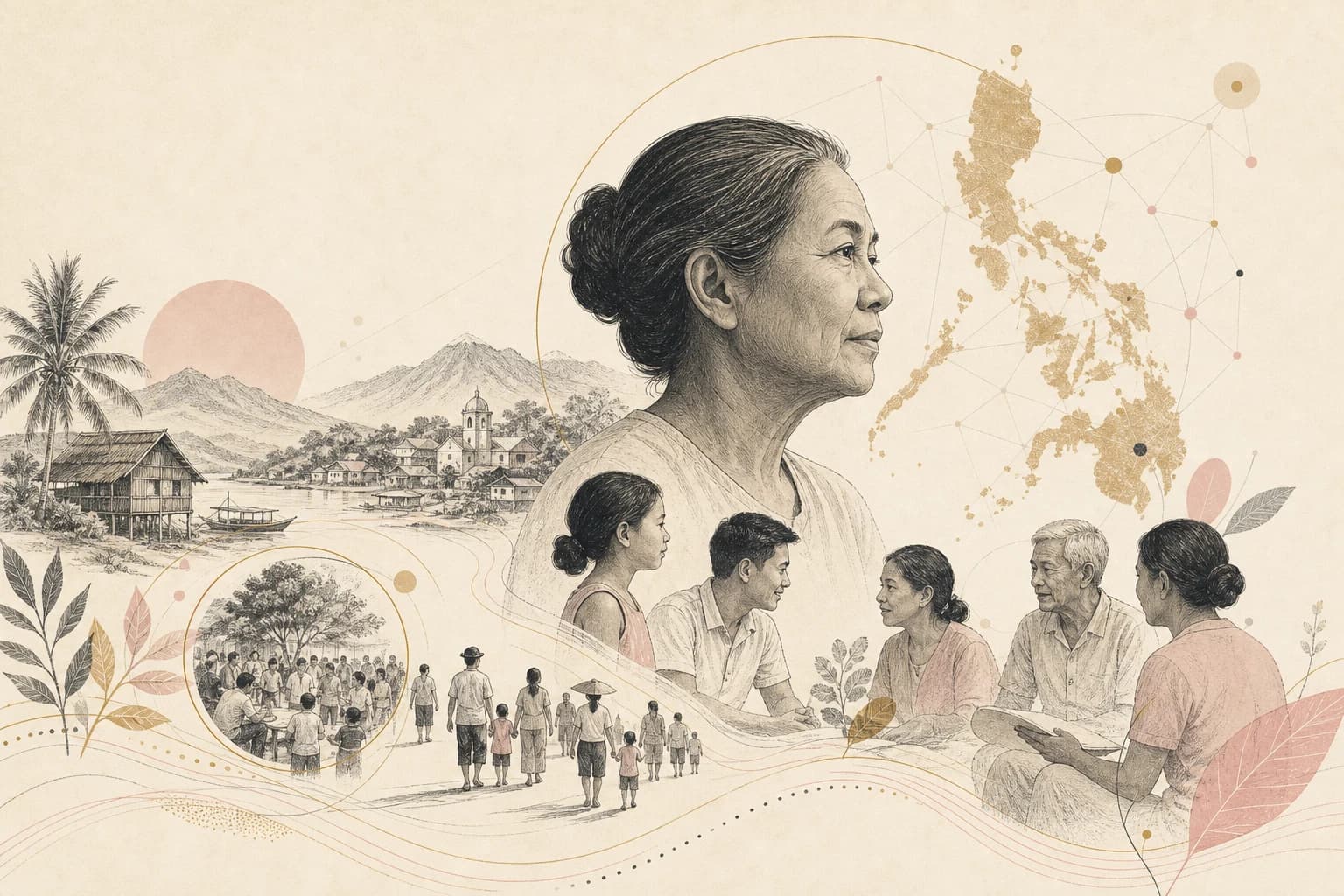
For Filipino readers, longevity can arrive as a close-up: one blood value, one scan, one biological-age score. Population health asks the camera to pull back. Can people move through their community, reach care, stay connected, and keep doing what matters?5 That wider frame does not make biomarkers useless. It gives each number a proper role inside a much larger story.
Start with what a longer life is for
WHO defines healthy ageing as maintaining the functional ability that supports well-being in older age.6 Functional ability means having real opportunities to meet basic needs, move, decide, learn, maintain relationships, and contribute.2 It depends on a person’s physical and mental capacities, the surrounding environment, and the interaction between them.5
This frame changes the opening question. Instead of asking only whether a number moved, ask whether people can keep doing what they value. Disease-free status is not required under WHO’s definition.5 A person may live with a condition and still have strong function when care and surroundings support daily life.5 Longevity is therefore not just extra time. It is also the practical ability to use that time.
NAD+ is named here only to introduce the following neutral catalog reference.
A biomarker is one window, not the whole house
The FDA-NIH glossary calls a biomarker a measured sign of a biological process or response.1 It may be molecular, physiological, imaging-based, or another defined characteristic.1 The same glossary draws a firm boundary: a biomarker does not measure how someone feels, functions, or survives.1
That boundary helps when a longevity headline celebrates a lower inflammatory marker or a higher cellular metabolite. The change may be real within the study.1 It still does not automatically report sharper thinking, steadier walking, fewer hospital visits, or longer life.1
Some biomarkers can serve as surrogate endpoints, but validation is specific and demanding.7 Mechanistic and clinical data must strongly show that changing the marker predicts a particular clinical benefit in a defined setting.7 A plausible pathway or simple correlation is not enough by itself.7
One NAD+ trial shows the gap clearly
A randomized pilot enrolled 20 older adults with mild cognitive impairment and followed them for 10 weeks.4 Participants received either placebo or nicotinamide riboside, a precursor studied for its effect on blood NAD+.4 Blood NAD+ rose 2.6-fold in the nicotinamide riboside group.4 Cognition did not change during the study.4
The fair reading keeps both results together. The trial recorded a clear movement in one blood measure and no movement in its cognitive outcome.4 It did not test a catalog item, a general anti-ageing claim, or the experience of Filipino communities.4
The pilot was small, short, and limited to adults with mild cognitive impairment.4 Those facts define its context rather than erase its result.4 It remains a useful example of why a biological response should not borrow the meaning of an outcome it did not change.4
Population health changes the unit of attention
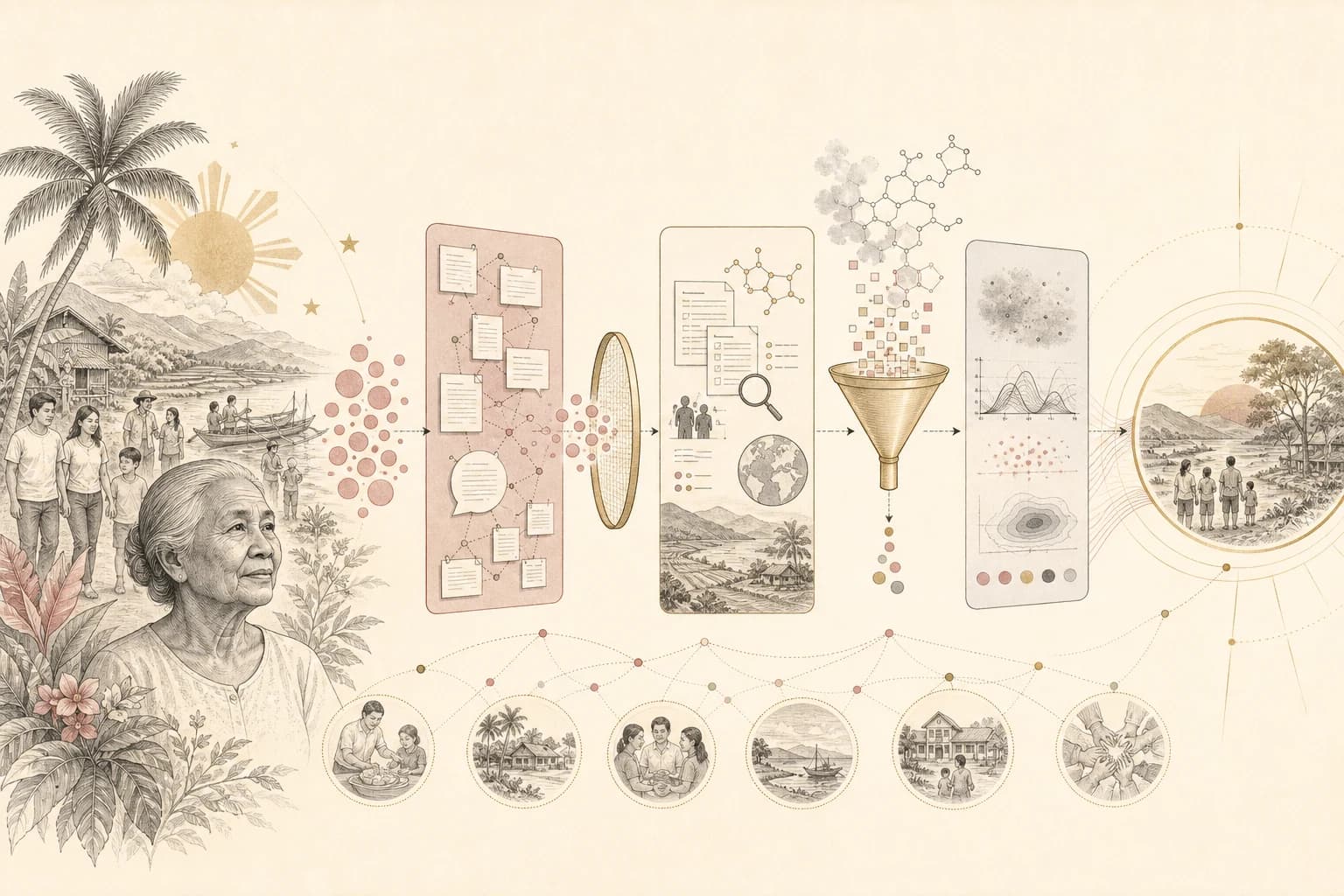
Healthy life expectancy, often shortened to HALE, measures expected years lived in full health under prevailing mortality and morbidity patterns.8 Unlike a simple lifespan count, it includes both fatal and non-fatal health outcomes.8 It is a modeled population summary, not a countdown for one person.8
This is a different scale from a blood test.8 A biomarker can help describe one process in an individual or study group.1 HALE asks how death and years lived with health loss combine across a population.8 Neither measure replaces the other because they answer different questions.1
The wider view also includes social determinants.9 WHO uses that term for the conditions in which people are born, grow, live, work, and age, plus access to money, power, and resources.9 Housing, education, social protection, and work opportunities can shape health inequities across groups.9
The Philippine setting changes the questions
In the Philippines, the structure of care makes local systems part of the longevity picture.3 A WHO case study says local government units manage and implement devolved health care, while the Department of Health guides national primary-care programmes.3 The study describes room for local innovation alongside fragmented referral and coordination.3
This does not mean every city or municipality performs alike.3 It means a national longevity story can miss something important if it reports only personal test results. The path between a household, a nearby provider, and the next level of care also matters.3
A joint DOH-WHO release describes primary health care as community-involved, multisectoral, and brought closer to home.10 It also places primary care at the foundation of universal health coverage.10 That language shifts attention from isolated optimization toward continuity, navigation, prevention, and support through life.10
MOTS-c is named here only to introduce the following neutral catalog reference.
Streets, transport, and connection belong in the frame
WHO says supportive environments can help people continue valued activities even when physical or mental capacity changes.11 It names safe public buildings, accessible transport, and easy-to-walk places as practical examples.11 These are not decorative extras to a longevity story. They shape whether capacity can become everyday function.5
Consider two people with the same walking-speed result. One may have a safe route, nearby services, and reliable company. The other may face barriers outside the door. WHO’s framework predicts that function reflects both capacity and environment, not capacity alone.5
Connection can also sit inside public health.12 WHO Philippines reported a Manila discussion on social prescribing with health, senior-citizen, and cultural agencies.12 The approach links people with community-based non-clinical services.12 The event does not prove a health outcome, but it shows how Philippine healthy-ageing work can look beyond a laboratory panel.12
Build a dashboard that keeps levels separate
A useful longevity dashboard needs distinct rows. The first can hold biomarkers, such as a blood value or scan feature, with the exact process measured.1 The second can hold clinical outcomes: how people feel, function, or survive.1 A third can track functional ability, including mobility, decisions, relationships, basic needs, and participation.2
A fourth row can describe environments, including transport, walkability, public spaces, and social support.11 A fifth can cover the care system: proximity, continuity, referral, and local coordination.3 At population level, HALE can summarize fatal and non-fatal health loss in one modeled measure.8
The rows should not be blended into one score.1 A laboratory improvement cannot stand in for community access.1 A national average cannot predict one family’s future.8 Keeping the levels separate makes the story more honest and more useful.
Read every longevity story in five passes
First, name the level: molecule, person, community, health system, or population. A biomarker belongs to the biological level unless it has been validated for a defined clinical use.7 Second, identify the outcome. Ask whether the study measured a laboratory response, daily function, symptoms, survival, or a population estimate.1
Third, keep the population attached. The NAD+ pilot involved 20 older adults with mild cognitive impairment over 10 weeks.4 Fourth, inspect the setting. For Philippine stories, local care pathways and coordination can affect what support reaches daily life.3
Fifth, look for what people value. WHO’s healthy-ageing frame includes mobility, relationships, decisions, basic needs, and contribution.2 This five-pass reading does not reject molecular research. It prevents one close-up from pretending to be the entire landscape.
Bottom line
Philippine longevity stories become stronger when biomarkers keep their proper scale.1 A biological number can describe a process, but it does not directly describe feeling, function, or survival.1 WHO’s wider frame asks whether people can move, decide, connect, meet basic needs, and contribute within supportive environments.2 Philippine primary-care evidence adds local coordination, community involvement, and care closer to home.3
The practical lesson is simple: report the marker, then report the human outcome, setting, and population separately. A longer life is not only a better laboratory profile.1 It is time that people have the real capacity and opportunity to use.
This article is educational research context, not medical advice. Catalog links are neutral references and do not imply a treatment or human-use recommendation.
Frequently asked questions
What is the difference between a biomarker and a health outcome?
A biomarker measures a defined biological process or response.1 A clinical outcome describes how a person feels, functions, or survives.1 The two can be related, but they are not interchangeable.7 A marker needs specific validation before it can substitute for a particular clinical benefit.7
Does a better biomarker mean someone will live longer?
Not by itself. A marker change reports what happened to that measure under specific conditions.1 It predicts a clinical benefit only when strong mechanistic and clinical evidence validates that use.7 Lifespan and healthy life also involve function, illness, environment, care, and population patterns.8
What does healthy life expectancy add to life expectancy?
Healthy life expectancy combines mortality with time lived in less than full health.8 It helps describe both fatal and non-fatal outcomes across a population.8 It remains a modeled summary, so it should guide population comparisons rather than serve as a personal forecast.8
Why does the environment count as longevity evidence?
WHO’s framework says function emerges from personal capacity, surroundings, and their interaction.5 Safe public places, accessible transport, and walkable areas can support valued activities in older age.11 These features matter because a physical capacity becomes useful only when daily surroundings allow a person to use it.5
What makes the Philippine context more than an address?
The Philippine health system places much management and implementation with local government units while national primary-care programmes are guided by the DOH.3 WHO’s case study describes both local innovation and coordination gaps.3 Longevity reporting should therefore ask how national ideas connect with local care pathways.
What did the small NAD+ pilot actually show?
In 20 older adults with mild cognitive impairment, 10 weeks of nicotinamide riboside increased blood NAD+ 2.6-fold while cognition did not change.4 The result belongs to that precursor, population, period, and protocol.4 It does not establish a broad longevity outcome or a catalog-product effect.4
Sources
Footnotes
-
Glossary - BEST (Biomarkers, EndpointS, and other Tools) Resource. Official FDA-NIH terminology resource for biomarkers and endpoints. A biomarker can be useful within its intended context without serving as a complete health outcome. ↩ ↩2 ↩3 ↩4 ↩5 ↩6 ↩7 ↩8 ↩9 ↩10 ↩11 ↩12 ↩13 ↩14 ↩15 ↩16 ↩17 ↩18 ↩19
-
Healthy ageing and functional ability. Five abilities named in WHO's healthy-ageing framework. These domains are population-health guideposts, not a personal diagnostic checklist. ↩ ↩2 ↩3 ↩4 ↩5
-
Philippines: a primary health care case study in the context of the COVID-19 pandemic. WHO case study of Philippine primary health care and lessons from January 2020 to July 2022. The case study describes system structure and pandemic-era lessons, not every local government's current performance. ↩ ↩2 ↩3 ↩4 ↩5 ↩6 ↩7 ↩8 ↩9 ↩10 ↩11
-
A randomized placebo-controlled trial of nicotinamide riboside in older adults with mild cognitive impairment. Placebo-controlled pilot with cognition as the primary outcome and blood NAD+ as a secondary outcome. The small, short study addressed one precursor, population, and protocol; it does not establish a general longevity outcome or a result for a catalog item. ↩ ↩2 ↩3 ↩4 ↩5 ↩6 ↩7 ↩8 ↩9 ↩10 ↩11 ↩12 ↩13 ↩14
-
Healthy ageing and functional ability. WHO explanation of intrinsic capacity, environments, and functional ability. People with the same diagnosis or laboratory result may have different functional circumstances. ↩ ↩2 ↩3 ↩4 ↩5 ↩6 ↩7 ↩8
-
Healthy ageing and functional ability. WHO healthy-ageing framework. The definition concerns a broad public-health goal rather than a score from one test. ↩
-
Validated Surrogate Endpoint - BEST (Biomarkers, EndpointS, and other Tools) Resource. FDA-NIH explanation of validation for surrogate endpoints. Correlation or biological plausibility alone does not establish that predictive relationship. ↩ ↩2 ↩3 ↩4 ↩5 ↩6 ↩7
-
Healthy life expectancy (HALE). WHO Global Health Observatory indicator metadata. HALE is a modeled population summary and does not predict one individual's lifespan. ↩ ↩2 ↩3 ↩4 ↩5 ↩6 ↩7 ↩8 ↩9 ↩10 ↩11
-
Social determinants of health. WHO overview of social determinants and health inequities. These influences operate across populations and should not be used to blame individuals for their health. ↩ ↩2 ↩3
-
DOH, WHO highlight need for primary health care in UHC. Official 2019 joint release about Philippine universal health coverage. The policy description is not proof that every community receives the same level of care. ↩ ↩2 ↩3
-
Ageing and health. WHO fact sheet on physical and social environments in healthy ageing. The examples do not measure the conditions of every Philippine community. ↩ ↩2 ↩3 ↩4
-
WHO promotes health and well-being through arts and culture. WHO Philippines report on a 2024 healthy-ageing session with Philippine agencies. The event illustrates a population-health approach and does not establish an individual clinical outcome. ↩ ↩2 ↩3 ↩4