
TL;DR
- Access is not one yes-or-no question: production, country registration, cost, and supply can each shape whether GLP-1 care reaches people.1
- In the Philippines, product registration and establishment licensing are separate FDA records, so a product name and a seller page require different checks.2
- A well-known label cannot prove identity, as WHO confirmed falsified semaglutide batches outside the Philippines and warned about substituted or unknown contents.3
- Real access also includes continuity, follow-up, safety reporting, and fair health-system capacity, which WHO places inside comprehensive, lifelong, person-centred care.4
In the Philippines, the GLP-1 conversation now travels through group chats, clinic questions, search pages, and social feeds. Calling it a “boom” describes that crowded attention, not a measured local market. WHO defines GLP-1 therapies as medicines that mimic a natural hormone involved in blood-sugar and appetite regulation.5 The harder story is how a Filipino reader separates visibility from trustworthy access.
Access is a chain, not a yes-or-no box
Seeing a name repeatedly can make access look simple. The practical chain has several links. WHO separates production capacity, country registration, cost, and supply when explaining global availability.1 These are related, but they are not interchangeable.
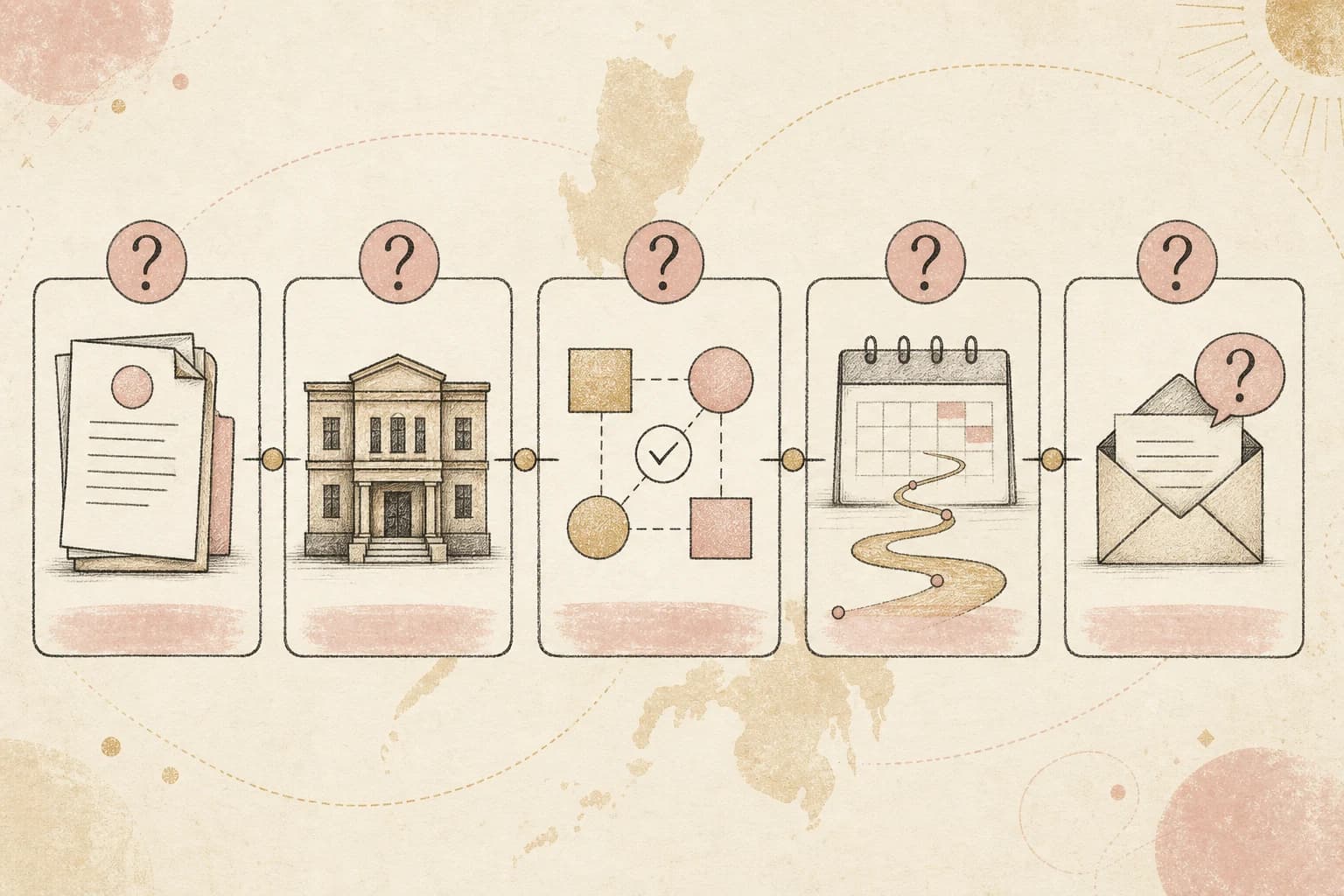
For a Philippine reader, the first useful move is to split one large question into smaller ones. Is there an official product record? Is the establishment licensed for its stated activity? Does the item match the official information? Is there a path for follow-up or reporting? The Philippine FDA system keeps product records and establishment records as distinct checks.2
That distinction changes the tone. A viral post can start curiosity, but it cannot complete the chain. Access becomes a process of matching names, records, dates, channels, and care context rather than trusting a single screenshot.
Tirzepatide is named only to introduce the following neutral catalog reference.
Start with the record, then read its scope
The Philippine FDA Verification Portal lists health products with Certificates of Product Registration or Notification and establishments with Licenses to Operate.6 Those are two different record types.6 A reader checking a product should search the exact name and inspect the record shown, while a reader checking a business should search the establishment separately.6
The portal is more than a name directory. FDA Circular No. 2023-008 says approved information documents for registered drug products should be published there and updated monthly.7 That gives readers a route to the regulator’s own material instead of relying only on promotional copy.
The scope still matters. A registration record answers a regulatory question about the named product entry.6 It does not answer whether an unrelated listing is genuine, whether a seller holds the right license, or what live inventory exists.6 Each answer needs its own checkpoint.
The seller check is separate
The Philippine FDA maintains a specific list for drugstores with online ordering and delivery activity.8 Its fields include the license number, establishment name, address, region, activity, issuance date, and expiry date.8 Those details make exact matching possible.
This matters because a polished page is not a regulatory credential.8 Do the business and legal names match? Does the address match? Does the listed activity cover online ordering? The FDA list lets a reader compare the claim with the record rather than judge by design, follower count, or testimonials.8
Product and seller checks should therefore run side by side.2 One asks about the named health product.2 The other asks about the establishment and its licensed activity.2 Passing one check does not automatically answer the other.2
A recognizable name cannot verify the item
Falsification makes access a question of identity, not only discovery. WHO confirmed three falsified semaglutide batches in Brazil, the United Kingdom, and the United States in 2024.9 This article keeps that detection claim within those three countries.9 Its lesson is still relevant to readers evaluating unfamiliar channels.
WHO warned that falsified products may contain incorrect contents, contamination, or unknown or substituted ingredients.3 A familiar brand name, a convincing photograph, or a believable batch number cannot settle those risks by itself.3 The source and supply path matter.10
WHO advised the public to obtain medical products from authorized or licensed suppliers.10 It also asked regulators to watch informal and online sales more closely.10 For Filipino readers, this supports a two-layer check: compare the product information with the Philippine FDA portal, then verify the establishment and its activity in the same official system.2
Continuity belongs in the access question
Finding a first point of contact is only the front door. WHO describes GLP-1 access within comprehensive, lifelong, person-centred care.4 Its 2025 recommendation was conditional partly because of questions about long-term evidence, maintenance, discontinuation, cost, health-system readiness, and equity.11
That frame widens the reader’s checklist. Can the care pathway support follow-up? Is there a clear place to raise concerns? Can records move with the person if work, travel, or family responsibilities interrupt appointments? These are access questions even though they do not fit inside a shopping post.
The distinction is especially useful in the Philippines, where attention can arrive through a Metro Manila clinic, a provincial inquiry, an overseas relative, or a social feed. Those examples describe routes into the conversation, not proof of a local service pattern. The solid point comes from WHO: supply alone is not the whole care system.4
Reporting completes the feedback loop
Access should include a route back to the regulator when something seems wrong. The Philippine FDA form accepts reports from patients or consumers as well as health professionals.12 It provides mail, regional office, email, online, and telephone routes.12
The form asks for serious adverse reactions, reactions involving newly introduced medicines, certain medication errors, serious outcomes tied to off-label use, and suspected product defects.13 A report records a suspicion; it does not prove that a medicine caused an event.13 That caveat protects both accuracy and the person reporting.
The form creates an official route for feedback.12 It also gives Filipino readers a concrete alternative to posting an unverified accusation online. The current FDA page should be checked for the latest contact details before any report is sent.12
Semaglutide is named only to introduce the following neutral catalog reference.
Fair access is a health-system question
A boom can create the impression that everyone has the same choices. WHO’s global view is more cautious. Even with rapid production growth, it projects that GLP-1 therapies will reach fewer than 10% of people who could benefit by 2030.14 That is a worldwide projection, not a Philippine demand or supply estimate.14
WHO also warns that access without deliberate policy could deepen existing health gaps.11 Its concerns include cost, system readiness, continuity, and equity rather than supply alone.11 This shifts the conversation away from who heard about a product first.
For Filipino readers, fair access is better understood as reliable systems: clear official records, licensed channels, understandable information, follow-up, and reporting. The Philippine FDA portal supplies two key verification layers through product and establishment records.6 WHO adds the wider test: whether a health system can make access fair and sustainable.4
Bottom line
The real access questions begin after a GLP-1 name becomes familiar. Philippine FDA records separate product registration from establishment licensing, and both checks need exact names, scopes, and dates.2 WHO’s falsification alert shows why identity and source cannot be assumed from appearance alone.3 Its global guidance also places continuity, system readiness, and equity inside the access discussion.11
For Filipino readers, the useful checklist is layered: verify the official product record, verify the establishment and activity, compare the item with official information, and know where concerns can be reported.12 None of these steps is a product endorsement. Together, they turn a noisy boom into a calmer question: what would trustworthy, continuous, and fair access actually require?
This article is educational research context, not medical advice. Catalog links are neutral references and do not imply a treatment or human-use recommendation.
Frequently asked questions
What does “access” mean in this article?
It means more than finding a name or seller. WHO separates production, country registration, cost, and supply as factors in global availability.1 It also places GLP-1 care in a wider system that includes continuity, health-system readiness, and equity.11
Where can Filipino readers verify regulatory records?
The Philippine FDA Verification Portal lists health products with registration or notification certificates and establishments with Licenses to Operate.6 Search the exact product or establishment name, then read the record’s scope and dates.6 The two record types answer different questions.2
Does an online page prove that a seller is licensed?
No. The Philippine FDA’s online-ordering drugstore list provides the establishment name, license number, location, activities, and license dates.8 Those fields can be compared with the page making the claim.8 Visual polish, testimonials, and follower counts are not fields in that official check.8
Can a familiar label prove that an item is genuine?
No. WHO confirmed falsified semaglutide batches in Brazil, the United Kingdom, and the United States, including examples that misrepresented their identity or source.9 WHO warned that falsified items may contain incorrect, contaminated, unknown, or substituted contents.3 Identity depends on a trustworthy supply path, not familiarity alone.10
Why does continuity count as access?
WHO frames GLP-1 access within comprehensive, lifelong, person-centred care.4 Its conditional recommendation cites maintenance, discontinuation, cost, system readiness, and equity among the concerns.11 A first contact therefore answers only one part of a much longer access question.
Who can report a suspected reaction in the Philippines?
The Philippine FDA form accepts reports from patients or consumers and from health professionals.12 It covers serious reactions and several other report types, including suspected product defects.13 A report can be filed even when causation is uncertain, because it records a suspicion rather than a verdict.13
Sources
Footnotes
-
Obesity: GLP-1 therapies. WHO global access overview. The statement is global and does not establish Philippine prices, stock, or availability. ↩ ↩2 ↩3
-
FDA Circular No. 2023-008: Guidelines on publishing drug information in the FDA Verification Portal; FDA Verification Portal: Drugstore — Online Ordering and Delivery. The FDA portal separates product authorization records from establishment license records. Both checks are time-sensitive and should be read using the exact names and dates shown. ↩ ↩2 ↩3 ↩4 ↩5 ↩6 ↩7 ↩8 ↩9
-
Medical Product Alert No. 2/2024: Falsified OZEMPIC (semaglutide). Risk explanation in WHO's falsified-product alert. The warning concerns the confirmed falsified products in the alert, not every GLP-1 product. ↩ ↩2 ↩3 ↩4 ↩5
-
WHO issues global guideline on the use of GLP-1 medicines in treating obesity. WHO health-system framing in the 2025 guideline release. The source gives a global policy frame, not a local service map. ↩ ↩2 ↩3 ↩4 ↩5
-
Obesity: GLP-1 therapies. WHO public questions-and-answers page about the GLP-1 medicine class. This class definition does not describe any catalog product, individual outcome, or Philippine access status. ↩
-
FDA Circular No. 2023-008: Guidelines on publishing drug information in the FDA Verification Portal. Philippine FDA circular defining the portal and its two regulatory record types. A portal record should be read for its named entity, scope, and dates; it does not establish live stock. ↩ ↩2 ↩3 ↩4 ↩5 ↩6 ↩7 ↩8
-
FDA Circular No. 2023-008: Guidelines on publishing drug information in the FDA Verification Portal. Philippine FDA publication rules for approved product information. The circular describes the publication process and does not prove that every page is complete at every moment. ↩
-
FDA Verification Portal: Drugstore — Online Ordering and Delivery. Current structure of the official online-ordering and delivery establishment list. The list verifies establishment records and does not authenticate every item offered on an external page. ↩ ↩2 ↩3 ↩4 ↩5 ↩6 ↩7
-
Medical Product Alert No. 2/2024: Falsified OZEMPIC (semaglutide). WHO Medical Product Alert No. 2/2024. The claim is limited to the three countries named in the alert and makes no Philippine detection claim. ↩ ↩2 ↩3
-
Medical Product Alert No. 2/2024: Falsified OZEMPIC (semaglutide). Public and regulatory advice in WHO Medical Product Alert No. 2/2024. The advice is a verification safeguard and does not identify a specific Philippine seller. ↩ ↩2 ↩3 ↩4
-
WHO issues global guideline on the use of GLP-1 medicines in treating obesity. WHO summary of its global guideline and implementation concerns. A conditional global recommendation is not a Philippine regulatory decision or an individual recommendation. ↩ ↩2 ↩3 ↩4 ↩5 ↩6
-
Suspected Side Effects Reporting Form, Version 6.0. Reporter fields and submission channels in the official Philippine FDA form. Contact details and links should be checked on the current FDA page before a report is submitted. ↩ ↩2 ↩3 ↩4 ↩5 ↩6
-
Suspected Side Effects Reporting Form, Version 6.0. Philippine FDA pharmacovigilance reporting instructions. A submitted report records a suspicion and does not by itself prove causation. ↩ ↩2 ↩3 ↩4
-
WHO issues global guideline on the use of GLP-1 medicines in treating obesity. WHO global implementation projection. This is a global projection, not a Philippine prevalence, demand, or supply estimate. ↩ ↩2