Quick answer
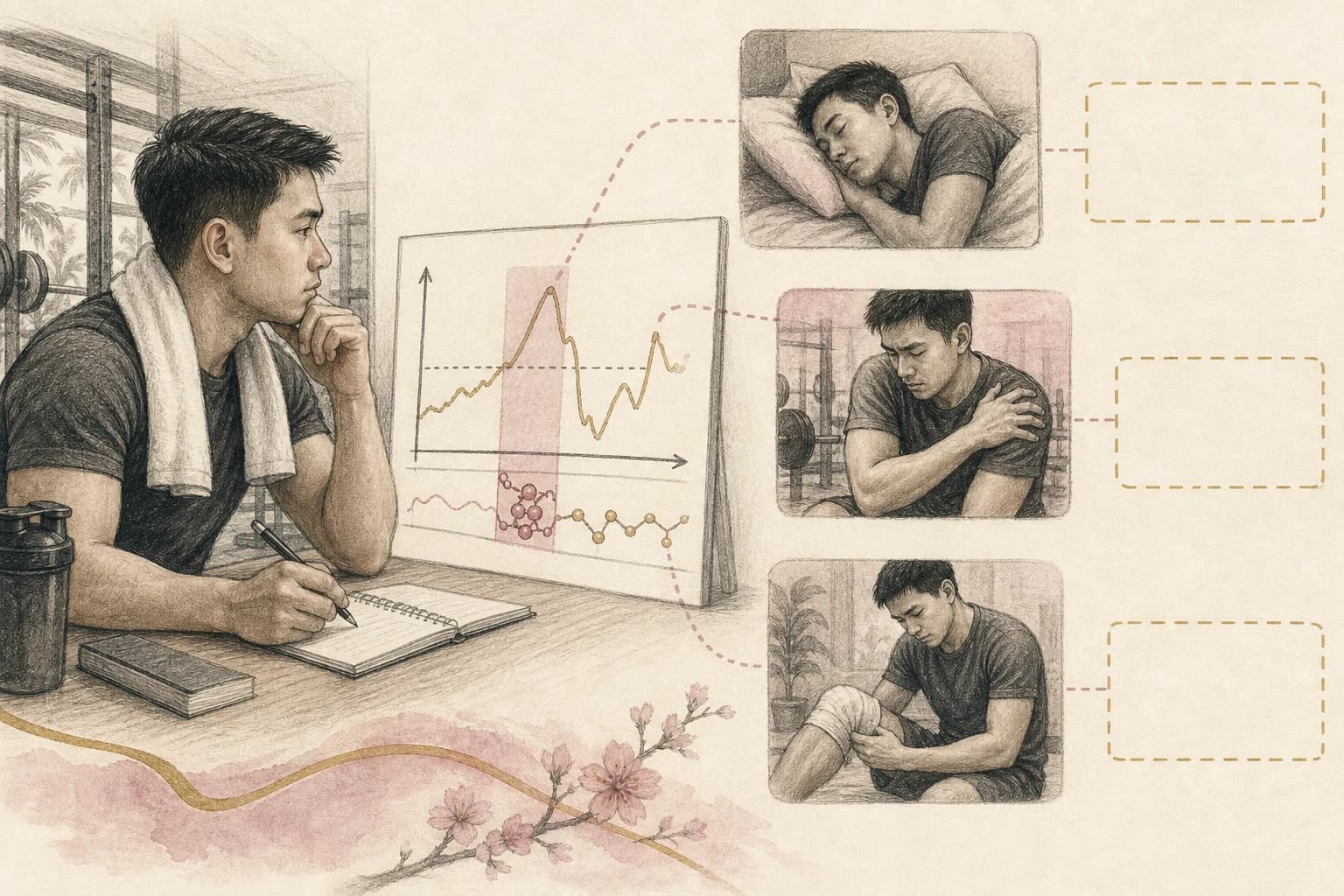
CJC-1295 increased growth hormone and IGF-1 in short randomized human trials, but those studies did not measure sleep quality, training recovery, injury healing, or gym performance. The hormone finding is real; the popular sleep-and-recovery conclusion was not tested there.
Other sources add a small serum-protein analysis, an unfinished trial protocol, and a mouse combination finding. None confirms that CJC-1295 alone improves sleep or recovery in people. Filipino readers should look for the exact outcome rather than assuming a growth-hormone signal proves every benefit attached to it online.123
What did the main human trials measure?
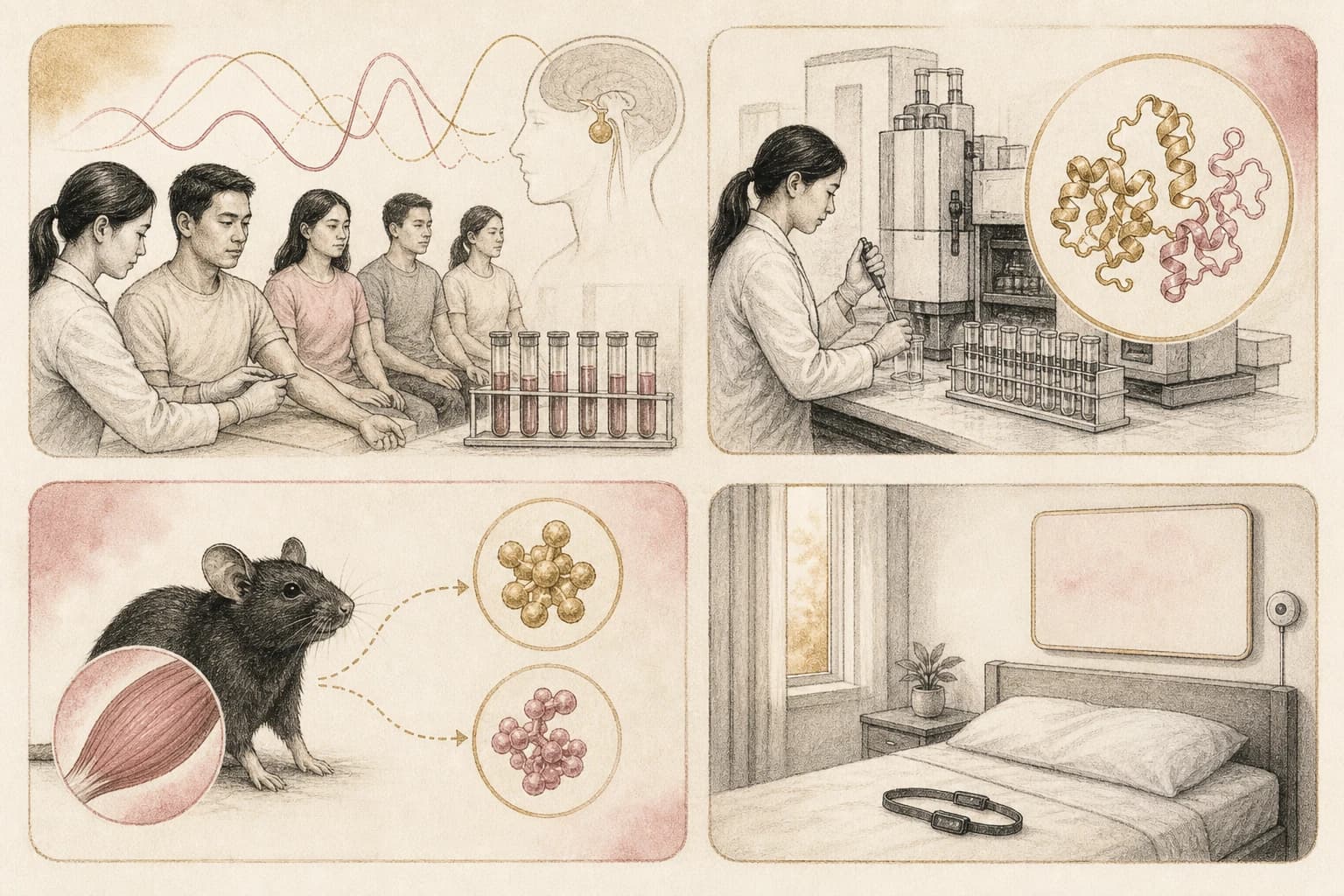
Two randomized, placebo-controlled trials studied healthy adults aged 21 to 61. CJC-1295 was evaluated as a long-acting analogue of growth hormone-releasing hormone.1
The main outcomes were growth hormone, IGF-1, pharmacokinetics, and short-term safety. The trials lasted 28 or 49 days.1
CJC-1295 produced exposure-dependent increases in average GH and IGF-1. After a single study exposure, reported hormone changes lasted for days rather than minutes.2
That persistence is a pharmacology result. It tells researchers that the compound had sustained biological activity under the trial conditions.
It does not tell us whether participants slept longer, woke less often, felt less sore, returned to training sooner, healed an injury, or improved athletic performance. Those outcomes were not the trial’s stated measures.12
Readers researching CJC-1295 with DAC can view its live catalog details below. The listing identifies the catalog item and is separate from the evidence discussed here.
Why are sleep claims easy to overread?
Growth hormone has a natural relationship with sleep physiology, so the marketing story can sound intuitive. Yet a biological relationship is not the same as a controlled test of a sleep intervention.
A convincing sleep study would define the participants, measure sleep directly, compare groups, and report both benefits and adverse events. Depending on the question, it might use validated questionnaires, actigraphy, or sleep-laboratory measurements.
The CJC-1295 trials in this research reviewed here did not report those outcomes. A higher hormone concentration should not be rewritten as deeper sleep or better sleep quality.
Personal anecdotes are also difficult to interpret. Training load, caffeine, work shifts, stress, illness, alcohol, room conditions, and expectation can all change how a person sleeps.
Sleep also has several dimensions. Falling asleep faster, remaining asleep, spending time in different sleep stages, and feeling alert the next day are related but distinct outcomes. One casual phrase such as “better sleep” can hide which change is being claimed.
A proper trial should define that outcome before collecting results. Otherwise, a promoter can select whichever impression sounds favorable after the fact, while ignoring neutral measures or nights that did not fit the story.
For Philippine gym readers balancing commutes, late sessions, and changing work schedules, those ordinary factors may be especially important. Local relevance does not require inventing local prevalence; it means asking whether the study resembles the reader’s actual situation.
Does serum-protein research prove recovery?
A small analysis examined stored serum from 11 healthy young men before and one week after CJC-1295 exposure. Researchers found several protein-profile changes, including one spot related linearly to IGF-1 levels.3
The authors presented the proteins as potential biomarkers and said their molecular links still needed clarification. A candidate marker is an early research lead, not a validated measure of muscle repair or recovery.3
Recovery itself is not one endpoint. It can mean less soreness, restored force, return to training, tissue healing, improved sleep, or lower injury recurrence. A paper should specify which of these it measured.
Protein-profile changes can help reveal biological pathways. They cannot replace a trial that tests the functional outcome claimed in the advertisement.
This is another place where wording matters. “Associated with serum changes” is supported. “Accelerates recovery” requires different direct evidence.
What about the CJC-1295 and ipamorelin animal finding?
A sports-medicine review described improved maximum tetanic tension in a mouse model of glucocorticoid-induced muscle loss. The intervention combined CJC-1295 with ipamorelin.4
The review labels the finding as animal research. The model involved induced muscle loss, not ordinary post-workout recovery in healthy people.
Because the compounds were combined, the result cannot be assigned to CJC-1295 alone. It also cannot prove that the pairing is suitable, effective, or safe in humans.
Reviews of injectable peptides describe uncertain safety profiles, product-quality concerns, and anti-doping restrictions around growth-hormone-axis compounds. Those class-level concerns do not give a product-specific risk rate, but they belong in a complete gym discussion.5
Readers comparing this topic with Ipamorelin can view its live catalog details below. It is a separate catalog reference, not a suggested combination.
Do protocols or online stacks close the gap?
A ClinicalTrials.gov entry describes a planned randomized phase 2 study in people with HIV-associated visceral obesity. Its goals included efficacy, pharmacokinetics, safety, and tolerability.6
The registry entry reports a plan, not an outcome. It does not supply sleep or gym-recovery results.6
A critical sports review says clinical evidence for performance use is limited. It also notes that controlled therapeutic research differs from the combined practices described in bodybuilding settings.7
That difference is important because online “stacks” create a new intervention. Evidence for one compound cannot establish the effect of a mixture, and an animal combination result cannot validate a human self-directed protocol.
A review also distinguishes CJC-1295 with DAC, a GHRH analogue, from ipamorelin, a secretagogue. Sharing a hormone pathway does not make the compounds interchangeable or prove they should be combined.8
How should Filipino readers judge a recovery claim?
Ask for the outcome first. Did the study measure sleep, soreness, force recovery, injury healing, return to sport, or only hormone concentrations?
Check the species and intervention. Mouse evidence involving two compounds should not become a human claim for either ingredient alone.4
Look for time and comparison. A short pharmacology study can show how long a signal lasts without answering whether months of use improve health or performance.
Separate testimonial language from controlled evidence. “I felt recovered” may be sincere, but it cannot isolate the compound from expectation, training changes, or normal day-to-day variation.
Finally, confirm product identity and competition rules. Reviews raise supply-chain and anti-doping concerns that remain relevant even when a benefit claim lacks strong support.58
Bottom line
CJC-1295 has human evidence for sustained GH and IGF-1 changes, but the cited trials did not test sleep quality, training recovery, injury healing, or athletic performance. A small protein analysis identified potential biomarkers, while a mouse study involved CJC-1295 combined with ipamorelin in a disease model.
Those findings are scientifically interesting without supporting the broad recovery language common in gym marketing. Filipino readers should demand the exact outcome, species, intervention, and comparison behind each claim. A lasting hormone signal is not the same as a proven night of better sleep or a faster return to training.
Frequently asked questions
Did CJC-1295 raise GH and IGF-1 in humans?
Yes. Short randomized trials reported sustained, exposure-dependent increases in both measures.12
Did those trials measure sleep quality?
No. Their stated outcomes were hormone and pharmacology measures, not sleep.1
Is a protein-profile change proof of recovery?
No. The small study described potential biomarkers whose links still needed clarification.3
Was the muscle finding a human CJC-1295 study?
No. It was a mouse model and used CJC-1295 together with ipamorelin.4
Do the cards recommend stacking the two compounds?
No. They are separate catalog references and do not recommend combinations, amount guidance, treatment, or human use.
Sources
Footnotes
-
Prolonged stimulation of growth hormone (GH) and insulin-like growth factor I secretion by CJC-1295, a long-acting analog of GH-releasing hormone, in healthy adults.. The participants were healthy adults aged 21 to 61 years, and the trials lasted 28 or 49 days. The stated outcomes were hormone measures, not sleep quality, training recovery, injury outcomes, or gym performance. ↩ ↩2 ↩3 ↩4 ↩5 ↩6
-
Prolonged stimulation of growth hormone (GH) and insulin-like growth factor I secretion by CJC-1295, a long-acting analog of GH-releasing hormone, in healthy adults.. The publication reported mean growth hormone increases of 2- to 10-fold for six days or more and mean insulin-like growth factor I increases of 1.5- to 3-fold for nine to 11 days. These are biochemical findings in healthy adults, not measures of sleep or athletic recovery. ↩ ↩2 ↩3 ↩4
-
Activation of the GH/IGF-1 axis by CJC-1295, a long-acting GHRH analog, results in serum protein profile changes in normal adult subjects.. The study analyzed stored serum before and one week after exposure using protein-separation and mass-spectrometry methods. The authors said the molecular links still needed clarification and presented the proteins as potential biomarkers. ↩ ↩2 ↩3 ↩4
-
Injectable Peptide Therapy: A Primer for Orthopaedic and Sports Medicine Physicians.. The reported finding was from a mouse model and involved a combination rather than CJC-1295 alone. The review says the finding is limited to animal research. ↩ ↩2 ↩3
-
Injectable Peptides in Sports Medicine: A Structured Narrative Review of Evidence, Safety, and Antidoping Implications.. The review synthesized human and translational evidence relevant to sports medicine through August 2025. A class-level review cannot establish the same outcome or safety profile for every individual product. ↩ ↩2
-
A Multicenter, Randomized, Placebo-Controlled, Double-Blind, Phase 2 Study to Evaluate the Efficacy and Safety of CJC 1295 Administered for 12 Weeks in HIV Infected Patients With HIV Associated Visceral Obesity. The registry entry describes the protocol and its planned comparisons. A registry objective is not an outcome result. ↩ ↩2
-
A new era of doping? Use of peptide and peptide-analog drugs in recreational and professional sport and bodybuilding: a critical review.. The review discusses recreational and professional sport and bodybuilding rather than a Philippine population. It does not establish how common peptide use is among gym-goers. ↩
-
The emerging landscape of performance-enhancing peptides modulating GH-IGF1 axis: bridging the gap between clinical evidence and patient self-administration.. The review contrasts peer-reviewed pharmacology and clinical evidence with online self-administration material. A shared pathway label does not make two compounds interchangeable or show that they should be combined. ↩ ↩2