TL;DR
- A public social-media pitch deserves extra scrutiny when the Philippine FDA record classifies the exact named semaglutide product as a prescription drug.1
- Philippine promotion rules reject one-sided evidence, unsupported superlatives, and vague safety or efficacy claims, making those patterns useful warning signs in an ad.2
- Check the exact product and the exact seller separately because the Philippine FDA Verification Portal lists registered products and licensed establishments as different records.3
- WHO’s confirmed falsified batches came from three countries outside the Philippines, but its warning still supports avoiding unfamiliar or unverified online sources.4
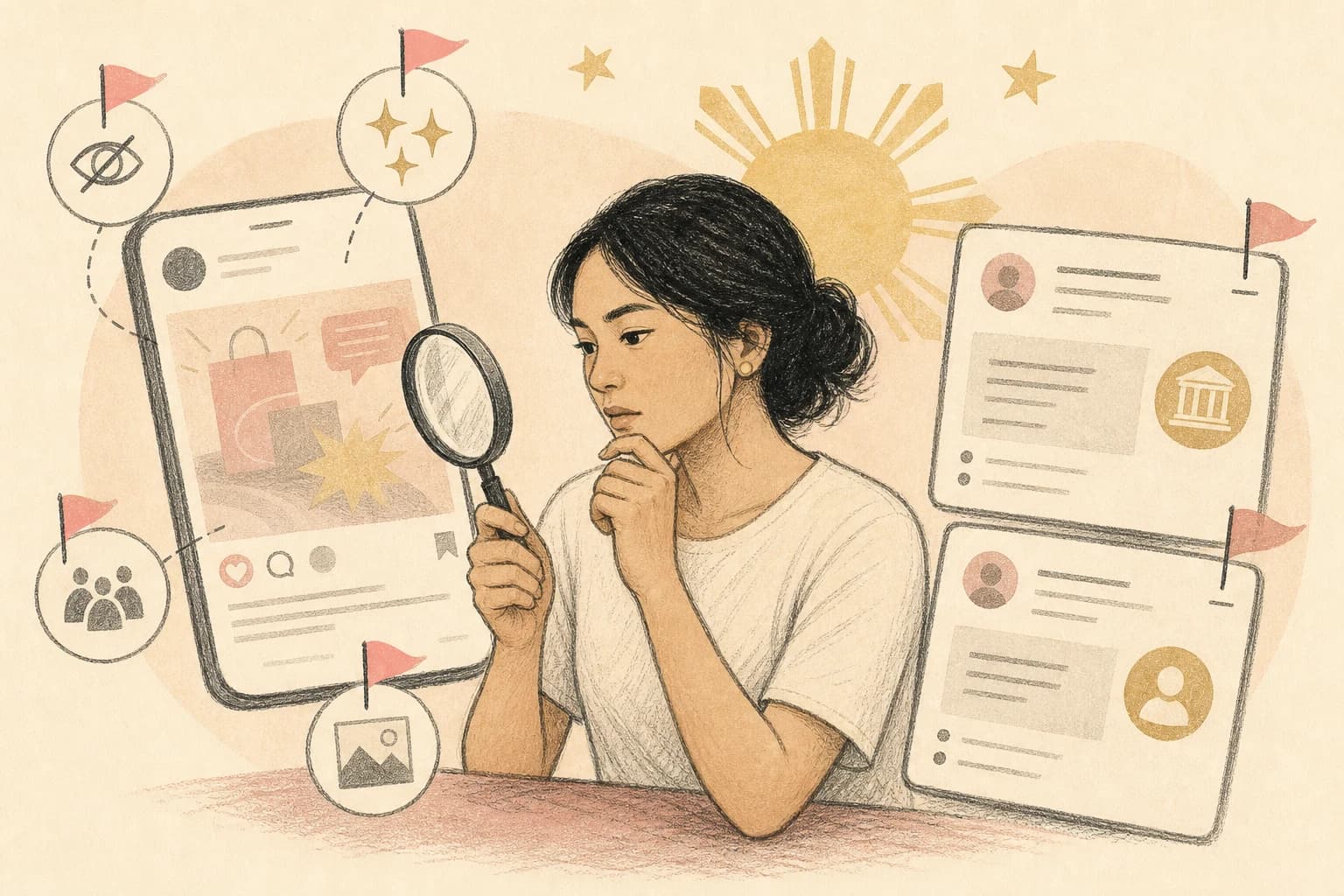
For Filipino readers, a GLP-1 post can arrive as a Reel, a boosted clinic video, a marketplace screenshot, or a message forwarded by family. The format feels casual, but the claim may be serious. A good first response is neither trust nor ridicule. Pause, separate the ad from the evidence, and check what the Philippine regulator actually records.3
First, read the post as a regulated message
A red flag is a reason to slow down, not proof that a seller has broken the law. Philippine Administrative Order No. 2015-0053 covers information, advertising, promotion, sponsorship, and other marketing involving prescription pharmaceutical products and medical devices.5 A current Philippine FDA portal record also classifies one exact named semaglutide product as a prescription drug and a GLP-1 analogue.1
That gives readers a plain starting point. Ask what the post is doing: sharing general education, or steering the public toward a named prescription product? Then ask who appears to be speaking, who may benefit, and whether the claims can be checked outside the post. The order is a screening guide, not a case ruling on every Reel or private message.5 A suspicious pattern calls for verification, not an accusation.
Semaglutide is named here only as the neutral catalog reference below.1
Red flag one: a prescription pitch dressed as lifestyle content
An ad may avoid the word “advertisement” while still working like one. It may pair a named product with a transformation montage, a booking link, and a direct-message prompt. The Philippine rule’s scope is broad enough to include information, promotion, sponsorship, and other marketing activity around prescription products.5
The messenger also matters. The order says covered companies must not hire or contract a health professional or health worker to endorse a pharmaceutical product through social media.6 It separately says company agents must not directly promote prescription products to patients or their families.6 A white coat, clinic backdrop, or professional title is therefore not automatic proof of an acceptable promotion. The record does not let a reader infer who paid a creator.6 Instead, look for a clear account owner, a disclosed commercial relationship, and a purpose that is understandable without decoding hashtags.
Red flag two: the post promises certainty and hides the limits
“Best,” “certain,” and “works for everyone” compress a complicated decision into a slogan. Philippine rules prohibit one-sided statements based on inadequate or cut-short evidence, unsupported superlatives, and vague or unreferenced claims about safety or efficacy.2 The same order specifically lists “no side effects” as prohibited wording.7
A citation in tiny text does not rescue an oversized promise. The order says quoted medical material must not be changed, distorted, or taken out of context.2 A useful post should identify the source and what it measured. Be cautious when a dramatic result lacks a named study, population, comparator, or time frame.2 Missing details make the claim hard to audit, but do not prove the opposite result. Withhold confidence until the full source supports the sentence.
Verify the product and the seller as two separate checks
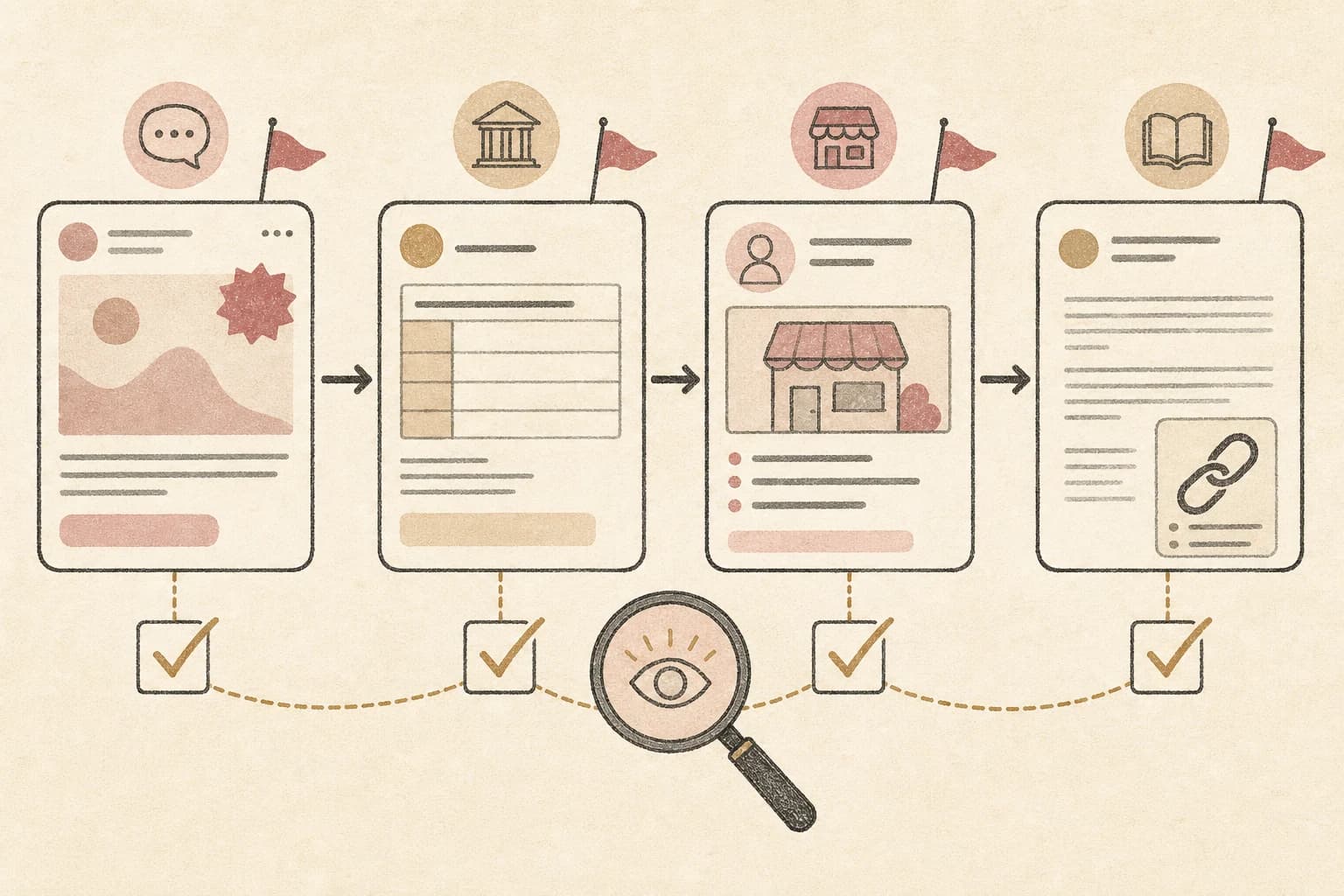
The Philippine FDA Verification Portal supports public checks of licensed establishments and registered or notified health products.3 A product record and a seller record answer different questions.3 Start with the exact name shown in the post, then compare its registration details with the portal entry.
Next, search the exact business name, not only the social-media handle. The portal lists drugstores whose licensed activities include online ordering and delivery.8 Each entry belongs to a named establishment and address.8 A familiar logo or nearly identical username does not inherit that record.8 If details do not line up, stop treating the profile as proof. Verify through the regulator or an independently located establishment channel.
A badge or registration number is not the whole answer
Screenshots are easy to crop, and official-looking seals can be placed beside unrelated text. The Philippine FDA says its portal information is for verification, but it is not regulatory advice and does not replace formal certifications issued for lawful purposes.9 That limit is useful: a portal match is one check, not a complete authenticity decision.
Read the full row, not just the first familiar word. Compare the exact product name, establishment, address, registration or license number, and validity dates shown by the portal.3 Then return to the ad. Does the account identify the same entity, or does it merely borrow a manufacturer’s name and product image? Does a claimed number belong to the item being offered? A mismatch is a reason to stop. A match still does not turn every statement in the post into an FDA-reviewed claim.9
Short videos can make missing context hard to notice
A fast Reel can feel convincing because it removes pauses, uncertainty, and boring detail. One 2025 study examined 96 English-language full-length YouTube videos and 93 shorts returned by four semaglutide-related searches.10 It was a defined YouTube sample, not a study of Philippine ads or every GLP-1 post.10
Within that sample, full-length videos scored higher than shorts on three content-quality measures.11 The researchers also found that many sampled videos left out counterfeit risk and other safety topics.11 This does not make every short video false.11 It does show why production quality, confidence, and view count are weak substitutes for complete information. Pause the clip and look for the source, sponsor, qualifications, limits, and date. If none can be found, treat the video as a lead to investigate, not as the final answer.
Tirzepatide is named here only as the neutral catalog reference below.
A testimonial is a story, not a verification method
Before-and-after images and first-person stories can describe someone’s experience, but they cannot verify the identity of a product or seller. The Philippine FDA portal exists so the public can check regulated products and establishments outside the ad.3 That independent step matters more than the creator’s certainty.
Be careful when the post treats questions as disloyalty: “limited slots,” “DM only,” “do not overthink,” or comments switched off. These are persuasion cues, not regulatory evidence.2 The Philippine promotion order requires balance, current support, and claims grounded in evidence.2 It also bars covered companies from arranging health-worker social-media endorsements of pharmaceutical products.6 Do not shame the person in the testimonial. Separate what the story can show from what it cannot. Identity, licensing, and claim accuracy each need their own check.
Global falsification alerts need accurate geography
WHO confirmed three falsified batches of a named semaglutide product found in Brazil, the United Kingdom, and the United States.4 WHO also said its monitoring system had seen more falsification reports across regions since 2022.4 Those facts are relevant to online caution, but they are not evidence of Philippine prevalence or a Philippine detection.4
WHO advises using authorized or licensed pharmacies and avoiding unfamiliar or unverified online sources.12 It also recommends checking manufacturer information, batch number, expiration date, and visible damage.12 These checks cannot authenticate every item.12 They can expose obvious gaps before a polished feed creates false comfort. If a post refuses to name the seller, hides traceable details, or blocks independent verification, leave the transaction path. Preserve screenshots if you plan to ask the regulator about the account or offer.
Bottom line
A GLP-1 social-media ad should survive checks outside its caption. In the Philippines, start with the FDA record for the exact product and license details of the exact seller.3 Treat public prescription-product promotion, unsupported superlatives, “no side effects,” disguised sponsorship, and borrowed credentials as reasons to pause.2 Keep the conclusion narrow: a warning sign is not a final legal judgment, while an official-looking badge is not full verification.9 WHO’s alert supports avoiding unverified online sources, but it does not document Philippine prevalence.4 Separate story, claim, product, and seller, then check each one.
This article is educational research context, not medical advice. Catalog links are neutral references and do not imply a treatment or human-use recommendation.
Frequently asked questions
Is every GLP-1 post on social media an advertisement?
Not necessarily. The useful question is what the post does, not its label. Philippine rules cover advertising, promotion, sponsorship, and other marketing activity involving prescription pharmaceutical products.5 A booking link, sales prompt, or undisclosed commercial role may justify a closer look, but context still matters.
Can I trust a post because a doctor appears in it?
A professional title does not verify the sponsor or the claim. Philippine rules say covered companies must not employ or contract health professionals or health workers to endorse pharmaceutical products on social media.6 The rule does not prove who funded a specific creator, so check disclosures and sources before drawing a conclusion.
What should I search in the Philippine FDA portal?
Check the exact product name and registration details, then search the exact establishment name separately. The portal publishes registered or notified health products and licensed establishments for public verification.3 Its online-ordering list also identifies drugstores with that licensed activity at the establishment level.8
Does a portal match prove the social-media account is genuine?
No. The Philippine FDA says portal information is for verification, not regulatory advice, and it does not replace formal certifications.9 Match the name, address, license or registration number, and dates. A real record can still be copied by a look-alike page, so verify the account independently.
Are short videos always less reliable than long videos?
No. A 2025 YouTube study found higher content-quality scores for full-length videos than shorts within its defined English-language sample.11 It did not study Philippine ads or prove that every short video is poor.10 Use length as a prompt to check missing context, not as a verdict.
Did WHO find falsified semaglutide in the Philippines?
The cited WHO alert confirmed three batches in Brazil, the United Kingdom, and the United States.4 It did not describe them as Philippine detections.4 The alert supports caution with unverified sources, but not a Philippine prevalence claim.
Where can a suspected reaction or product problem be reported?
The Philippine FDA reporting form accepts suspected adverse-reaction and product-defect reports, even when the reporter is unsure about causation.13 The form lists online, email, telephone, mail, and regional-office routes.13 A submitted report supports safety monitoring; it does not by itself prove what caused an event.13
Sources
Footnotes
-
FDA Verification Portal human-drug record for semaglutide. Product-specific Philippine regulatory record in the FDA Verification Portal. The entry supports only the named product record and classification; it does not establish the identity, quality, status, or availability of a catalog item or a social-media offer. ↩ ↩2 ↩3
-
Administrative Order No. 2015-0053: Implementing Guidelines on the Promotion and Marketing of Prescription Pharmaceutical Products and Medical Devices. Specific promotional-information provisions in Administrative Order No. 2015-0053. The rule supplies a screening standard, not a final case-specific enforcement decision. ↩ ↩2 ↩3 ↩4 ↩5 ↩6 ↩7
-
FDA Advisory No. 2023-2238: Utilization of the FDA Verification Portal. FDA Advisory No. 2023-2238 describing the portal and its public verification purpose. A matching name should be checked at the exact establishment and product level rather than treated as proof for every similarly named account or offer. ↩ ↩2 ↩3 ↩4 ↩5 ↩6 ↩7 ↩8
-
WHO issues warning on falsified medicines used for diabetes treatment and weight loss. WHO medical product alert and public warning issued on 20 June 2024. The confirmed batches named in the alert were not reported as Philippine detections, so the record must not be presented as Philippine prevalence evidence. ↩ ↩2 ↩3 ↩4 ↩5 ↩6 ↩7
-
Administrative Order No. 2015-0053: Implementing Guidelines on the Promotion and Marketing of Prescription Pharmaceutical Products and Medical Devices. National Philippine Department of Health rules published through the FDA. The order has defined scope and regulated actors; a reader should not infer a legal finding about a specific post from this general rule alone. ↩ ↩2 ↩3 ↩4
-
Administrative Order No. 2015-0053: Implementing Guidelines on the Promotion and Marketing of Prescription Pharmaceutical Products and Medical Devices. Company-promotion restrictions in Administrative Order No. 2015-0053. The text concerns covered company conduct and does not prove who funded or directed any particular creator. ↩ ↩2 ↩3 ↩4 ↩5
-
Administrative Order No. 2015-0053: Implementing Guidelines on the Promotion and Marketing of Prescription Pharmaceutical Products and Medical Devices. Specific prohibited wording in Administrative Order No. 2015-0053. The provision does not mean every informal comment using similar language has already been judged by the regulator. ↩
-
FDA Verification Portal list of drugstores with online ordering and delivery. Current online-ordering and delivery list in the Philippine FDA Verification Portal. An entry belongs to the named establishment and address; it does not automatically validate a look-alike social-media page. ↩ ↩2 ↩3 ↩4
-
FDA Advisory No. 2023-2238: Utilization of the FDA Verification Portal. Disclaimer in FDA Advisory No. 2023-2238. A portal check is a useful screen, not a complete authenticity investigation or a case-specific legal decision. ↩ ↩2 ↩3 ↩4
-
Online Information About Side Effects and Safety Concerns of Semaglutide: Mixed Methods Study of YouTube Videos. Mixed-methods content analysis of a defined YouTube search sample. The sample was English-language YouTube content, not Philippine social-media advertising and not all online GLP-1 content. ↩ ↩2 ↩3
-
Online Information About Side Effects and Safety Concerns of Semaglutide: Mixed Methods Study of YouTube Videos. Comparative content-quality results within the 2025 YouTube sample. The findings describe sampled content and do not prove that every short video, creator, testimonial, or Philippine post is unreliable. ↩ ↩2 ↩3 ↩4
-
Semaglutide injection products: Questions and answers. WHO public guidance on avoiding falsified semaglutide products. These checks can identify warning signs but cannot authenticate every product or replace advice from a health professional or regulator. ↩ ↩2 ↩3
-
Philippine FDA suspected side-effects reporting form. Official Philippine pharmacovigilance reporting instructions for consumers and health professionals. A report records a suspicion for safety monitoring; it does not by itself establish causation. ↩ ↩2 ↩3