TL;DR
- A Philippine FDA registration number is useful only when the full portal record matches the name, form, strength, manufacturer, and validity details shown for that product.1
- A QR code proves little by appearance alone; it matters who issued it, where it leads, and whether the official destination confirms the document it was designed to verify.2
- A receipt can connect a purchase to a seller, while detailed invoices and delivery records from licensed supply-chain actors carry more weight in an official counterfeit-drug inquiry.3
- The strongest practical check layers the official product record, seller licence, transaction trail, and package details, while leaving a suspect unit for authorized examination.4
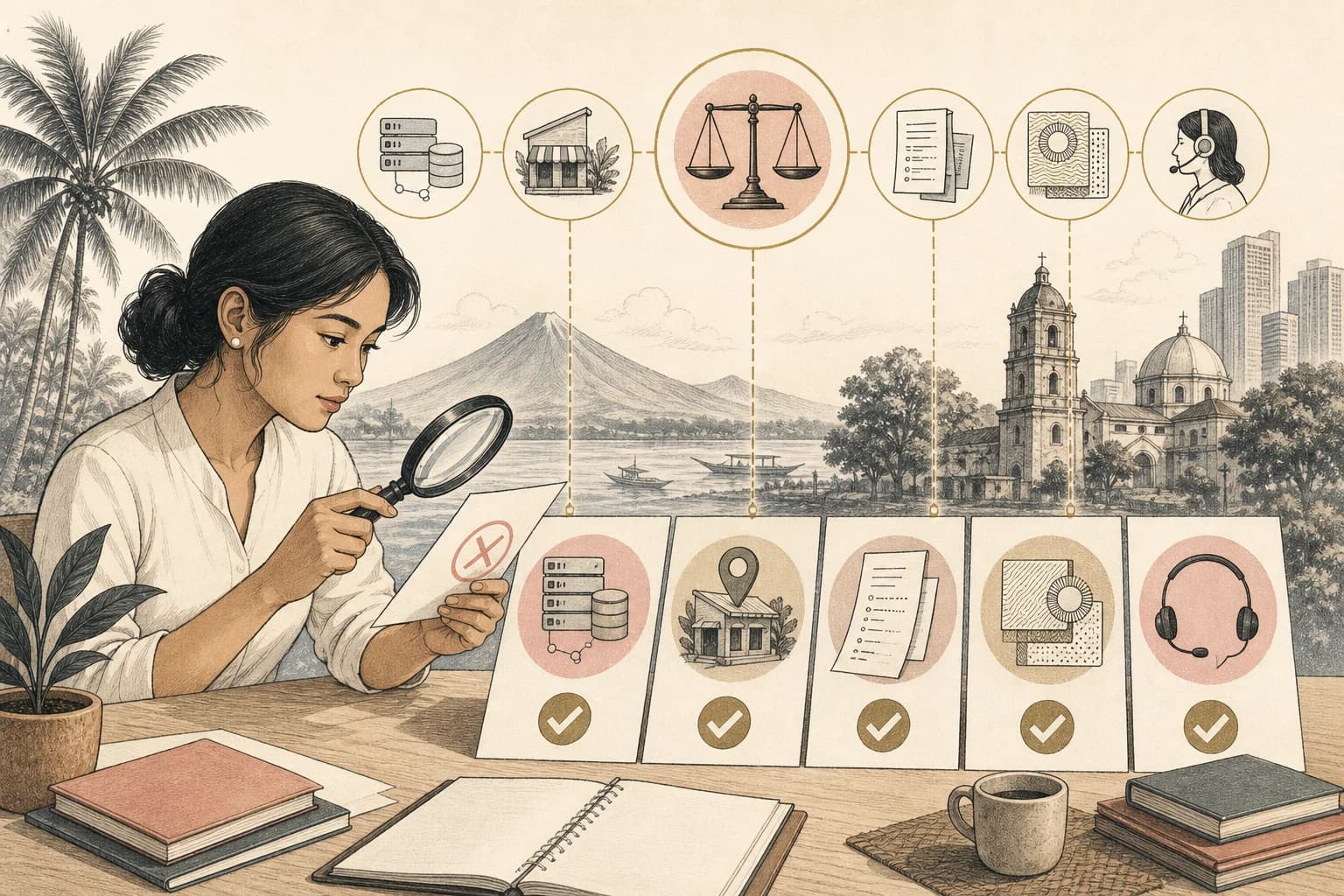
For Filipino readers, product checking often begins with a familiar trio: scan the square code, search the printed number, and save the resibo. Each step can reveal something useful.5 Yet the three clues answer different questions, and none automatically proves what is inside one physical unit.4 A sound check connects the record, seller, transaction, and package before drawing a conclusion.4
Start with the question each clue can answer
Verification is not one yes-or-no test.4 A registration search asks whether an official regulatory record matches the described product.5 A seller search asks whether the named establishment holds the relevant licence.6 A receipt asks where and when a transaction occurred.3 Package details ask whether the parts of the item agree with one another.7
These checks also address different problems.8 WHO separates substandard, unregistered, and falsified medical products because those terms do not mean the same thing.8 An authorized product can fail quality standards, while a falsified one can misstate its identity, composition, or source.8 That is why one matching number cannot settle every question about one item.4
Tirzepatide is named here only as the neutral catalog reference below.
Read the registration record, not just the number
The Philippine FDA Verification Portal publishes lists of licensed establishments and registered or notified health products for public checking.5 Its drug register shows much more than a registration number.1 Fields can include the generic name, brand, strength, form, classification, manufacturer, origin, issue date, and expiry date.1
Treat the search result like an identity card with several lines.1 Compare the spelling and every relevant field with the item being checked.1 A number beside a different name, form, strength, or manufacturer is not a complete match to that record.1 Dates matter because the portal also displays issuance and expiry information.1
The careful conclusion stays narrow.4 A matching portal entry supports that the described product has a regulatory record.5 It does not, by itself, authenticate the contents of the specific package in front of you.4
A QR code is a route, not a verdict
A QR code is useful when an identified issuer connects it to an official verification system.2 One Philippine example appears on FDA Licenses to Operate for covered medical-device retailers.2 Under the relevant circular, the QR verifier helps establish the legitimacy of that LTO document.2 That precise purpose should not be stretched to every code printed on every product.2
After scanning, inspect the destination before trusting the result.9 WHO advises people to check a verification logo or certificate for authenticity, not merely notice that one exists.9 A code that opens a seller page, social profile, shared file, or generic product page may provide information, but it does not become an FDA check by looking polished.9
The useful question is therefore not “Did it scan?”9 Ask who issued the verifier and what exact document or record it confirmed.2

A receipt traces a sale, not the contents
A consumer receipt can preserve the seller name, date, item description, and transaction reference.10 Those details help reconstruct where a questioned item came from.10 They do not reveal its composition or prove that its packaging was never copied.4
Philippine counterfeit-drug rules show why document detail matters.3 During an official inspection, regulators may request sales invoices, delivery receipts, or related records for suspected stock.3 The rules recognize documents from licensed manufacturers, traders, distributors, wholesalers, or importers when the lot number and expiry date appear.3 That is a more specific trail than a screenshot saying only “paid.”3
Save the receipt, but read it for what it is: evidence of a transaction.10 Its value rises when it identifies the real seller and connects the item to detailed, licensed supply-chain records.3 It is one link, not a final authenticity certificate.4
Verify the seller behind the screen
WHO advises obtaining medical products from trusted, licensed outlets.6 In the Philippines, the FDA Verification Portal lets the public check establishment records as well as product records.5 The seller name should match the business shown in the official entry, not only the marketplace or social platform carrying the listing.11
This distinction matters online.11 Philippine rules require a drug establishment selling directly to consumers through an online platform to hold the relevant LTO with online activity.11 A marketplace can host listings without being the drug outlet behind each sale.11 The licensed seller remains the party to identify and check.11
Read the store name, invoice name, address, and licence entry together.6 A familiar app icon cannot substitute for that comparison.11 Seller verification narrows the supply-chain question, though it still does not authenticate a physical unit on its own.4
Let the package details cross-check one another
Packaging is a set of linked details, not a single shiny seal.7 WHO advises checking its condition, spelling, manufacturing and expiry dates, and signs of tampering.7 It also advises comparing batch and expiry details on the inner and outer packaging.7 Agreement across those parts is more informative than one isolated feature.7
Mismatch is a reason to pause.7 A different batch number inside, broken seal, unexplained label change, or inconsistent date deserves further checking.7 Still, tidy printing is not proof of authenticity.9 WHO notes that some falsified medical products look almost identical to genuine ones.9
Use appearance to find inconsistencies, not to declare certainty.9 Photograph the package from several sides and keep the lot and expiry details readable.10 Those records can support a later review even though the photos do not settle composition or quality.10
Semaglutide is named here only as the neutral catalog reference below.
What official authentication can involve
When a suspected drug reaches a formal Philippine investigation, the process goes beyond scanning and visual comparison.12 The rules allow regulators to collect samples for examination or evaluation of genuineness and authenticity.12 They may also ask the registered brand owner whether the lot and expiry details belong to its records.12
That answer must be supported by batch, production, and distribution records and validated for official use.12 Physical examination can resolve some cases, while other cases may require laboratory or product-standard review.12 This explains the limit of consumer clues.4 A buyer can preserve evidence and detect conflicts, but cannot recreate the regulator’s full process at home.12
Do not convert uncertainty into an accusation.13 Describe the item as suspected, keep it and its records available, and let an authorized review determine the finding.13 Careful language protects the accuracy of the report.13
Turn separate clues into one verification file
A practical file begins with the exact seller identity and its official licence record.6 Add the complete FDA product entry, not just a copied registration number.1 Keep the receipt or invoice, order page, transaction reference, and any seller messages.10 Photograph the outer and inner packaging, seal, lot number, and expiry date.10
Next, write down what each clue confirmed and what it did not.4 The portal may confirm a matching regulatory entry.5 The seller search may confirm a licence record.6 The receipt may connect the payment to that seller.10 The package comparison may reveal agreement or a mismatch.7
If concern remains, WHO advises contacting a health professional and reporting the suspicion to the national regulator.13 Philippine FDA counterfeit advisories publish channels for reports about continued sale or distribution.13 A clear file gives that report traceable details without pretending the buyer has already proven the case.10
Bottom line
A QR code, registration number, or receipt can be useful, but only within its proper job.4 The official Philippine FDA record checks regulatory details, while the establishment record checks the named seller.5 A receipt preserves the transaction trail, and package details help expose inconsistencies.10 None alone proves the identity, composition, or quality of one physical unit.4
The better method is layered and calm.4 Match the full product record, verify the actual seller, retain detailed transaction records, and compare inner and outer packaging.4 If the signals conflict, preserve the item and report a suspicion rather than announcing a verdict.13 Formal authentication may depend on official examination and supply-chain records that consumers cannot reproduce themselves.12
This article is educational research context, not medical advice. Catalog links are neutral references and do not imply a treatment or human-use recommendation.
Frequently asked questions
Does a valid FDA registration number prove my package is genuine?
No. A matching entry supports the existence of a Philippine regulatory record for the described product.5 Compare the name, form, strength, manufacturer, and dates, not only the number.1 Authentication of a suspect physical unit may require official examination and supply-chain records.12
What should happen when I scan a QR code?
The result should fit the code’s stated purpose and lead to a verifier controlled by the identified issuer.2 An FDA QR verifier on a covered LTO checks that document.2 A scan that opens a seller page or shared file does not perform the same regulatory check.9
Is an official receipt enough to verify a product?
A receipt is useful because it records a transaction and may identify the seller.10 Philippine investigation rules give more specific value to supply-chain invoices or delivery records from licensed actors that include lot and expiry details.3 Neither document alone tests what is inside a package.4
How can I check an online seller in the Philippines?
Search the Philippine FDA Verification Portal for the establishment named as the actual seller.5 For direct online drug sales, the relevant establishment needs an LTO with online activity.11 Do not treat the marketplace name alone as the identity or licence of every shop using it.11
Which package details should agree?
WHO advises checking condition, spelling, dates, seals, and the appearance of the item.7 Batch and expiry details on inner and outer packaging should match.7 Consistency is a useful screen, but a neat package cannot rule out falsification because close copies can be difficult to detect.9
What should I keep if something seems wrong?
Keep the item, inner and outer packaging, receipt or invoice, seller details, order record, messages, and clear images of the lot and expiry information.10 Report the concern as a suspicion to the Philippine FDA and discuss it with a qualified health professional.13 Official review determines the finding.12
Sources
Footnotes
-
FDA Verification Portal: All Drug Products. Current field structure of the public Philippine FDA drug-product register. A number-only match is weaker than a match across the full record, and the register may be updated on its stated schedule. ↩ ↩2 ↩3 ↩4 ↩5 ↩6 ↩7 ↩8 ↩9
-
FDA Circular No. 2022-007: Guidelines on the Use of the FDA eServices Portal System for License to Operate Applications of Retailers of Medical Devices. Philippine FDA eServices procedure for a defined class of regulatory documents. This rule concerns the legitimacy of the LTO document; it does not make every QR code on every health product an FDA authenticity tool. ↩ ↩2 ↩3 ↩4 ↩5 ↩6 ↩7 ↩8
-
Rules and Regulations Implementing Republic Act No. 8203, the Special Law on Counterfeit Drugs. Philippine administrative procedure for investigating suspected counterfeit drugs. A consumer receipt may help identify a transaction, but the official rule gives evidentiary weight to detailed records from licensed supply-chain participants. ↩ ↩2 ↩3 ↩4 ↩5 ↩6 ↩7 ↩8
-
FDA Advisory No. 2023-2238: Utilization of the Food and Drug Administration Verification Portal; Substandard and falsified medical products: Advice to patients and consumers; Rules and Regulations Implementing Republic Act No. 8203, the Special Law on Counterfeit Drugs. Synthesis of Philippine regulatory records, Philippine investigation procedures, and WHO consumer screening guidance. Conclusive findings about a suspect unit may require regulator or manufacturer review and, where appropriate, sample examination. ↩ ↩2 ↩3 ↩4 ↩5 ↩6 ↩7 ↩8 ↩9 ↩10 ↩11 ↩12 ↩13 ↩14 ↩15 ↩16 ↩17
-
FDA Advisory No. 2023-2238: Utilization of the Food and Drug Administration Verification Portal. Philippine FDA advisory describing the portal's purpose and contents. A portal record is regulatory information; it is not a laboratory examination of the physical item in a reader's hand. ↩ ↩2 ↩3 ↩4 ↩5 ↩6 ↩7 ↩8 ↩9
-
FDA Advisory No. 2023-2238: Utilization of the Food and Drug Administration Verification Portal; Substandard and falsified medical products: Advice to patients and consumers. WHO consumer advice paired with the Philippine public licensing register. A licensed seller reduces one source of uncertainty but does not replace checks on the exact product record, package, and transaction. ↩ ↩2 ↩3 ↩4 ↩5
-
Substandard and falsified medical products: Advice to patients and consumers. WHO screening advice for medical products received in person or through online purchase. A package that passes visual checks may still be falsified because close imitation can be difficult to detect. ↩ ↩2 ↩3 ↩4 ↩5 ↩6 ↩7 ↩8 ↩9 ↩10
-
Definitions of Substandard and Falsified Medical Products. WHO regulatory definitions adopted for public-health use. The categories describe different problems and cannot be collapsed into a single judgment based on appearance. ↩ ↩2 ↩3
-
Substandard and falsified medical products: Advice to patients and consumers. WHO consumer guidance on recognizing and avoiding substandard and falsified medical products. Visual inspection and a successful scan are screening steps, not conclusive chemical or supply-chain authentication. ↩ ↩2 ↩3 ↩4 ↩5 ↩6 ↩7 ↩8 ↩9
-
Substandard and falsified medical products: Advice to patients and consumers; Rules and Regulations Implementing Republic Act No. 8203, the Special Law on Counterfeit Drugs. WHO consumer checks and Philippine complaint and investigation procedures. Preserving records supports traceability and reporting; it does not itself prove authenticity. ↩ ↩2 ↩3 ↩4 ↩5 ↩6 ↩7 ↩8 ↩9 ↩10 ↩11 ↩12
-
FDA Circular No. 2022-002: Guidelines on the Retail of Pharmaceutical Products and Health Commodities through Online Platforms. Philippine FDA rules for online ordering, e-pharmacy activity, and marketplace use. The seller named in the regulatory record matters; the presence of a listing on a familiar platform does not establish that seller's license. ↩ ↩2 ↩3 ↩4 ↩5 ↩6 ↩7 ↩8
-
Rules and Regulations Implementing Republic Act No. 8203, the Special Law on Counterfeit Drugs. Philippine procedure after a regulator identifies suspected counterfeit drug stock. This is an official investigation process, not a home test that a buyer can reproduce from packaging alone. ↩ ↩2 ↩3 ↩4 ↩5 ↩6 ↩7 ↩8 ↩9
-
Substandard and falsified medical products: Advice to patients and consumers; FDA Advisory No. 2024-1495: Public Health Warning Against a Counterfeit Drug Product. Consumer reporting guidance from WHO and a Philippine FDA counterfeit-product advisory. A suspicion should be described as a suspicion until an authorized investigation reaches a finding. ↩ ↩2 ↩3 ↩4 ↩5 ↩6 ↩7