TL;DR
- Night work can shorten or disrupt sleep, while fatigue can slow reactions, narrow attention, weaken short-term memory, and impair judgment.1
- NAD+ is essential to cellular energy chemistry, but that biological role does not prove that raising an NAD-related marker improves alertness or work performance.2
- Randomized human NAD-precursor studies produced mixed results across biomarkers, mitochondrial function, metabolism, fatigue, and sleep.3
- A small human exercise study measured the body's own MOTS-c and found no link with fitness outcomes, so it cannot support a fatigue claim.4
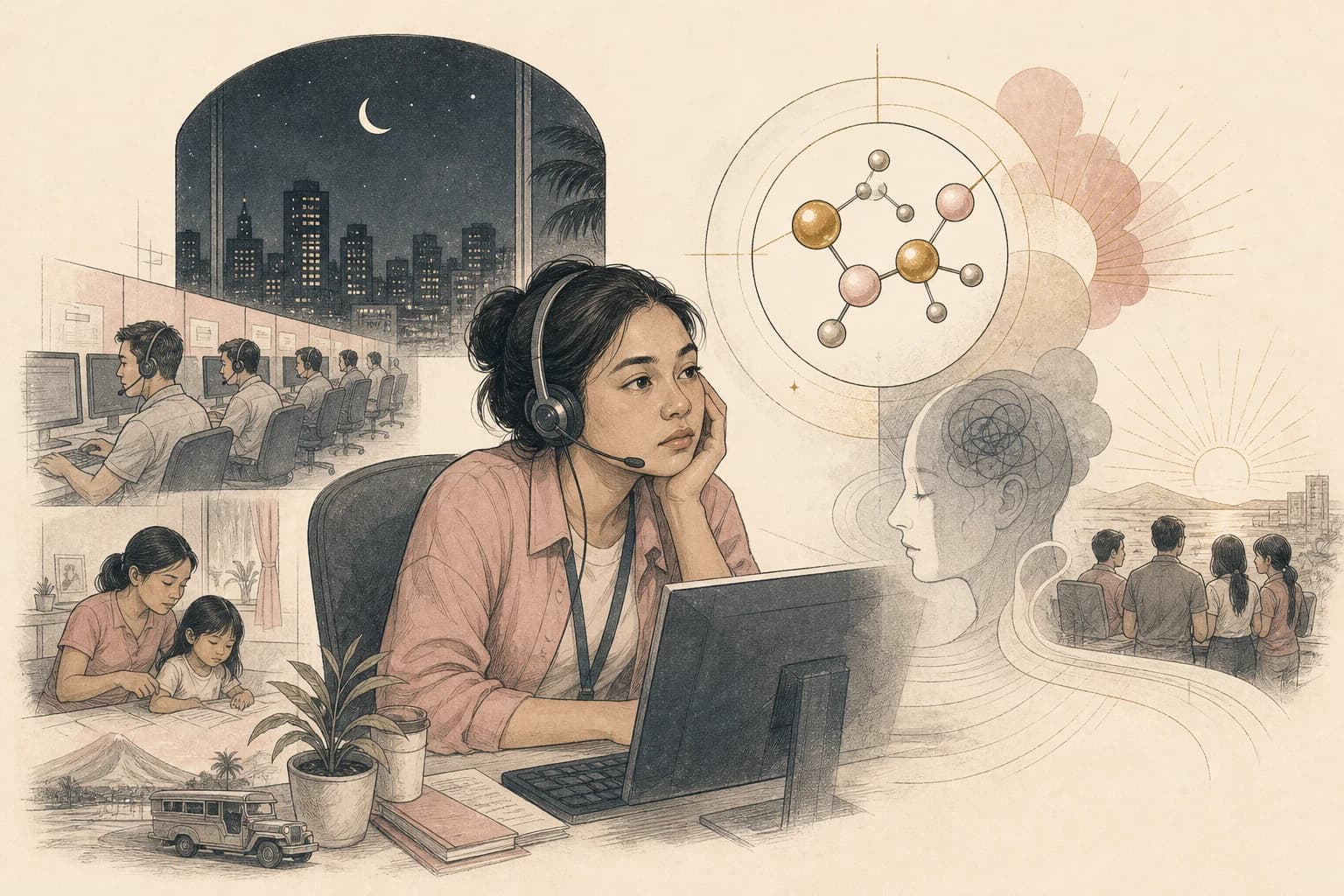
For a Filipino BPO worker, the hardest hour may arrive when customers are starting their day abroad. The screen stays bright, yet focus turns soft. A product pitch about “cellular energy” can then feel perfectly timed. The better question is not whether energy chemistry sounds scientific. It is whether research measured the same problem: alertness and fatigue during recurring night work.1
Fatigue is bigger than feeling sleepy
Workplace fatigue is not simply a bad mood after a demanding queue.1 NIOSH links it with schedules that interrupt or reduce sleep, including night work.1 Its effects can reach reaction time, concentration, short-term memory, and judgment.1 That list matters in a role built around listening, switching systems, and making careful decisions.1
The cause may also be layered.1 During a self-check, ask about daytime family duties, noise, travel, and mental stress. Those are useful questions, not proof that one worker has a disorder. The practical starting point is to separate sleep opportunity, body-clock timing, workload, and any lasting symptoms. A single “energy” label compresses those different issues into one vague promise.2
NAD+ is named here only as the neutral catalog reference below.
The body clock does not read the roster
Circadian misalignment means the central body clock is out of step with cycles such as sleep, light, and eating.5 A graveyard schedule can move behavior to the biological night even when the clock has not fully moved with it.5 This conflict is different from lacking motivation.5
A randomized crossover experiment helps show the mechanism.6 Healthy chronic shift workers completed simulated day-work and night-work schedules during two short laboratory stays.6 Under misalignment, their post-meal glucose was 5.6 percent higher.6 The study examined glucose handling, not a fatigue remedy.6 It also lasted only three days per visit.6
The result therefore explains one biological effect under controlled conditions.6 It does not predict disease for a particular agent in Cebu, Clark, Davao, or Metro Manila.6
Fatigue belongs on the workplace map
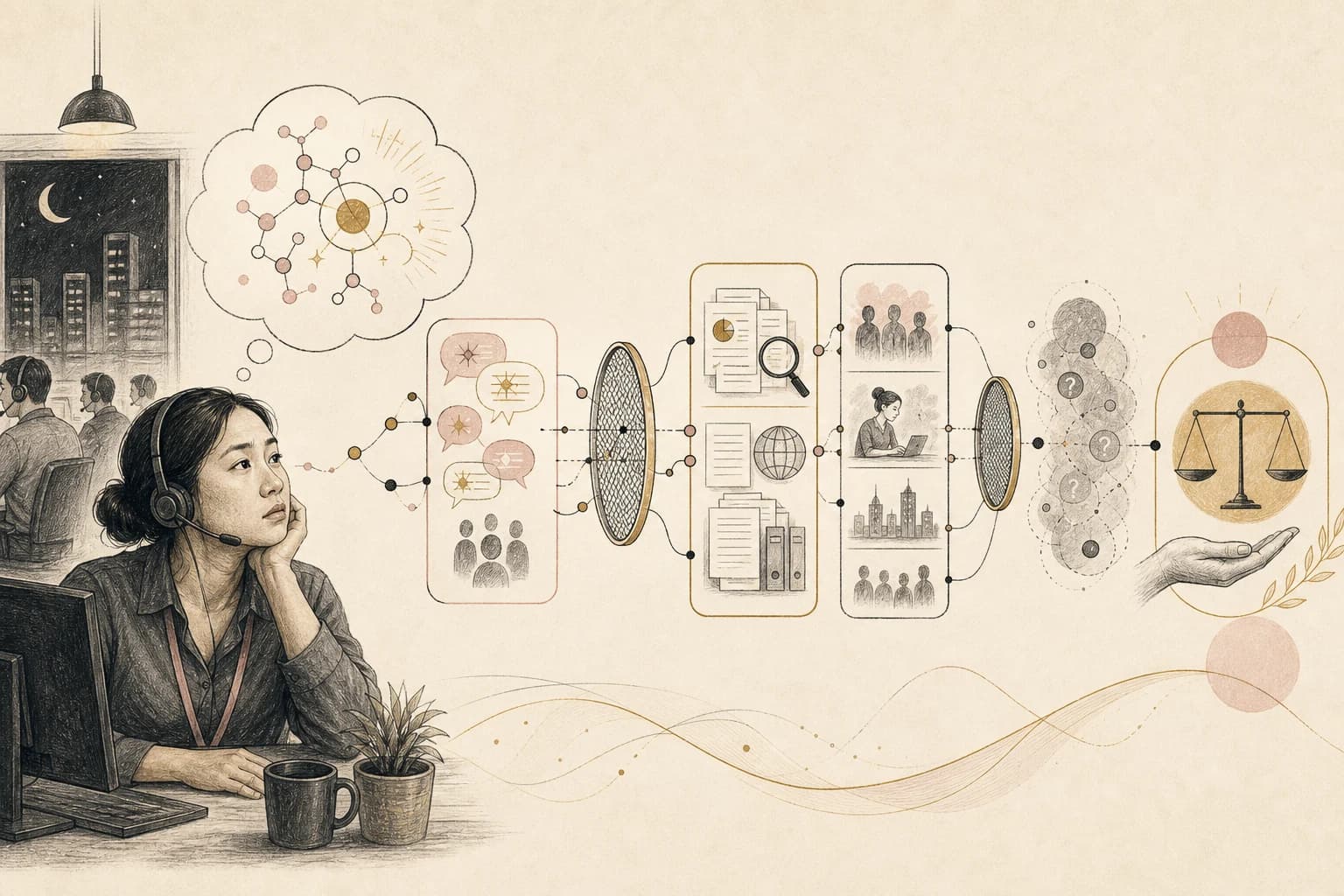
NIOSH treats fatigue control as shared work for employees and managers.7 Its guidance includes adequate sleep opportunity, a suitable sleep setting, sensible breaks, safer schedule design, and a way to report unsafe fatigue.7 That is a wider tool kit than asking a worker to push through.7
For a Philippine team, this frame makes room for real operational questions. Are shift changes predictable enough for sleep planning? Is overtime reducing recovery time? Can an agent flag unsafe fatigue without being shamed? Those questions do not assume a local rate or policy.
Personal habits still matter, but they sit inside the work system.7 A dark and quiet daytime room may support sleep, while well-timed breaks can support alertness.7 Neither step cancels a roster that repeatedly cuts recovery short.7
What NAD+ actually does
NAD is a coenzyme, meaning it helps enzymes carry out chemical reactions in cells.2 The body makes it from niacin-related inputs.2 It participates in oxidation and reduction, the transfer of electrons during metabolism.2 It also helps move potential energy from carbohydrates, fats, and proteins toward ATP.2 ATP is the cell's immediately usable energy currency.2
That biology is real, but the marketing shortcut is not.2 Being needed for energy metabolism does not mean that more produces better alertness.2 A car needs engine oil, yet an extra bottle does not explain every warning light. In the same way, a blood or muscle marker is not a direct reading of focus on a customer call.3
Research must measure each promised outcome separately.3 Fatigue, sleep quality, reaction time, and work accuracy are not synonyms for an NAD-related laboratory value.3
Human trials separate markers from outcomes
One crossover trial enrolled 12 older men for a 21-day nicotinamide-riboside period and a placebo period.8 Researchers detected changes in NAD-related muscle metabolites.8 They did not find a change in measured mitochondrial bioenergetics.8 The result shows why “the marker moved” and “energy function improved” are separate statements.8
Another trial enrolled 40 sedentary men with obesity and insulin resistance.9 After 12 weeks, nicotinamide riboside did not improve insulin sensitivity, resting energy expenditure, lipid oxidation, or body composition against placebo.9
Neither population represents Philippine night-shift agents.8 The trials asked metabolic questions rather than testing overnight alertness.9 Their value here is narrower: human outcomes must be measured, and a mechanism cannot fill in an unmeasured result.3
The fatigue findings need their full labels
A 58-person trial offers a direct lesson about outcome labels.10 It studied people with long COVID, not healthy shift workers.10 Nicotinamide riboside raised NAD+ levels, yet fatigue severity and sleep quality did not improve significantly versus placebo.10 The nicotinamide-riboside group also had more dropout.10
An 18-person crossover pilot tested a combination of nicotinamide and D-ribose in healthy middle-aged adults.11 NAD-related measures changed during the active period.11 Physical and mental fatigue scores improved during both periods, with consistently larger changes during the active period.11 The seven-day supplier-associated pilot did not study night workers.11
These findings point in mixed directions at the measurement level.3 They do not establish an NAD-precursor answer for fatigue during Philippine BPO night work.3
MOTS-c is named here only as the neutral catalog reference below.
MOTS-c belongs to another research lane
MOTS-c is a mitochondrial-derived peptide, not another name for NAD+.4 A small human study compared acute endurance exercise, resistance exercise, and a control condition.4 It measured the participants' own circulating mitochondrial-derived peptides around those sessions.4
Circulating MOTS-c was not linked with the fitness outcomes measured in that study.4 After endurance exercise, it showed a trend rather than a reported significant increase.4 Humanin, another mitochondrial-derived peptide, showed the clearer exercise response.4
This was an exercise-physiology experiment, not a test of MOTS-c as an intervention.4 It did not study call-center alertness, daytime sleep, or repeated night schedules.4 Grouping MOTS-c and NAD+ under a broad “mitochondrial energy” banner would therefore erase important differences in molecule, design, and outcome.4
Read the pitch like a careful QA check
Start with the exact noun. Did a study measure NAD+, an NAD-related metabolite, fatigue, sleep, reaction time, or job performance? Those endpoints cannot substitute for one another.3
Next, check the people and the setting. Older men, people with insulin resistance, people with long COVID, and healthy middle-aged adults answer different questions.3 None of those labels describes the Philippine BPO night-shift workforce.3 Then check the comparator, because improvement from baseline is not automatically improvement over placebo.11
Finally, put work design back into view. NIOSH places schedule design, sleep opportunity, breaks, and fatigue reporting beside individual actions.7 A cellular story may be interesting.2 It should not distract from the measured sources of workplace fatigue or replace an evaluation when sleepiness becomes persistent or unsafe.1
Bottom line
Night-shift fatigue is not a character flaw, and it is not one simple chemistry problem.1 Sleep timing, circadian alignment, recovery time, workload, and persistent symptoms belong in the same conversation.5 NAD+ has an essential role in cell metabolism, but that fact alone does not prove better alertness.2 Human precursor trials show why the distinction matters: biomarkers can move while fatigue, sleep, metabolism, or mitochondrial outcomes do not move with them.3 MOTS-c is a separate research subject, and one small exercise study cannot turn it into a workplace-fatigue claim.4 For Filipino readers, the sound approach is to match every headline to its actual population, comparator, measurement, and limit.3
This article is educational research context, not medical advice. Catalog links are neutral references and do not imply a treatment or human-use recommendation.
Frequently asked questions
Is night-shift fatigue just lack of discipline?
No. NIOSH links fatigue with nonstandard schedules that can disrupt or shorten sleep.1 Fatigue can affect attention, memory, reaction time, and judgment.1 Work demands and recovery time also matter.7 That makes fatigue a worker-safety and work-design issue, not a moral verdict about effort.7
What is circadian misalignment?
It is a mismatch between the central body clock and behavior such as sleeping, eating, and seeing light.5 In a short crossover study of chronic shift workers, simulated misalignment changed glucose handling.6 That mechanism study did not test a fatigue product or predict an individual's future health.6
Does NAD+ create energy in the body?
NAD helps cellular reactions transfer potential energy from food toward ATP, the cell's usable energy currency.2 That essential role is often simplified in advertising.2 However, the fact that a pathway needs NAD does not show that raising an NAD-related marker improves alertness, focus, or workplace performance.2
Have NAD precursors improved fatigue in human trials?
The results discussed here are mixed and population-specific.3 In a long-COVID trial, NAD+ rose without a significant advantage over placebo for fatigue or sleep.10 In a smaller combination pilot, fatigue scores improved during both active and placebo periods, which prevents a simple cause-and-effect claim.11
Why can a biomarker rise without a felt benefit?
A biomarker and a lived outcome measure different things.3 One trial found changes in muscle NAD-related metabolites without changed mitochondrial bioenergetics.8 Another found higher NAD+ without a significant fatigue or sleep advantage over placebo.10 Each outcome needs its own measurement, comparator, and interpretation.3
What does the cited MOTS-c study show?
The study measured naturally circulating mitochondrial-derived peptides around one exercise session.4 MOTS-c was not correlated with measured fitness outcomes and showed only a trend after endurance exercise.4 It did not test MOTS-c as an intervention, and it did not study night-shift fatigue or BPO performance.4
Sources
Footnotes
-
Fatigue and Work. Current U.S. occupational-safety guidance about work-related fatigue across jobs. The guidance is not a prevalence estimate for Philippine BPO workers and does not identify one cause for every tired worker. ↩ ↩2 ↩3 ↩4 ↩5 ↩6 ↩7 ↩8 ↩9 ↩10 ↩11
-
Niacin: Fact Sheet for Health Professionals. NIH Office of Dietary Supplements explanation of niacin metabolism and NAD biology. A molecule's essential cellular role does not show that adding a precursor improves alertness, fatigue, or job performance. ↩ ↩2 ↩3 ↩4 ↩5 ↩6 ↩7 ↩8 ↩9 ↩10 ↩11 ↩12 ↩13 ↩14
-
Nicotinamide Riboside Augments the Aged Human Skeletal Muscle NAD+ Metabolome and Induces Transcriptomic and Anti-inflammatory Signatures; A randomized placebo-controlled clinical trial of nicotinamide riboside in obese men: safety, insulin-sensitivity, and lipid-mobilizing effects; Effects of nicotinamide riboside on NAD+ levels, cognition, and symptom recovery in long-COVID: a randomized controlled trial; A Combination of Nicotinamide and D-Ribose Is Safe and Effective to Increase NAD+ Metabolome in Healthy Middle-Aged Adults: A Randomized, Triple-Blind, Placebo-Controlled, Cross-Over Pilot Clinical Trial. Synthesis of four randomized human studies with different populations, interventions, durations, and outcomes. The studies cannot be pooled as one effect estimate and none directly tested Philippine BPO night-shift workers. ↩ ↩2 ↩3 ↩4 ↩5 ↩6 ↩7 ↩8 ↩9 ↩10 ↩11 ↩12 ↩13 ↩14 ↩15
-
Acute endurance exercise stimulates circulating levels of mitochondrial-derived peptides in humans. Randomized comparison of one acute endurance session, one resistance session, and a control condition. The study measured endogenous circulating peptide around exercise; it did not test MOTS-c as a fatigue intervention. ↩ ↩2 ↩3 ↩4 ↩5 ↩6 ↩7 ↩8 ↩9 ↩10 ↩11 ↩12 ↩13 ↩14
-
Effects of the Internal Circadian System and Circadian Misalignment on Glucose Tolerance in Chronic Shift Workers. Definition used in a randomized crossover laboratory study of chronic shift workers. A controlled laboratory schedule does not reproduce every feature of a real BPO shift or home environment. ↩ ↩2 ↩3 ↩4 ↩5
-
Effects of the Internal Circadian System and Circadian Misalignment on Glucose Tolerance in Chronic Shift Workers. Two three-day laboratory visits comparing simulated night work with simulated day work. This was a short mechanistic study of glucose handling, not a trial of fatigue treatment or a forecast of disease for an individual. ↩ ↩2 ↩3 ↩4 ↩5 ↩6 ↩7 ↩8 ↩9
-
Fatigue and Work; Managing Fatigue During Times of Crisis: Guidance for Nurses, Managers, and Other Healthcare Workers. Occupational-safety guidance, including detailed material written for healthcare shift work. Specific schedules and controls must fit the job; the guidance is not a treatment plan or proof that one tactic will work for everyone. ↩ ↩2 ↩3 ↩4 ↩5 ↩6 ↩7 ↩8 ↩9
-
Nicotinamide Riboside Augments the Aged Human Skeletal Muscle NAD+ Metabolome and Induces Transcriptomic and Anti-inflammatory Signatures. Randomized, double-blind, placebo-controlled crossover trial in older men. The small study did not enroll night-shift workers and did not test BPO fatigue or work performance. ↩ ↩2 ↩3 ↩4 ↩5 ↩6
-
A randomized placebo-controlled clinical trial of nicotinamide riboside in obese men: safety, insulin-sensitivity, and lipid-mobilizing effects. Randomized, double-blind, placebo-controlled parallel trial. The population and outcomes differ from healthy night-shift workers, and the trial was not designed around workplace fatigue. ↩ ↩2 ↩3
-
Effects of nicotinamide riboside on NAD+ levels, cognition, and symptom recovery in long-COVID: a randomized controlled trial. Single-center randomized, double-blind, placebo-controlled trial with a later crossover. Long-COVID fatigue is not interchangeable with night-work fatigue, and dropout was higher in the nicotinamide-riboside group. ↩ ↩2 ↩3 ↩4 ↩5 ↩6
-
A Combination of Nicotinamide and D-Ribose Is Safe and Effective to Increase NAD+ Metabolome in Healthy Middle-Aged Adults: A Randomized, Triple-Blind, Placebo-Controlled, Cross-Over Pilot Clinical Trial. Randomized, triple-blind, placebo-controlled crossover pilot in healthy middle-aged adults. The seven-day pilot was small, two authors worked for the ingredient supplier, and the reported fatigue comparisons do not establish an effect in night-shift workers. ↩ ↩2 ↩3 ↩4 ↩5 ↩6