TL;DR
- NAD+ is a central cellular molecule studied for its role in energy metabolism and signaling; this is a broad biological role, not proof of a clinical benefit.1
- In a randomized pilot study in amnestic mild cognitive impairment, nicotinamide riboside increased blood NAD+ about twofold over 12 weeks.2
- That same pilot study found no improvement in cognitive function, total cerebral blood flow, or blood pressure over 12 weeks.3
- In people with mild-to-moderate psoriasis, nicotinamide riboside supplementation reduced Th17 immune responsiveness in a randomized placebo-controlled study; the paper also examined immune signaling pathways, but the outcome was measured in psoriasis participants.4
For readers in the Philippines sorting through NAD+ research, the useful question is simple: what do the published results actually show, and what do they not show yet? The answer depends on whether the data come from people, laboratory work, or combination studies. That context changes how strongly any finding should be read.
Why researchers are studying NAD+
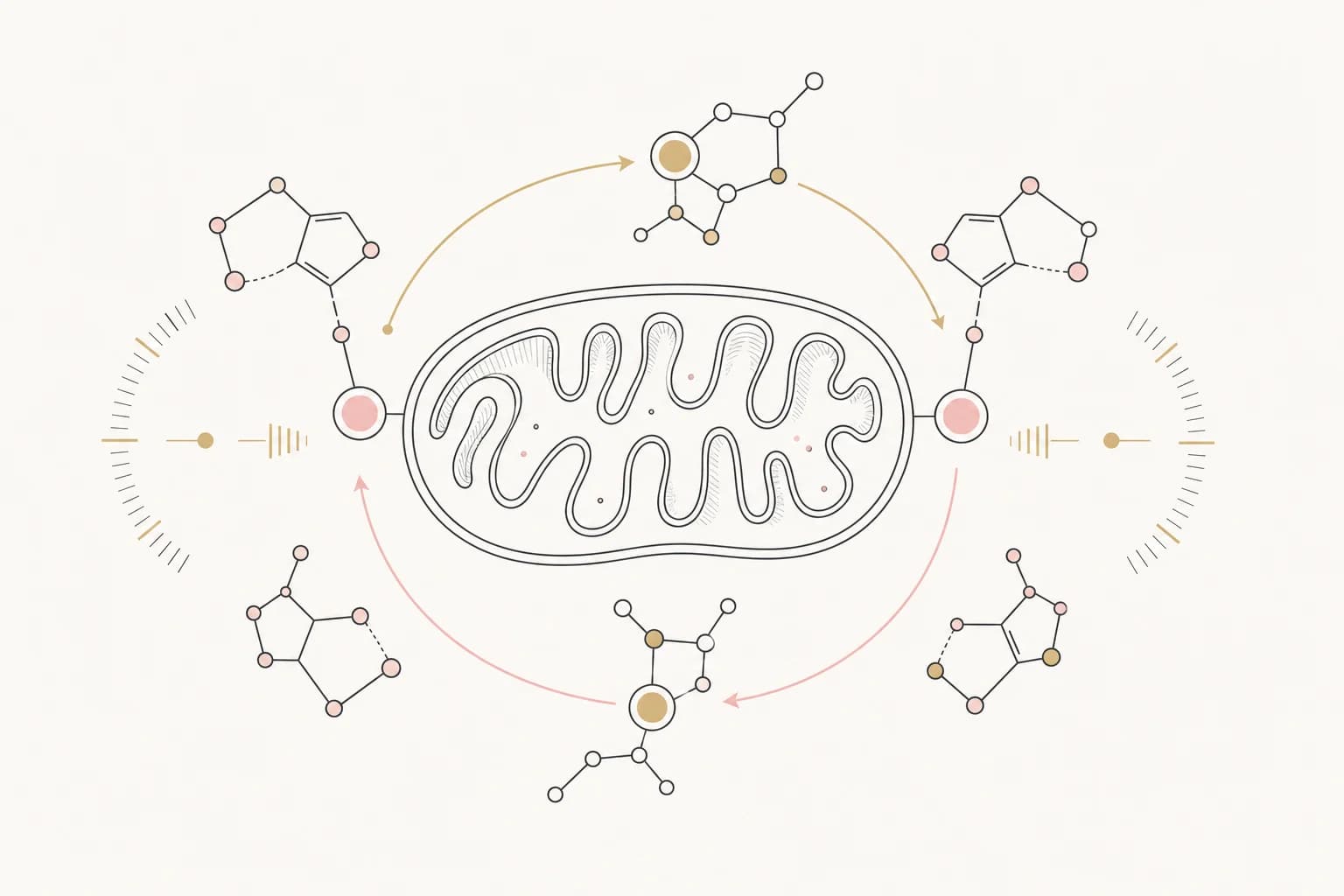
Researchers study NAD+ because it sits in basic cell biology, not because one result has settled the question.1 It is a central cellular molecule involved in energy metabolism and signaling.1
The other reason for interest is that NAD+ levels change with aging and have been linked to several age-related biology questions.5 That link helps explain why the topic keeps appearing in human and mechanistic studies.5
A useful reading habit is to separate biology from clinical meaning. A molecule can matter in cells and still fail to shift outcomes that people can feel or measure in daily life. That distinction appears repeatedly in NAD+ research.
Nicotinamide riboside is one precursor used in studies designed to raise NAD+ levels.6 In other words, some trials test a way to move the molecule, then ask whether anything meaningful changes afterward.6
For readers looking for the exact topic in the catalog, the NAD+ card below shows its live details. It is a catalog reference, not research evidence or a recommendation.
What NAD+ is and why researchers study it
The plain-language answer is that NAD+ is a molecule cells use in core processes like energy metabolism and signaling.1 That makes it biologically important, but not automatically clinically useful.1
Researchers also care because NAD+ changes with aging and has been tied to age-related biology questions.5 That is a research reason, not a claim that changing NAD+ will improve health.5
Nicotinamide riboside is one of the compounds used in studies to raise NAD+ levels.6 For general readers, that means the research often begins with a precursor and then measures what happens to blood NAD+ afterward.6
This is where the central evidence question begins. If a study increases NAD+ in blood, does that translate into better human outcomes? The current record gives some interesting signals, but not a single simple answer.
What human studies have found so far
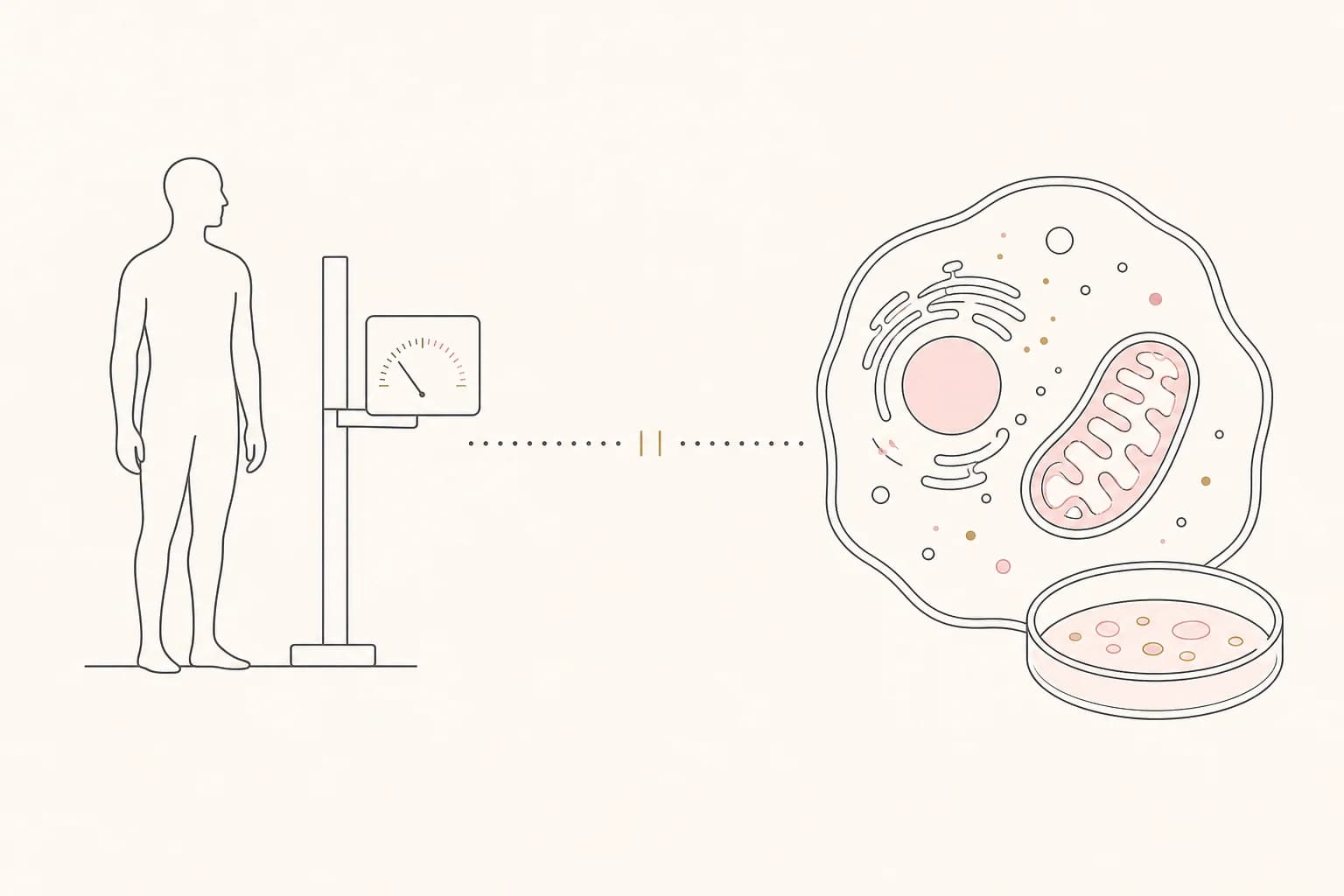
One randomized pilot study in adults with amnestic mild cognitive impairment found that nicotinamide riboside increased blood NAD+ about twofold over 12 weeks.2 That is a clear biological change in people.2
But the same study did not show improvement in cognitive function, total cerebral blood flow, or blood pressure over 12 weeks.3 So the trial separated a measurable biomarker shift from clinical outcome change.3
A different randomized placebo-controlled study in people with mild-to-moderate psoriasis found that nicotinamide riboside reduced Th17 immune responsiveness.4 That points to an immune effect in participants, not just a lab signal.4
The psoriasis study also reported increased circulating SLIT2 levels after supplementation.7 That makes the study useful for mechanism-hunting, but it still stays within the limits of one human trial.7
Taken together, these studies suggest that NAD+-related interventions can change measured biology in people.247 They do not show that every biological shift becomes a broad clinical benefit.3
What the lab and mechanistic work adds
Mechanistic findings help explain why researchers keep testing NAD+ pathways, but they do not substitute for human outcomes. In psoriasis participants, the study paired reduced Th17 immune responsiveness with higher circulating SLIT2.47
That pairing matters because it gives a plausible biological picture for the observed immune change.47 Still, the result is best read as a human mechanistic signal, not as proof of a larger clinical effect.47
The same careful reading applies to biomarker work in other settings. In the mild cognitive impairment pilot study, blood NAD+ rose substantially, but the main outcome measures did not improve over 12 weeks.23
So the mechanistic lesson is narrow but important. NAD+-related studies can show that a pathway moves, while leaving open whether people feel or function differently.23
For readers comparing nearby catalog topics, the Epithalon card below opens its live catalog details. It is a separate reference, not proof of compatibility or a recommendation.
Where the evidence is mixed or still early
Some of the most attention-grabbing results come from studies that do not test NAD+ alone. A pilot open-label study of nicotinamide riboside plus pterostilbene in women going through the menopause transition reported fewer hot flashes, bloating, and poor sleep after 7 days.8
Because that study used a combination, the result cannot be assigned to NAD+ alone.8 That matters when readers try to connect a short-term symptom report with the molecule itself.8
Another study adds context rather than direct proof. In participants with obesity, sevelamer improved peripheral insulin sensitivity in a randomized clinical trial.9 The same trial reported higher plasma levels of metabolites linked to improved glucose and lipid metabolism, including NAD+ precursors.10
That finding is interesting, but it belongs to sevelamer and the metabolite pattern that followed it.910 It does not show that NAD+ itself caused the insulin-sensitivity change.910
How to read the evidence
The practical takeaway is that NAD+ research is real, but still uneven.15 Some human studies show measurable changes in blood NAD+ or immune markers.247 Others show no change in the main outcomes people care about.3
That mix does not make the field useless. It does mean readers should avoid reading every biomarker shift as if it were a proven health effect.23 The strongest honest conclusion is that NAD+ remains an active research target with early human signals and clear limits.
Combination studies make the reading even more careful. When nicotinamide riboside was paired with pterostilbene, the findings belonged to the combination, not to NAD+ alone.8 When metabolites rose alongside a different intervention, that too was an association within that trial context.1011
So the evidence supports interest, not certainty. It supports asking better questions about pathways, populations, and outcomes, rather than assuming one molecule explains everything.1234
Questions the evidence leaves open
The biggest open question is simple: which NAD+ changes matter beyond the lab readout? The pilot study in amnestic mild cognitive impairment showed a strong blood NAD+ rise, but no main outcome improvement over 12 weeks.23
A second question is whether immune and symptom findings will hold up in larger studies. The psoriasis study found reduced Th17 immune responsiveness and higher SLIT2, but that is still one placebo-controlled result in one participant group.47
A third question is how to interpret combination studies. The menopause-transition pilot reported fewer hot flashes, bloating, and poor sleep after a combined product, yet that result cannot be separated from the other ingredient.8
Finally, blood-marker associations are not the same as outcome proof. In the post hoc NMN analysis, higher blood NAD tracked with several laboratory markers, including red blood cell measures and liver- and lipid-related parameters.1112 That is useful, but still not the same as a confirmed clinical benefit.1112
Bottom line
NAD+ research has moved beyond abstract biology, but it has not settled into a single clear clinical story. Human studies show that related interventions can raise blood NAD+, alter immune markers, and shift some laboratory measures.2471112 At the same time, a key pilot study found no improvement in cognition, cerebral blood flow, or blood pressure despite a large blood NAD+ rise.3
The useful takeaway is to read NAD+ studies by outcome and context. Biomarker changes are informative, but they are not the same as clinical proof. Combination studies, post hoc analyses, and animal or laboratory findings can help explain pathways, yet they do not answer every practical question for readers.
This article is educational research context, not medical advice. Catalog links are neutral references and do not imply a treatment or human-use recommendation.
Frequently asked questions
What is the main reason scientists study NAD+?
They study it because NAD+ is a central cellular molecule involved in energy metabolism and signaling.1 Researchers also look at it because NAD+ levels change with aging and have been linked to age-related biology questions.5
Does raising blood NAD+ automatically improve human outcomes?
No. In a pilot study in amnestic mild cognitive impairment, nicotinamide riboside raised blood NAD+ about twofold, but cognition, total cerebral blood flow, and blood pressure did not improve over 12 weeks.23 That is the key caution for readers interpreting biomarker changes.23 0.0%?
What did the psoriasis study add?
In people with mild-to-moderate psoriasis, nicotinamide riboside reduced Th17 immune responsiveness in a randomized placebo-controlled study.4 The study also reported increased circulating SLIT2 levels.7 Those are meaningful mechanistic signals, but they come from one human study.47 0.0%?
Why are combination studies harder to interpret?
Because the result belongs to the full combination, not one ingredient. A pilot open-label study of nicotinamide riboside plus pterostilbene reported fewer hot flashes, bloating, and poor sleep after 7 days.8 That finding cannot be assigned to NAD+ alone.8 0.0%? 0.0%? 0.0%? 0.0%? 0.0%? 0.0%? 0.0%? 0.0%?
How should Filipino readers interpret this research?
Readers in the Philippines should read NAD+ studies as evidence about specific designs, not as a general verdict.123 Human trials can show biomarker shifts or immune changes, but those findings still need outcome-specific interpretation.411 0.0%? 0.0%? 0.0%? 0.0%? 0.0%? 0.0%? 0.0%?
What do the association studies mean?
They show patterns, not proof of benefit. In a post hoc analysis of a randomized nicotinamide mononucleotide trial, higher blood NAD was associated with several laboratory markers, including red blood cell, liver, and lipid-related measures.11 Association is not the same as a confirmed clinical effect.1112 0.0%?
Sources
Footnotes
-
NAD⁺ biology and supplementation: From mechanisms to clinical perspectives.. Review and clinical perspective This is a broad biological role, not proof of a clinical benefit. ↩ ↩2 ↩3 ↩4 ↩5 ↩6 ↩7 ↩8 ↩9
-
A phase-II randomized controlled pilot study of nicotinamide riboside supplementation in older adults with amnestic mild cognitive impairment.. 12-week double-blind randomized placebo-controlled pilot trial The study did not show cognitive improvement. ↩ ↩2 ↩3 ↩4 ↩5 ↩6 ↩7 ↩8 ↩9 ↩10 ↩11 ↩12 ↩13 ↩14
-
A phase-II randomized controlled pilot study of nicotinamide riboside supplementation in older adults with amnestic mild cognitive impairment.. Phase II randomized controlled pilot study in amnestic mild cognitive impairment Exploratory regional blood-flow findings were separate from the main outcomes. ↩ ↩2 ↩3 ↩4 ↩5 ↩6 ↩7 ↩8 ↩9 ↩10 ↩11 ↩12 ↩13 ↩14
-
NAD+ augmentation by nicotinamide riboside engages SLIT2/ROBO1 signaling to attenuate Th17 inflammation in psoriasis.. Randomized placebo-controlled supplementation study The paper also examined immune signaling pathways, but the outcome was measured in psoriasis participants. ↩ ↩2 ↩3 ↩4 ↩5 ↩6 ↩7 ↩8 ↩9 ↩10 ↩11 ↩12 ↩13 ↩14
-
A phase-II randomized controlled pilot study of nicotinamide riboside supplementation in older adults with amnestic mild cognitive impairment.; NAD⁺ biology and supplementation: From mechanisms to clinical perspectives.. Introductory background in a trial and review Association and research interest do not establish a treatment effect. ↩ ↩2 ↩3 ↩4 ↩5 ↩6
-
A phase-II randomized controlled pilot study of nicotinamide riboside supplementation in older adults with amnestic mild cognitive impairment.; NAD+ augmentation by nicotinamide riboside engages SLIT2/ROBO1 signaling to attenuate Th17 inflammation in psoriasis.; Safety and efficacy of individualised exercise and NAD<sup>+</sup> precursor supplementation in patients with Friedreich's ataxia in the USA: a single-centre, 2 × 2 factorial, randomised controlled trial.; NAD⁺ biology and supplementation: From mechanisms to clinical perspectives.. Human trial and review abstracts This claim is about research use, not a product recommendation. ↩ ↩2 ↩3 ↩4
-
NAD+ augmentation by nicotinamide riboside engages SLIT2/ROBO1 signaling to attenuate Th17 inflammation in psoriasis.. Human randomized placebo-controlled study with immune and molecular analyses This is a mechanistic finding alongside the immune-response result. ↩ ↩2 ↩3 ↩4 ↩5 ↩6 ↩7 ↩8 ↩9 ↩10 ↩11
-
Nicotinamide riboside and pterostilbene reduces frequency and severity of undesirable symptoms of the menopause transition: an open-label, pilot clinical trial.. Open-label pilot clinical trial of the combination NRPT Because the study used a combination, the result cannot be assigned to NAD+ alone. ↩ ↩2 ↩3 ↩4 ↩5 ↩6 ↩7
-
Effect of Sevelamer and B. longum on Insulin Sensitivity in Participants With Obesity: A Randomized Clinical Trial.. Three-arm randomized double-blind placebo-controlled trial This result belongs to sevelamer, not NAD+ itself. ↩ ↩2 ↩3
-
Effect of Sevelamer and B. longum on Insulin Sensitivity in Participants With Obesity: A Randomized Clinical Trial.. Randomized clinical trial in obesity This was a metabolite association reported with sevelamer, not a direct NAD+ intervention result. ↩ ↩2 ↩3 ↩4
-
Association between blood nicotinamide adenine dinucleotide levels and blood laboratory parameters at baseline and after nicotinamide mononucleotide supplementation in middle-aged healthy individuals: post hoc analysis of a randomized, double-blinded, placebo-controlled clinical trial.. Post hoc analysis of a randomized, double-blind placebo-controlled trial Association is not the same as a proven clinical effect. ↩ ↩2 ↩3 ↩4 ↩5 ↩6 ↩7
-
Association between blood nicotinamide adenine dinucleotide levels and blood laboratory parameters at baseline and after nicotinamide mononucleotide supplementation in middle-aged healthy individuals: post hoc analysis of a randomized, double-blinded, placebo-controlled clinical trial.. Post hoc analysis after nicotinamide mononucleotide supplementation The authors described this as potentially indicating improved oxygen-carrying capacity. ↩ ↩2 ↩3 ↩4