
TL;DR
- The Philippine FDA Verification Portal lists product registrations and establishment licenses, which are separate records with different verification jobs.1
- Search “semaglutide” first, then open the exact row and compare its registration number, brand, form, manufacturer, importer, and dates field by field.2
- A matching portal entry confirms that a regulatory record exists, but it does not authenticate the physical item in front of you.3
- If details conflict or the item looks suspicious, use the Philippine FDA’s reporting channels and ask for official review instead of treating one matching name as proof.4
For Filipino readers, checking a health-product claim should begin with a Philippine source. The FDA Verification Portal gives that starting point, but the page can look like a wall of rows and abbreviations.1 A useful check has three parts: find the right record, compare every key field, and understand what the database cannot confirm.3 That sequence turns a quick name search into a more careful verification habit.
Know what the portal can verify
The Philippine FDA defines its Verification Portal as an online list of establishments and health products with official licenses or registration records.1 For a drug-product check, the important record is the Certificate of Product Registration, often shortened to CPR.1 An establishment’s License to Operate, or LTO, answers a different question about the business.1
Think of the portal as a regulatory directory, not a scanner for a physical item.3 It can show that the FDA published a record with a particular registration number and set of details.5 It cannot examine the item, seller, receipt, or route by which something reached you.3 A sound check therefore starts in the database but does not end with a familiar name.2
Semaglutide is named here only as the neutral catalog reference below.6
Start with a broad ingredient search
Open the Philippine FDA Verification Portal and go to the All Drug Products search.1 Enter “semaglutide” as the broad first query, because the current result page returns several item-specific rows under that generic name.6 This first pass is for finding candidates, not declaring a match.7
Scan the table before opening anything.5 The result page separates registration number, generic name, brand name, strength, dosage form, manufacturer, application type, and record dates into columns.5 Different brand names and forms can appear under the same ingredient search.7 That is why copying only the largest word from a label is too weak a check.2
If spelling or spacing produces an unclear result, retry with the generic name and the claimed registration number as separate searches.5 A search miss is a reason to refine the query or contact the FDA, not proof that a record does not exist.4
Open the row; do not stop at the name
Click “View” on the closest candidate row.5 The item-level page gives the record its own identity, led by the registration number.8 It also names parties such as the manufacturer, importer, and distributor for that selected record.8 Those details are more useful together than any one field alone.2
For example, the portal gives BR-1328 and BR-1476 separate item pages even though both records use semaglutide as the generic name.5 The pages do not carry the same brand name, registration number, or other record details.8 This shows why “semaglutide appears in the portal” is only the beginning of the check.7
Keep the item page open beside the information you are assessing.2 Compare text exactly, including punctuation and number order, because a near match is still not the same regulatory record.2
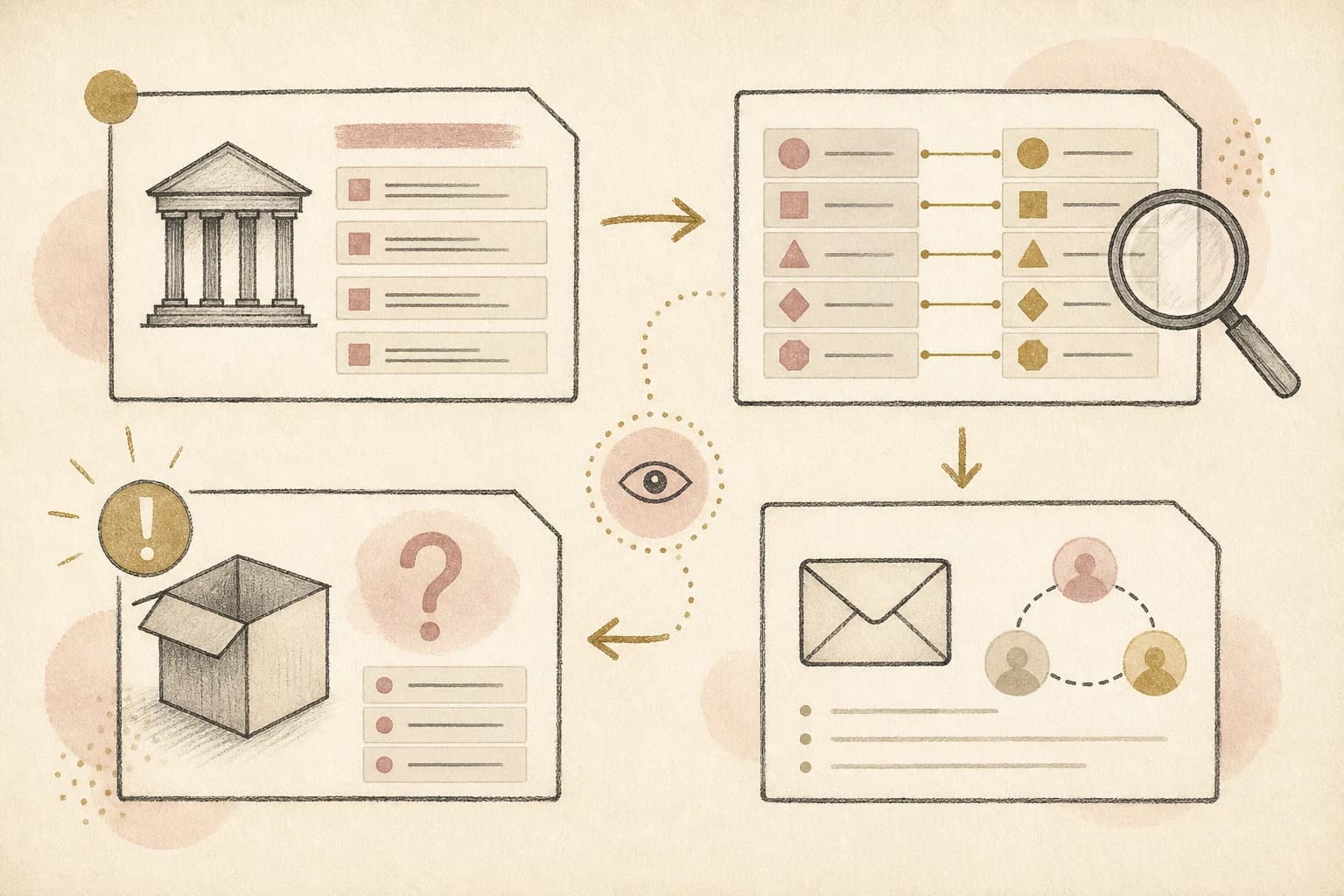
Match the record field by field
Begin with the registration number because it points to one item-level record.8 Next compare generic name and brand name, then the listed strength and dosage form.5 Continue with the manufacturer, country of origin, importer, and distributor shown on the opened page.8 Finish with the issuance and expiry dates.9
Use a simple two-column note: “information being checked” on one side and “portal record” on the other.2 Mark each field as exact, different, or unreadable.2 This keeps a familiar logo or product name from outweighing several conflicts.10 It also makes an inquiry easier to explain if you later contact the regulator.4
Do not combine details from two rows to create one imaginary match.2 Each registration number belongs to its own combination of listed fields.5 If the brand matches one row but the other details point elsewhere, treat the comparison as unresolved.3
Read dates and documents as part of the record
The semaglutide search page says it was updated as of 19 January 2026.9 Its rows also show separate issuance and expiry dates.9 Those dates make the live portal more useful than an old screenshot, forwarded message, or copied table.9 Reopen the current record whenever the timing matters.9
Some rows include a link to approved product information.11 The Philippine FDA says approved package inserts and patient information leaflets for registered drugs shall be published through the portal and updated regularly.11 That linked document belongs to the named regulatory record.11 It should not be borrowed to support a different item that merely shares an ingredient.2
Record dates also deserve exact reading.9 An issuance date tells when that entry was issued, while the expiry field gives the date displayed for that registration.9 Neither date authenticates the object in someone’s hand.3
A portal match is not an authenticity test
Registration and authenticity are related but separate questions.3 A portal match confirms that the Philippine FDA published the named record.1 Counterfeit or falsified items can copy real names, numbers, or design cues.10 The Philippine FDA’s definition covers wrong amounts, wrong ingredients, missing active ingredients, and fraudulent identity or source information.10
WHO’s 2024 alert makes the limit concrete.12 It confirmed three falsified Ozempic products found outside the Philippines, including one that carried a genuine batch number.12 The alert does not document a Philippine case.12 It shows why a single familiar number cannot authenticate a physical item.3
Use the portal for what it does well: identifying the official record and its named details.5 Use regulator or legitimate product-owner review when the physical item itself is in doubt.4 That boundary prevents database evidence from being stretched beyond its function.3
Tirzepatide is named here only as the neutral catalog reference below.
Finish with the establishment and reporting checks
The Philippine FDA advises consumers to obtain drug products from FDA-licensed establishments.13 The portal’s LTO information and product-registration information serve different purposes.1 Check the establishment separately rather than assuming that a product row licenses every seller using its name.13
When a mismatch remains, save the URL of the portal record and list the fields that conflict.4 Clear notes are more useful than a vague statement that something “looks fake.”4 The Philippine FDA says suspected counterfeit medicines can be reported by telephone or email, and the legitimate product owner may also be contacted.4 Its advisory gives ereport@fda.gov.ph for reports about continued sale or distribution of unregistered health products.13
A report asks the authority to review the concern.4 It is not a public verdict about the seller or item.4 Keep the language factual: what you searched, what the portal showed, and which fields did not match.2
Bottom line
For a Philippine semaglutide check, begin with the Philippine FDA’s own portal.1 Search the generic name, open the closest row, and compare the registration number plus every identifying field.2 Read the issuance and expiry dates on the live record rather than relying on an old screenshot.9 Then separate three questions: does the product record match, is the establishment licensed, and does the physical item raise an authenticity concern?3 The portal answers the first two through different record types.1 It cannot authenticate an object by itself.3 When details remain inconsistent, document the mismatch and use the FDA’s reporting channels for official review.4
This article is educational research context, not medical advice. Catalog links are neutral references and do not imply a treatment or human-use recommendation.
Frequently asked questions
What should I type into the Philippine FDA portal?
Start with the generic name “semaglutide” in the All Drug Products search.6 The result should be treated as a candidate list because several item-specific rows can appear.7 You can then narrow the comparison using the claimed registration number and the other fields shown by the portal.5
Is seeing “semaglutide” in the results enough?
No. The current results include separate entries under the same generic-name search.6 Brand, form, registration number, manufacturer, importer, and dates help identify the exact record.5 A generic-name match alone cannot show that the information being checked corresponds to one particular row.2
Which field should I compare first?
Begin with the registration number because the item-level page is organized around that identifier.8 Then compare the generic and brand names, listed form, manufacturer, importer, distributor, issuance date, and expiry date.5 Treat conflicts as unresolved instead of borrowing details from another row.2
Does a matching registration number prove authenticity?
No. A portal match supports the existence of a regulatory record, not the authenticity of a physical item.3 WHO confirmed a falsified Ozempic product that carried a genuine batch number in its 2024 global alert.12 That alert was not a report of a Philippine case.12
Are the product record and seller license the same?
No. The Philippine FDA describes product registrations and establishment licenses as different records within the portal.1 A matching drug-product row should not be used as proof that every seller is licensed.13 Check the establishment record as its own step, using the business’s exact identifying details.1
What can I do when details do not match?
Write down the portal URL and the exact conflicting fields.4 The Philippine FDA says suspected counterfeit medicines can be reported by telephone or email, and the legitimate product owner may be contacted.4 For continued sale or distribution of unregistered health products, its advisory lists ereport@fda.gov.ph.13
Sources
Footnotes
-
Guidelines on the Publishing of Package Insert and Patient Information Leaflet of Registered Drug Products in the Food and Drug Administration Verification Portal System. Philippine FDA circular defining the portal and the regulatory records it publishes. A product registration record and an establishment license are different records and should not be treated as interchangeable. ↩ ↩2 ↩3 ↩4 ↩5 ↩6 ↩7 ↩8 ↩9 ↩10 ↩11 ↩12
-
Philippine FDA Verification Portal search results for semaglutide; Philippine FDA Verification Portal human drug record BR-1328; Philippine FDA Verification Portal human drug record BR-1476. Comparison of the semaglutide search table and item-level records. Verification therefore requires a field-by-field match rather than reliance on one familiar name. ↩ ↩2 ↩3 ↩4 ↩5 ↩6 ↩7 ↩8 ↩9 ↩10 ↩11 ↩12 ↩13 ↩14
-
Guidelines on the Publishing of Package Insert and Patient Information Leaflet of Registered Drug Products in the Food and Drug Administration Verification Portal System; FDA Drug Safety Newsletter, Volume 2, Issue 4; Medical Product Alert No. 2/2024: Falsified Ozempic (semaglutide). Synthesis of the portal's registration function with Philippine FDA and WHO descriptions of counterfeit or falsified products. Physical-product authenticity may require regulator or legitimate product-owner review. ↩ ↩2 ↩3 ↩4 ↩5 ↩6 ↩7 ↩8 ↩9 ↩10 ↩11 ↩12
-
FDA Drug Safety Newsletter, Volume 2, Issue 4. Public reporting instructions in the Philippine FDA Drug Safety Newsletter. A report is a request for official review, not proof that the item is counterfeit. ↩ ↩2 ↩3 ↩4 ↩5 ↩6 ↩7 ↩8 ↩9 ↩10 ↩11 ↩12
-
Philippine FDA Verification Portal search results for semaglutide. Column headings and populated rows on the Philippine FDA All Drug Products results page. A row describes a regulatory record; it does not authenticate a physical item presented by a seller. ↩ ↩2 ↩3 ↩4 ↩5 ↩6 ↩7 ↩8 ↩9 ↩10 ↩11 ↩12
-
Philippine FDA Verification Portal search results for semaglutide. Current Philippine FDA portal search result for the generic name semaglutide. The result is a portal snapshot and should be checked again at the time of verification. ↩ ↩2 ↩3 ↩4
-
Philippine FDA Verification Portal search results for semaglutide. Philippine FDA result rows for semaglutide, including distinct brand and form entries. A generic-name match narrows candidates but does not identify the exact record by itself. ↩ ↩2 ↩3 ↩4
-
Philippine FDA Verification Portal human drug record BR-1328; Philippine FDA Verification Portal human drug record BR-1476. Two item-level Philippine FDA semaglutide records with separate registration numbers. The named parties belong to the selected record and should not be generalized to every semaglutide listing. ↩ ↩2 ↩3 ↩4 ↩5 ↩6
-
Philippine FDA Verification Portal search results for semaglutide. Date label and record fields displayed by the Philippine FDA portal. A dated portal view should not be treated as permanently current; readers should revisit the live record. ↩ ↩2 ↩3 ↩4 ↩5 ↩6 ↩7 ↩8
-
FDA Drug Safety Newsletter, Volume 2, Issue 4. Counterfeit Medicines Corner of the Philippine FDA Drug Safety Newsletter. This general definition does not establish that any specific semaglutide item is counterfeit. ↩ ↩2 ↩3
-
Guidelines on the Publishing of Package Insert and Patient Information Leaflet of Registered Drug Products in the Food and Drug Administration Verification Portal System. Philippine FDA circular on publication of approved drug information in the portal. A document link may not be visible in every search row, so the item-level record remains the relevant place to inspect. ↩ ↩2 ↩3
-
Medical Product Alert No. 2/2024: Falsified Ozempic (semaglutide). WHO medical product alert concerning products detected in Brazil, the United Kingdom, and the United States. The alert is global context and does not document a Philippine case or authenticate any item in the Philippines. ↩ ↩2 ↩3 ↩4 ↩5
-
FDA Advisory No. 2024-1495. Consumer and reporting instructions in a Philippine FDA counterfeit-drug advisory. An establishment license does not replace the separate check for the exact product registration record. ↩ ↩2 ↩3 ↩4 ↩5