
TL;DR
- A SURMOUNT result belongs to its enrolled population, comparison group, endpoint, and follow-up period, so SURMOUNT-1 and SURMOUNT-2 answer different questions because their diabetes criteria differed.1
- A post hoc analysis asks a later question, so the nonrandomized finding that early responders did better cannot predict one person’s path.2
- Asian trial findings help widen the evidence base, yet an indirect, underpowered comparison did not prove equivalence across ethnic groups or provide a Filipino-specific estimate.3
- SURMOUNT-J reported a modeled cardiovascular-risk estimate rather than observed heart attacks or strokes, so it should not be retold as observed prevention.4
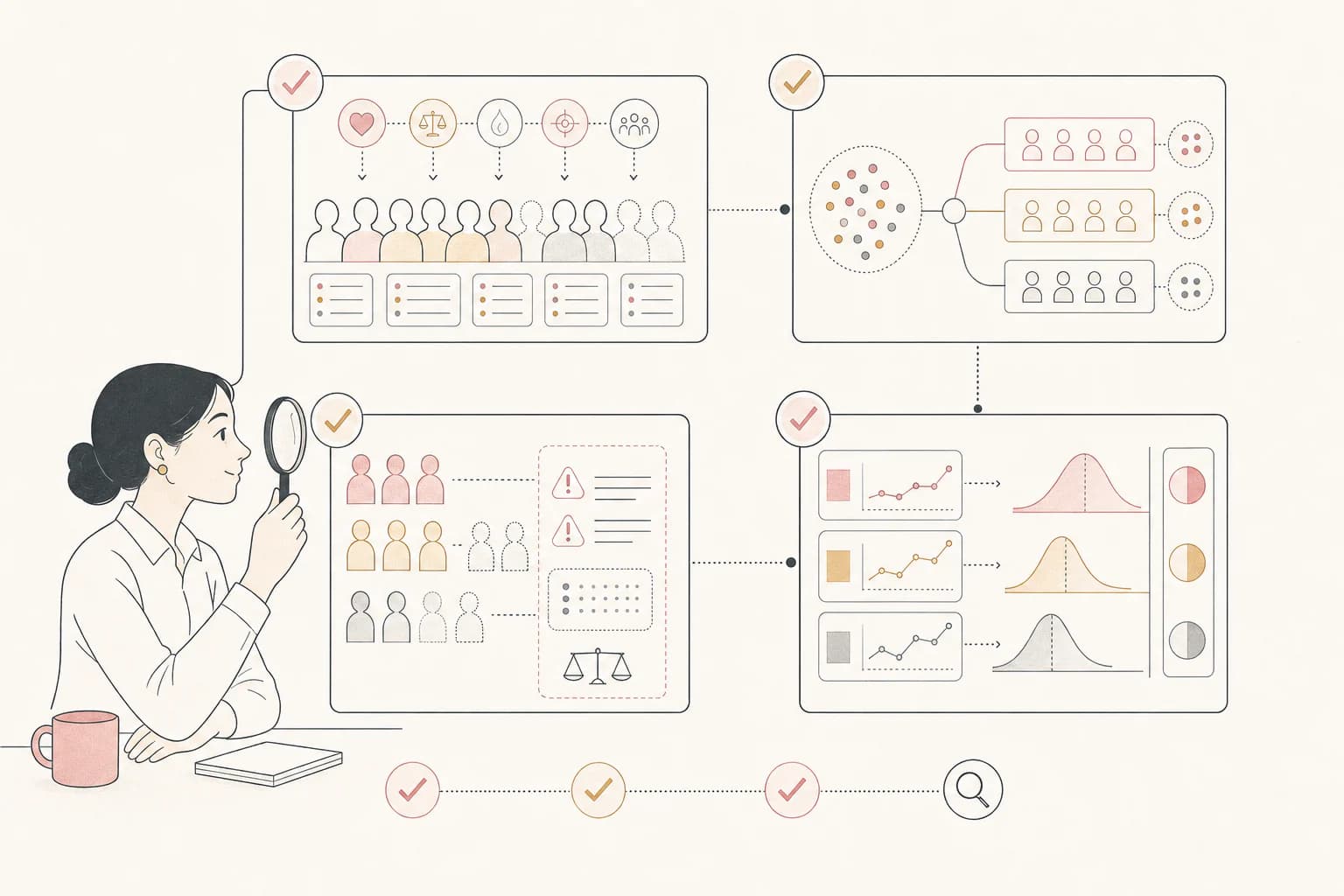
For Filipino readers, a large percentage in a headline can feel more certain than it is. Yet a trial result is never just one number.1 It comes from selected participants, a defined comparison, chosen outcomes, and a set timeline.1 Reading those parts together makes SURMOUNT reports useful without turning them into personal forecasts.3
First, identify the question the trial actually asked
Start with the trial name, enrolled population, comparison group, endpoint, and follow-up length.1 SURMOUNT-1 and SURMOUNT-2 were both randomized, double-blind, placebo-controlled phase 3 trials.1 However, SURMOUNT-1 studied adults without type 2 diabetes, while SURMOUNT-2 studied adults with it.1 That difference changes what each result can support.1
Next, ask whether the paper reports the original trial question or a later analysis.2 A primary trial comparison preserves random assignment between groups.1 A post hoc analysis may regroup participants after treatment began, which weakens causal interpretation.2 The safest summary keeps the population, comparator, outcome, and time point in one sentence.1
This basic frame prevents one SURMOUNT result from standing in for the entire research program.1
Tirzepatide is the exact product named in the primary topic and appears below as a neutral catalog reference.5
Read percentages with their denominator and time point
A result becomes clearer when you ask, “Among whom, compared with what, and when?”6 In one SURMOUNT-5 post hoc analysis, 425 participants had obesity and prediabetes at baseline.6 At Week 72, the tirzepatide group showed greater glycaemic and body-weight changes than the semaglutide group.6 That describes one defined subgroup in a head-to-head human trial.6
It does not automatically describe people without prediabetes, people outside the enrollment criteria, or outcomes beyond that timeline.6 Nor should a group average become an expected result for an individual.6 Look for the number analyzed, baseline characteristics, missing-data method, and exact endpoint.6 These details reveal whether a striking percentage is broad evidence or a narrow estimate.6
The subgroup label belongs beside the result whenever it is repeated.6
Separate planned analyses from later questions
Post hoc work can be informative, but its label should travel with the finding.2 Researchers combined tirzepatide-treated participants from SURMOUNT-1 and SURMOUNT-2, then classified them by Week 8 response.2 Both groups had meaningful changes by Week 72, while early responders had greater changes.2
That pattern does not prove early response caused the later difference.2 The groups were created after randomization and differed in some baseline features.2 It also does not create a dependable rule for one reader’s future response.2 Treat such results as exploratory signals that may shape later research.2
The same caution applies to BMI-category analyses from SURMOUNT-1 and SURMOUNT-4.7 Category shifts and related marker changes describe associations, not confirmed long-term clinical outcomes.7
They answer a useful descriptive question, but not every question a reader might attach to them.7
Keep patient-reported outcomes in their proper frame
Some SURMOUNT papers measure how participants report function or wellbeing, not only laboratory values.8 In SURMOUNT-J, 201 Japanese adults without diabetes completed prespecified quality-of-life assessments.8 Several measures improved more with tirzepatide than placebo at Week 72.8
These outcomes matter because they capture experiences that a scale or blood test cannot.8 Still, they depend on the questionnaire, population, language, and study setting.8 They are not direct counts of hospitalization, disability, or other clinical events.8
Qualitative interviews require another level of restraint.9 A separate study interviewed 29 Japanese SURMOUNT-J completers about their experiences.9 Those accounts can show themes and questions worth studying.9 They cannot estimate how common an experience is across all participants or Filipino communities.9
Completion of the parent trial also makes this a selected interview group.9
Ask whether an endpoint was measured or modeled
Words such as “predicted,” “projected,” and “estimated” signal a model rather than observed events.4 A post hoc SURMOUNT-J analysis applied Framingham equations to participant measurements.4 It reported lower predicted 10-year cardiovascular risk with tirzepatide than placebo at Week 72.4
That is not the same as following participants for ten years and counting cardiovascular events.4 A model combines observed inputs with assumptions from another evidence framework.4 Its output may help form a research question, but it cannot be rewritten as proven event prevention.4
Likewise, improved BMI categories and cardiometabolic markers may suggest a favorable direction.7 They do not establish what happened to long-term clinical outcomes.7 Match your language to what investigators actually measured.4
This distinction is essential when a paper discusses possible future effects.7
Check who entered the study and who reached analysis
Randomized withdrawal trials answer a narrower question than trials randomizing everyone at the start.10 SURMOUNT-MAINTAIN first placed participants in a 60-week tirzepatide period.10 It then randomized 378 participants to continued treatment, reduced treatment, or placebo.10 Continued tirzepatide maintained more body-weight reduction through Week 112 than switching to placebo.10
The randomized population therefore consisted of people who reached that later stage.10 Rescue therapy was also permitted under the protocol.10 Those features matter when interpreting maintenance findings.10
Age subgroup reports need similar care.11 A pooled post hoc analysis found broadly comparable findings for adults aged at least 65 and younger adults.11 Yet pooling completed trials does not replace a study designed specifically for older adults.11
“Broadly comparable” should remain a qualified subgroup description, not a guarantee.11
Semaglutide is the exact related product named in the head-to-head research and appears below as a neutral catalog reference.6
Judge how far the findings travel
Filipino readers should resist treating “Asian” as a single, interchangeable population.3 A systematic review compared two all-Asian SURMOUNT trials with four predominantly non-Asian comparisons.3 Relative weight changes appeared broadly similar, but the comparison was indirect and underpowered.3 Only 148 tirzepatide-treated participants came from the two all-Asian trials.3
The authors explicitly said the findings did not establish ethnic equivalence.3 The analysis also provided no Filipino-specific estimate.3 Japanese or Chinese participation can improve regional relevance without erasing differences in enrollment, health systems, culture, or baseline risk.3
External validity is therefore a reasoned judgment, not a yes-or-no label.3 Ask how closely the participants and setting resemble the question you care about.3 Then state the remaining gap plainly.3
That gap is part of an accurate summary, not a reason to dismiss the study.3
Distinguish completed findings from planned research
Not every published SURMOUNT paper contains outcome results.12 SURMOUNT-REAL UK describes a five-year, open-label pragmatic randomized trial in primary care.12 Its primary endpoint is body-weight change at Month 24, with other outcomes planned later.12
Because the source is a design paper, it supports statements about methods and intended endpoints.12 It does not support claims that the trial has already demonstrated effectiveness.12 Future-facing verbs such as “will evaluate” are more accurate than “found.”12
Publication alone does not turn a planned endpoint into a completed finding.12
Finally, keep study identity separate from product identity.5 United States records list Zepbound and Mounjaro as named tirzepatide products under separate applications.5 Those records do not establish identity, equivalence, or status for a catalog item.5
Bottom line
The strongest reading of a SURMOUNT paper is usually the most specific one.1 Name the human population, study design, comparator, endpoint, and timeline before repeating a result.1 Label subgroup, post hoc, qualitative, and modeled findings every time they appear.2 Keep planned trials separate from completed results.12 For Filipino readers, Asian evidence can be relevant while still leaving a local evidence gap.3
Avoid turning averages into personal predictions or marker changes into proven clinical events.7 A careful summary may sound less dramatic, but it is more faithful to the research.4 This article is educational research context, not medical advice. Catalog links are neutral references and do not imply a treatment or human-use recommendation.
Frequently asked questions
What does “randomized, double-blind, placebo-controlled” tell me?
It describes safeguards in a human trial’s comparison.1 Random assignment supports balanced groups, blinding limits expectation effects, and placebo provides a reference.1 These features strengthen causal interpretation for the enrolled population and stated endpoint.1 They do not make every later subgroup analysis randomized.2
Can I compare SURMOUNT-1 directly with SURMOUNT-2?
Only with care, because their populations differed in a major way.1 SURMOUNT-1 enrolled adults without type 2 diabetes, while SURMOUNT-2 enrolled adults with it.1 A cross-trial difference may reflect participants, methods, or other design features, not only treatment response.1
Does an early response predict an individual’s final result?
The cited post hoc analysis found greater Week 72 changes among early responders.2 However, researchers formed those groups after treatment began, and baseline features differed.2 The finding describes an exploratory group pattern.2 It does not provide a dependable forecast for one person.2
Does “lower predicted cardiovascular risk” mean fewer events occurred?
No.4 The SURMOUNT-J analysis used participant measurements in Framingham equations to estimate future risk.4 It did not follow the group for ten years and count those events.4 Report the result as a modeled risk change, not demonstrated event prevention.4
Are Japanese or broader Asian findings automatically applicable in the Philippines?
No automatic transfer is justified.3 The meta-analysis found broadly similar relative changes, but its ethnic comparison was indirect and underpowered.3 It included few tirzepatide-treated participants from all-Asian trials and gave no Filipino-specific estimate.3 Regional evidence still requires a transferability judgment.3
What is the fastest way to check a SURMOUNT headline?
Write down five items: population, design, comparator, endpoint, and time point.1 Then check whether the result was prespecified, post hoc, qualitative, modeled, or still planned.2 If the headline drops those qualifiers, restore them before sharing the finding.4
Sources
Footnotes
-
Tirzepatide Efficacy and Tolerability According to Early Weight Response: A Post Hoc Analysis of the SURMOUNT-1 and SURMOUNT-2 Trials.. Human phase 3 randomized trials summarized in a post hoc journal article. The two trial populations should not be treated as interchangeable. ↩ ↩2 ↩3 ↩4 ↩5 ↩6 ↩7 ↩8 ↩9 ↩10 ↩11 ↩12 ↩13 ↩14 ↩15 ↩16 ↩17 ↩18 ↩19
-
Tirzepatide Efficacy and Tolerability According to Early Weight Response: A Post Hoc Analysis of the SURMOUNT-1 and SURMOUNT-2 Trials.. Exploratory post hoc human analysis defining early response at Week 8. The groups were formed after randomization and differed at baseline, so the finding is not a randomized comparison. ↩ ↩2 ↩3 ↩4 ↩5 ↩6 ↩7 ↩8 ↩9 ↩10 ↩11 ↩12 ↩13 ↩14 ↩15 ↩16 ↩17
-
Comparative Efficacy and Safety of Tirzepatide in Asian and Non-Asian Adults With Obesity Without Diabetes: A Systematic Review and Meta-Analysis.. Systematic review and meta-analysis of human randomized trials without diabetes. Only 148 tirzepatide-treated participants came from the two all-Asian trials, and no Filipino-specific estimate was reported. ↩ ↩2 ↩3 ↩4 ↩5 ↩6 ↩7 ↩8 ↩9 ↩10 ↩11 ↩12 ↩13 ↩14 ↩15 ↩16 ↩17 ↩18
-
Post hoc analysis of SURMOUNT-J: tirzepatide versus placebo and predicted 10-year cardiovascular disease risk in Japanese adults with obesity disease.. Human post hoc analysis using Framingham equations and modeled projections. Predicted risk and projected events are not observed cardiovascular events. ↩ ↩2 ↩3 ↩4 ↩5 ↩6 ↩7 ↩8 ↩9 ↩10 ↩11 ↩12 ↩13 ↩14
-
FDA Drugs@FDA record for ZEPBOUND (TIRZEPATIDE); FDA Drugs@FDA record for MOUNJARO (TIRZEPATIDE). United States authoritative regulatory records for named products. These records do not establish approval, identity, or equivalence for a catalog item. ↩ ↩2 ↩3 ↩4
-
Reversion to normoglycemia with tirzepatide vs semaglutide in participants with obesity and prediabetes: a post hoc analysis of SURMOUNT-5.. Human post hoc subgroup analysis from a head-to-head trial. The analysis applies to the baseline-prediabetes subgroup and cannot be generalized to every reader. ↩ ↩2 ↩3 ↩4 ↩5 ↩6 ↩7 ↩8 ↩9 ↩10
-
Shifts in body mass index category with tirzepatide and associated changes in cardiometabolic risk factors in people with obesity: a post hoc analysis from the SURMOUNT-1 and SURMOUNT-4 trials.. Human post hoc analyses at Week 72 and Week 88. Category shifts and associated markers do not establish long-term clinical outcomes. ↩ ↩2 ↩3 ↩4 ↩5 ↩6 ↩7
-
Effect of Tirzepatide on Health-Related Quality of Life in Japanese Patients With Obesity Disease: Patient-Reported Outcomes From the SURMOUNT-J Study.. Human phase 3 randomized placebo-controlled trial using patient-reported outcomes. Questionnaire changes are population- and instrument-specific and are not direct measures of clinical events. ↩ ↩2 ↩3 ↩4 ↩5 ↩6
-
Experience with Tirzepatide and Weight Management During and After a Clinical Trial in Japanese Patients with Obesity Disease: A Qualitative Study.. Cross-sectional, non-interventional qualitative human study. A small selected interview sample can describe experiences but cannot estimate effects for the wider population. ↩ ↩2 ↩3 ↩4 ↩5
-
Tirzepatide for maintenance of bodyweight reduction in people with obesity in the USA (SURMOUNT-MAINTAIN): a multicentre, double-blind, randomised, placebo-controlled trial.. Human phase 3b randomized withdrawal trial in the United States. The randomized phase included only people who completed the initial treatment period, and rescue therapy was allowed. ↩ ↩2 ↩3 ↩4 ↩5 ↩6 ↩7
-
Tirzepatide for Obesity in Adults ≥ 65 Years: A Post Hoc Analysis of the SURMOUNT and SUMMIT Clinical Trials.. Human post hoc age-subgroup analysis across phase 3 trials. Pooling does not replace a trial designed and powered specifically for older adults. ↩ ↩2 ↩3 ↩4
-
SURMOUNT-REAL UK: A Pragmatic Randomized Clinical Trial to Assess the Effectiveness of Tirzepatide in Adults With Obesity.. Prospective human phase 4 trial design article. The source describes planned methods and endpoints, not completed results. ↩ ↩2 ↩3 ↩4 ↩5 ↩6 ↩7 ↩8