
TL;DR
- A polished box is not proof of authenticity because WHO says some falsified medical products can look almost identical to genuine ones.1
- Filipino buyers can use the Philippine FDA Verification Portal to check product records and seller licenses before relying on screenshots or claims.2
- Lot numbers, serial numbers, spelling, label quality, and matching inner and outer details are useful warning checks, but they are clues rather than a complete authenticity test.3
- If a medicine seems counterfeit, Philippine FDA guidance says not to take it, to report the suspicion, and to report any possible adverse reaction if it was already taken.4
For Filipino readers, a copied medicine box can create false confidence: the colors look right, the spelling seems clean, and a seller shows a registration number. Yet packaging is only one layer of identity.1 A safer check connects the item, its records, the seller, and the purchase trail before treating appearance as proof.2
First, separate three different problems
“Counterfeit,” “falsified,” “substandard,” and “unregistered” do not mean the same thing.5 WHO says a falsified product uses a false identity, contents, or source on purpose.5 A substandard product is authorized but fails its quality rules or specifications.5 An unregistered or unlicensed product has not gone through the required local review.5
Philippine FDA guidance uses “counterfeit medicine” for problems that can include fake packaging, false identity or source, wrong amounts, wrong ingredients, or missing ingredients.6 The practical point is that a suspicious box may signal several different failures.6 A buyer cannot settle which failure occurred by inspecting a photograph or screenshot alone.1
Semaglutide is named here only as the neutral catalog reference below.
Packaging is a screening tool, not a verdict
WHO says some falsified products are nearly indistinguishable from genuine ones by sight.1 That warning changes how a careful buyer reads packaging.1 Sharp printing, familiar colors, a sealed carton, and a professional-looking pen should not be treated as an authenticity certificate.1 Poor details can raise concern, while good details cannot close the case.3
WHO suggests checking the carton for damage, spelling mistakes, or grammar problems.3 It also advises comparing manufacturing and expiry details on the outer and inner packaging.3 The medicine itself should not look discolored, degraded, or otherwise unusual.3 These checks are useful because counterfeiters sometimes leave visible inconsistencies.3 They remain limited because a sophisticated copy may reproduce expected details.1 Think of the visual check as a smoke alarm: it can tell you to stop and investigate, but silence does not prove there is no problem.1
A copied number can still look official
A batch or registration number is data to verify, not decoration to admire.2 The Philippine FDA Verification Portal provides records for authorized health products and licensed establishments.2 A careful search should compare the exact product name, registration entry, company, and other available fields instead of accepting the first similar result.2 A screenshot supplied by a seller can be incomplete, old, or unrelated to the item being offered.2
Lot and serial numbers have the same limit.7 WHO’s 2024 Ozempic alert included a falsified product that carried a genuine batch number.7 The alert also described batch and serial data that did not match factory records.7 Those foreign cases show why a familiar number is not proof by itself.7 The record, the physical item, and the supply trail need to agree.8
Official alerts are specific, not universal checklists
WHO’s 2024 alert covered three falsified Ozempic batches detected in Brazil, the United Kingdom, and the United States.7 It did not report a Philippine detection, so it cannot support a claim about local prevalence.7 Its value for Filipino readers is methodological: an official alert ties a warning to named products, places, dates, and identifying information.7
The same alert listed signs tied to those cases.7 They included a scale extending from a pen during adjustment, a loose label, spelling errors, and listed lot or serial details.7 Those signs should not become a universal internet quiz for every pen or brand.7 A missing sign does not clear a product.1 A suspected mismatch also does not prove guilt by itself.1 Buyers should read the whole notice, including its location and scope, before forwarding a cropped warning image.7
The seller record matters as much as the product record
For purchases in the Philippines, the FDA portal separates seller licenses from product records.2 A product record does not validate every person or account using its name.2 The Philippine FDA also lists drugstores licensed for online ordering and delivery.9 Its entries include the seller name, address, licensed activity, and license dates.9
When a social-media page claims to represent a pharmacy, compare its identity and contact details with the official establishment record.9 A copied license image is weaker evidence than a live regulator entry that matches the actual seller.2 An online profile that hides its physical address or ordinary contact details also fits a warning pattern in WHO consumer guidance.10 These checks do not authenticate a pen on their own.1 They reduce reliance on branding by asking whether the path from seller to buyer can be traced.8
Tirzepatide is named here only as the neutral catalog reference below.
The contents may not match the convincing exterior
The safety concern is not merely that copied packaging violates a brand’s design.6 Philippine FDA guidance says counterfeit medicines may have a wrong or missing ingredient.6 They may also have the correct ingredient in the wrong amount.6 WHO’s alert adds contamination and unknown or swapped ingredients to the possible risks in the products it covered.11 A carton cannot reveal the exact contents of a suspect item.11
Device parts can also be involved.12 In a 2023 U.S. case, FDA confirmed fake needles, pen labels, information sheets, and cartons in one counterfeit lot.12 The agency said it could not confirm that the needles were sterile.12 That finding belongs to a specific U.S. case, not to Philippine products as a class.12 It shows that several parts may be copied together.12 A convincing insert or accessory is therefore not separate proof.12
Preserve the trail instead of confronting or experimenting
Philippine verification rules show why the purchase trail matters.8 Official review may use the sample, lab or physical checks, brand-owner records, and supply papers.8 Those papers can include invoices or delivery receipts with lot and expiry details.8 A buyer can help by keeping the item, box, inserts, receipt, messages, payment record, and delivery details unchanged.8
The Philippine FDA’s published instruction for a suspected counterfeit is not to take the product and to report it.4 If it was already taken, the guidance says to watch for and report possible adverse drug reactions.4 WHO also advises prompt contact with a health worker about an unexpected reaction or failure to work.10 A report lets authorities compare records and examine evidence.8 That is more useful than naming a seller in public based on a visual guess.8 Check the current reporting route on the Philippine FDA website before sending sensitive details.4
Bottom line
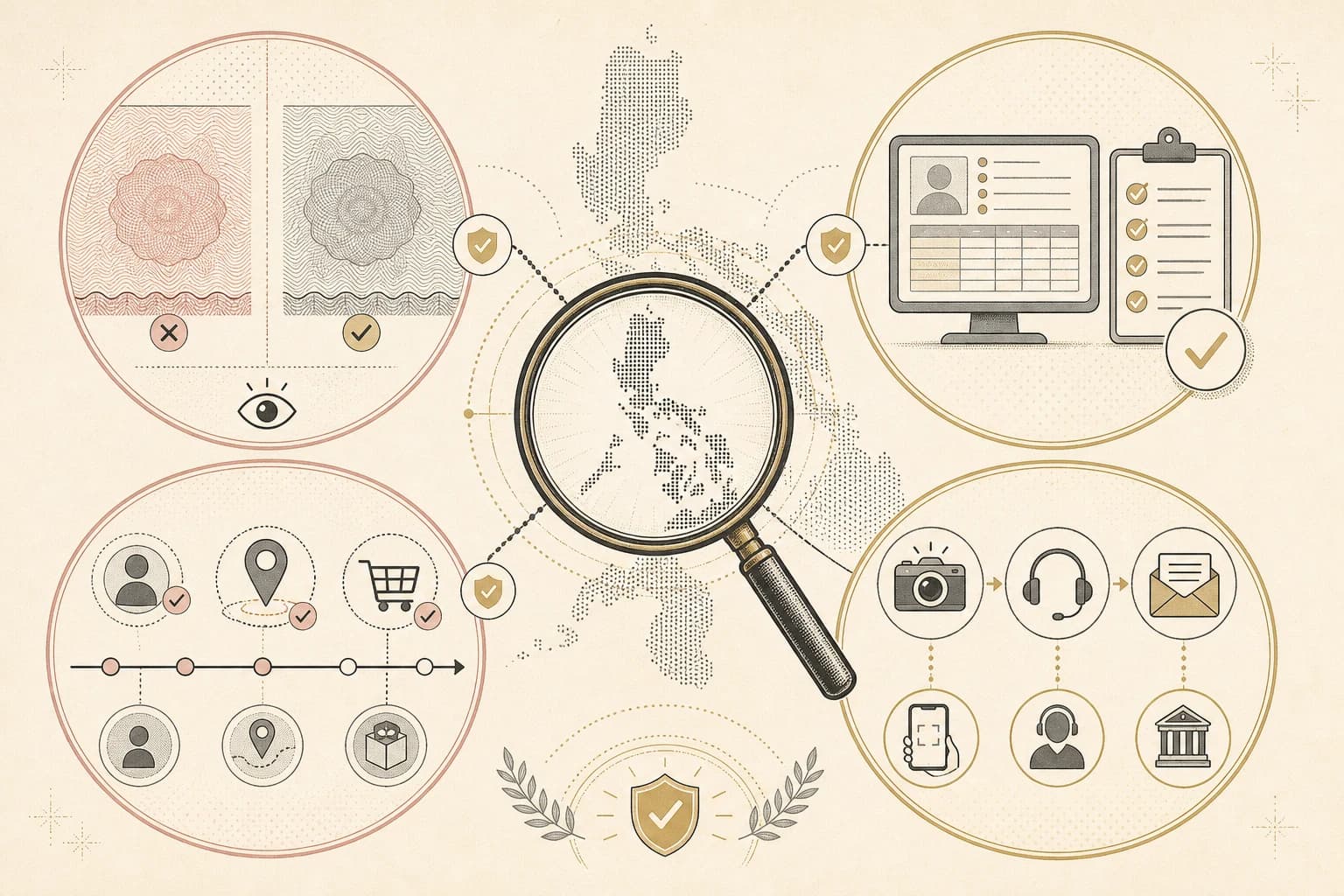
Copied packaging works by making one layer of a medicine look reassuring.6 A stronger buyer-safety check uses several layers: clear terminology, a careful visual screen, exact Philippine FDA product and establishment records, and a preserved purchase trail.2 None of those alone proves authenticity.1 Together, they make it easier to stop when details conflict and to give regulators useful evidence.8
Foreign counterfeit alerts can teach readers what officials documented, but they do not establish a Philippine trend.7 If suspicion remains, do not turn use into a personal test.4 Keep the item and records intact, check current Philippine FDA reporting instructions, and seek prompt professional help if an unexpected reaction occurred.10
This article is educational research context, not medical advice. Catalog links are neutral references and do not imply a treatment or human-use recommendation.
Frequently asked questions
Can perfect-looking packaging still be counterfeit?
Yes.1 WHO says some falsified medical products are almost visually identical to genuine products and difficult to detect.1 Good printing and familiar colors may reduce suspicion, but they do not verify composition or source.1 Use appearance as one screen, then compare official records and seller details.2
What packaging details should I compare?
WHO advises checking packaging condition, spelling, grammar, manufacturing dates, and expiry dates.3 Details on the outer box should match those on the inner packaging.3 An unusual appearance, discoloration, degradation, or smell also deserves attention.3 A clean match lowers uncertainty but does not prove authenticity.1
Does a registration number prove the item is genuine?
No.2 A Philippine FDA record can show that a named health product has an authorization entry, but a seller may copy a real number onto an unrelated listing or package.2 Match the exact record details and separately check the establishment.9 The physical item may still need official verification.8
How can I check an online pharmacy in the Philippines?
Use the Philippine FDA’s online-ordering and delivery list to compare the pharmacy’s name, address, licensed activity, issuance date, and expiry date.9 Check the live regulator record rather than relying only on a screenshot.2 A similar business name does not by itself connect a social account to the licensed establishment.9
Are WHO’s Ozempic warning signs universal?
No.7 WHO tied its 2024 signs and batch details to three falsified batches detected in Brazil, the United Kingdom, and the United States.7 The examples are useful screening clues, not a complete test for every pen.1 Their absence cannot prove that another item is genuine.1
What should I keep if I suspect a counterfeit?
Preserve the item, packaging, inserts, receipt, seller information, messages, payment record, and delivery details.8 Philippine checks may use samples, physical or lab review, supply papers, and brand-owner records.8 Do not alter the evidence or use the product merely to see what happens.4
Where should a Filipino buyer report a concern?
The Philippine FDA says suspected counterfeit medicine should be reported through its official channels.4 Its guidance also says not to take the suspected product and to report possible adverse reactions if it was taken.4 Confirm the current contact method on the FDA website, since reporting interfaces and details can change.4
Sources
Footnotes
-
Substandard and falsified medical products: Advice to patients and consumers. WHO advice to patients and consumers. Visual inspection can flag inconsistencies but cannot authenticate every product. ↩ ↩2 ↩3 ↩4 ↩5 ↩6 ↩7 ↩8 ↩9 ↩10 ↩11 ↩12 ↩13 ↩14 ↩15 ↩16 ↩17 ↩18
-
FDA Verification Portal. Official Philippine FDA public verification service. A record should be matched carefully by exact product and establishment details; a similar name alone is insufficient. ↩ ↩2 ↩3 ↩4 ↩5 ↩6 ↩7 ↩8 ↩9 ↩10 ↩11 ↩12 ↩13 ↩14
-
Substandard and falsified medical products: Advice to patients and consumers. WHO consumer screening guidance. Passing these checks does not prove authenticity. ↩ ↩2 ↩3 ↩4 ↩5 ↩6 ↩7 ↩8 ↩9
-
FDA Drug Safety Newsletter, Volume 2, Issue 4. Philippine FDA Drug Safety Newsletter instructions. Contact details and reporting interfaces may change, so readers should confirm them on the current FDA website. ↩ ↩2 ↩3 ↩4 ↩5 ↩6 ↩7 ↩8 ↩9
-
Definitions of Substandard and Falsified Medical Products. WHO regulatory terminology adopted for public-health communication. The definitions classify product problems; they do not determine the status of a particular item without verification. ↩ ↩2 ↩3 ↩4
-
FDA Drug Safety Newsletter, Volume 2, Issue 4. Philippine FDA Drug Safety Newsletter guidance on counterfeit medicines. This is a regulatory description, not a finding about any specific seller or product. ↩ ↩2 ↩3 ↩4 ↩5 ↩6
-
Medical Product Alert N°2/2024: Falsified OZEMPIC (semaglutide). WHO Medical Product Alert N°2/2024. The alert concerns named foreign detections and does not establish Philippine prevalence or make every listed clue universal. ↩ ↩2 ↩3 ↩4 ↩5 ↩6 ↩7 ↩8 ↩9 ↩10 ↩11 ↩12 ↩13 ↩14
-
Rules and Regulations Implementing Republic Act No. 8203. Rules implementing Republic Act No. 8203. Consumers can preserve useful evidence, but only the responsible authorities and verification process can determine authenticity. ↩ ↩2 ↩3 ↩4 ↩5 ↩6 ↩7 ↩8 ↩9 ↩10 ↩11 ↩12
-
Drugstore - Online Ordering and Delivery. Official Philippine FDA online-drugstore verification list. A listed establishment record does not authenticate an unrelated social-media account, listing, or individual item. ↩ ↩2 ↩3 ↩4 ↩5 ↩6
-
Medical Product Alert N°2/2024: Falsified OZEMPIC (semaglutide); Substandard and falsified medical products: Advice to patients and consumers. WHO medical-product alert and consumer guidance. These are general safety steps and do not replace urgent medical assessment when symptoms occur. ↩ ↩2 ↩3
-
Medical Product Alert N°2/2024: Falsified OZEMPIC (semaglutide). Risk section of WHO Medical Product Alert N°2/2024. The exact contents and risks of a suspected item require official examination. ↩ ↩2
-
FDA warns consumers not to use counterfeit Ozempic (semaglutide) found in U.S. drug supply chain. U.S. FDA investigation of an identified counterfeit lot in the U.S. supply chain. This is a documented U.S. case and should not be generalized to Philippine products or all suspected counterfeits. ↩ ↩2 ↩3 ↩4 ↩5 ↩6