Quick answer
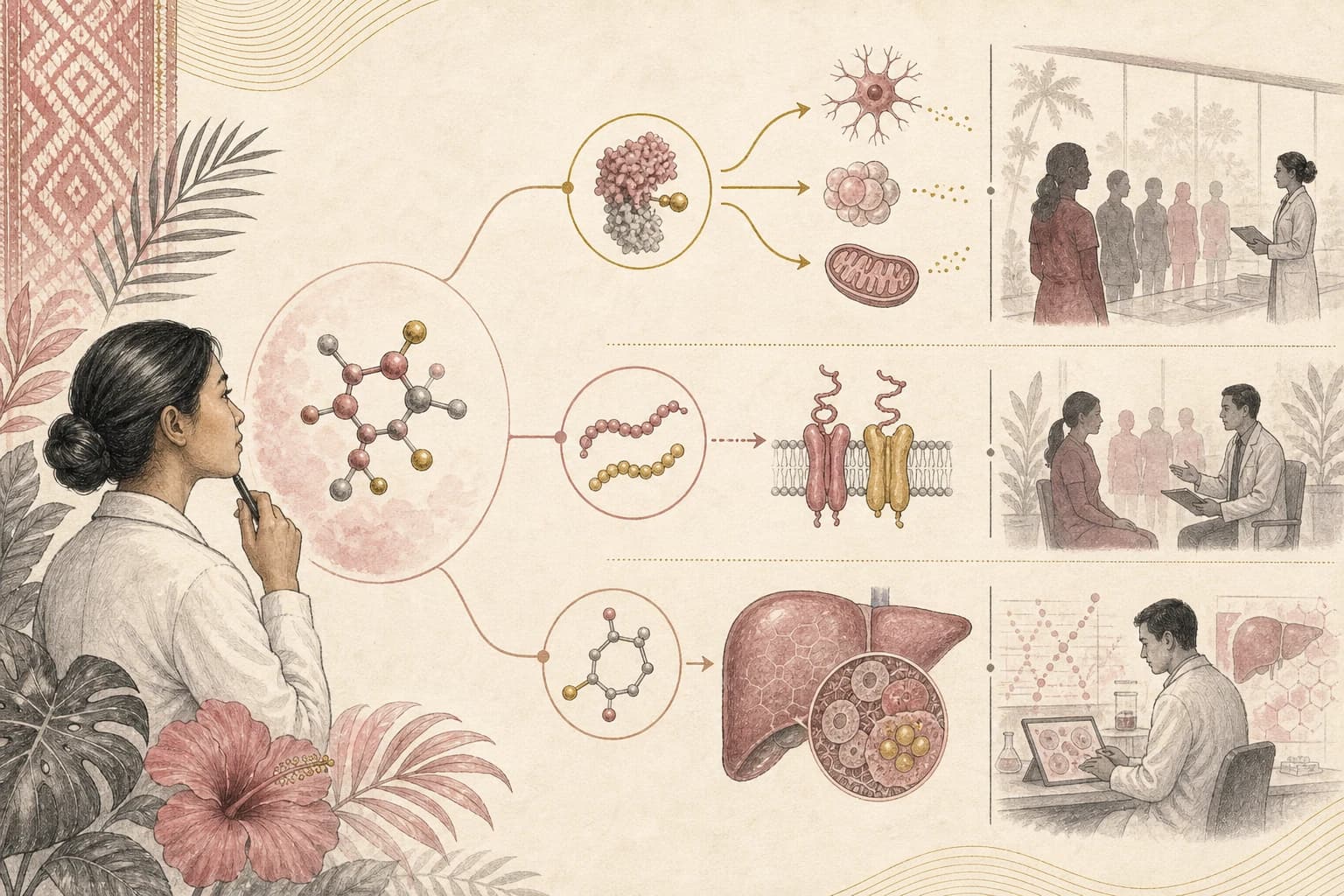
The next wave after semaglutide is not one replacement drug. Researchers are testing several strategies: single molecules that activate multiple receptors, combinations that pair GLP-1 biology with amylin pathways, and oral small molecules designed to reach the GLP-1 receptor without being peptides.
Retatrutide is a leading multi-receptor example with human phase 2 and phase 3 data. Its results are early-stage, but liver fat, blood sugar, weight, appetite questionnaires, and long-term health outcomes are different endpoints. Filipino readers should compare evidence by molecule, population, and development stage.12345
What does “beyond semaglutide” actually mean?
It means researchers are exploring more than one way to influence metabolic signaling.
Some candidates combine activity at several hormone receptors in one molecule. Others place two separate active components in the same research program.
A third strategy uses oral small molecules rather than peptide drugs. These candidates aim to engage the GLP-1 receptor while changing how the medicine is manufactured or taken.
A review of the field grouped the pipeline into multi-receptor agonists, amylin combinations, and oral small-molecule GLP-1 receptor agonists.2
These categories describe design strategies, not certain outcomes. A clever mechanism can fail in later trials, and candidates within one category can have different safety or effectiveness.
The familiar semaglutide name is therefore a starting point, not the universal comparator for every claim. Each new program needs its own evidence file.
Readers researching Retatrutide can view its live catalog details below. The listing identifies the catalog item and is separate from the evidence discussed here.
How is retatrutide different?
Retatrutide is a single molecule designed to activate GIP, GLP-1, and glucagon receptors.3
That three-receptor description is why it is often called a triple agonist. It distinguishes retatrutide from semaglutide’s GLP-1-only design.
The mechanism alone does not show how much weight someone will lose, whether blood sugar will improve, or which adverse events will occur.3
Those questions require controlled human trials. Researchers must measure the relevant outcomes over enough time and compare them with placebo or another active treatment.
The word “triple” can sound automatically stronger than “single.” Biology does not work like a simple feature count.
Activating more targets may produce different benefits, risks, or trade-offs. The useful question is what happened in the tested population, not how impressive the pathway diagram looks.
This distinction also prevents evidence borrowing. Results from semaglutide, tirzepatide, or a combination product cannot be assigned to retatrutide because the compounds share part of a pathway.
What have phase 3 human data shown?
A double-blind phase 3 trial studied 537 adults whose type 2 diabetes was inadequately controlled by diet and exercise.4
At 40 weeks, retatrutide improved HbA1c and reduced body weight compared with placebo.4
That is direct human evidence for two specified outcomes. It does not automatically establish effects in adults without diabetes or outside the controlled trial setting.
Gastrointestinal events were the most frequent adverse events in the trial.4 Balanced reporting keeps that finding beside the positive results.
The comparator also matters. A placebo-controlled trial answers whether the intervention differed from placebo under that protocol.
It does not automatically establish superiority over semaglutide, tirzepatide, or every candidate described as “next generation.”
Longer follow-up and direct active comparisons can answer different questions. Until then, phase 3 progress should be reported as progress, not as a finished ranking.
What did the liver-fat substudy find?
A randomized phase 2a substudy examined 98 participants with metabolic dysfunction-associated steatotic liver disease.1
At 24 weeks, retatrutide groups had larger liver-fat reductions than placebo.1
Liver fat was measured directly, making it a meaningful organ-specific outcome. It is still not the same as proving improved liver fibrosis, fewer complications, or better long-term survival.
A biomarker or imaging result can sit on a pathway toward clinical benefit without completing that pathway.
The small substudy also answers a narrower question than the larger diabetes trial. Sample size, selection, and duration affect how widely the finding can be generalized.
Readers should resist turning “reduced liver fat” into “undoes liver disease.” The study supports the measured change and no broader remedy language.
That narrower wording is not less interesting. It tells us exactly what changed and identifies the next questions researchers need to test.
Readers comparing this topic with Cagrilintide can view its live catalog details below. It is a separate catalog reference, not a suggested combination.
What do appetite findings add?
Metabolic trials sometimes include questionnaires about hunger, food-related thoughts, and eating behaviour.
In prespecified exploratory analyses, higher retatrutide groups reported less hunger and disinhibition than placebo over 36 weeks.5
Disinhibition describes difficulty maintaining control around eating in certain situations. It is a questionnaire concept, not a laboratory measurement of willpower.
The findings were self-reported and exploratory. Comparisons with dulaglutide were less consistent.5
These data may help researchers understand how participants experienced treatment. They cannot prove a universal psychological effect or explain every change in body weight.
Questionnaires are especially sensitive to wording, expectations, missing responses, and cultural context. A result from an international protocol should not be rewritten as a claim about all Filipino eating habits.
Appetite evidence is most useful when placed beside, rather than above, objective clinical outcomes.

Where do amylin combinations and oral candidates fit?
Amylin combinations take a different path from retatrutide’s single triple-receptor molecule.
They pair distinct components so researchers can test whether complementary pathways change outcomes. Combination results belong to the complete intervention, not automatically to either component alone.
Oral small-molecule GLP-1 candidates address another question: whether non-peptide chemistry can deliver convenient receptor activity.
Convenience can influence interest and adherence, but it is not itself proof of stronger clinical results.
Each category needs separate trials for effectiveness, safety, discontinuation, and long-term outcomes. Pipeline reviews map possibilities; they do not authorize a winner.2
For readers, the category map is useful because it prevents false comparisons. “Beyond semaglutide” includes several research philosophies, not a single race along one track.
What should Filipino readers verify?
Start by checking whether a headline names a molecule, a combination, or an entire category.
Then identify the development phase and endpoint. Human phase 3 HbA1c data are not equivalent to an animal memory experiment or a mechanism review.
The Philippine FDA Verification Portal separates licensed establishments from registered or notified health products.6
A research candidate discussed in a journal does not automatically have a Philippine product record. Search the exact name, company, and form.
WHO notes that some falsified medical products can closely resemble genuine products and may require quality-control analysis.7
Product photography and study citations cannot establish identity. The research intervention, catalog reference, and seller item must remain separate unless official records connect them.
The most reliable conclusion stays attached to the exact source, study context, and product identity.8
Bottom line
Metabolic research beyond semaglutide is expanding in several directions. Retatrutide combines activity at three receptors in one molecule and now has human phase 3 evidence for HbA1c and weight outcomes in adults with type 2 diabetes.
Smaller studies add liver-fat and appetite findings, but those endpoints have narrower meanings. Amylin combinations and oral small molecules represent different strategies and need their own trials. Filipino readers should compare candidates by molecule, development phase, population, endpoint, and exact local product record—not by “next generation” labels alone.
Frequently asked questions
Is retatrutide simply a stronger semaglutide?
No. It is a different molecule with activity at GIP, GLP-1, and glucagon receptors.3
Has retatrutide been tested in people?
Yes. The cited phase 3 trial involved 537 adults with type 2 diabetes.4
Did liver-fat reduction prove reversal of liver disease?
No. The substudy measured liver-fat change, not fibrosis reversal or long-term clinical outcomes.1
Are amylin combinations the same as triple agonists?
No. One combines separate active components, while retatrutide is a single multi-receptor molecule.
Do the catalog cards suggest a combination?
No. They are separate neutral catalog references and contain no treatment advice.
Sources
Footnotes
-
Triple hormone receptor agonist retatrutide for metabolic dysfunction-associated steatotic liver disease: a randomized phase 2a trial.. Double-blind, placebo-controlled human substudy using liver-fat measurements. Liver-fat change is not the same as proving improved fibrosis or long-term clinical outcomes. ↩ ↩2 ↩3 ↩4
-
Novel GLP-1-based Medications for Type 2 Diabetes and Obesity.. Narrative review of mechanisms and clinical development across novel GLP-1-based medicines. Pipeline inclusion does not show that every candidate will succeed or have the same evidence base. ↩ ↩2 ↩3
-
Novel GLP-1-based Medications for Type 2 Diabetes and Obesity.. Narrative review of novel GLP-1-based medicines for type 2 diabetes and obesity. A mechanism description does not establish clinical benefit or safety. ↩ ↩2 ↩3 ↩4
-
Efficacy and safety of retatrutide, a GIP, GLP-1, and glucagon receptor agonist, in people with type 2 diabetes and inadequate glycaemic control with diet and exercise (TRANSCEND-T2D-1): a double-blind, randomised, phase 3 trial.. Double-blind, placebo-controlled phase 3 trial of 537 adults whose type 2 diabetes was inadequately controlled by diet and exercise. The trial population and controlled setting limit generalization beyond the studied adults. ↩ ↩2 ↩3 ↩4 ↩5
-
Appetite, eating attitudes, and eating behaviours during treatment with retatrutide in adults with type 2 diabetes: Results of a phase 2 study.. Questionnaire-based exploratory analyses in 275 adults with type 2 diabetes over 36 weeks. These were self-reported exploratory outcomes, and comparisons with dulaglutide were less consistent. ↩ ↩2 ↩3
-
Philippine FDA Verification Portal; FDA Advisory No. 2023-2238: Utilization of the FDA Verification Portal. Official Philippine regulatory verification service. A portal record applies to the exact product or establishment named in that record. ↩
-
WHO laboratory analysis of suspected falsified medical products; WHO laboratory testing for health-product regulation. WHO guidance on suspected falsified medical products and regulatory laboratory testing. Appearance alone cannot authenticate a product or establish a research outcome. ↩
-
Triple hormone receptor agonist retatrutide for metabolic dysfunction-associated steatotic liver disease: a randomized phase 2a trial.; Novel GLP-1-based Medications for Type 2 Diabetes and Obesity.; Philippine FDA Verification Portal; FDA Advisory No. 2023-2238: Utilization of the FDA Verification Portal. Editorial synthesis of the canonical research records and Philippine verification sources. This synthesis is educational and is not personal medical advice or a product recommendation. ↩