
TL;DR
- “Approved” belongs to a regulator and a country; WHO defines marketing authorization as permission for a product in the respective country, not a worldwide passport.1
- In the Philippines, the FDA uses its own rules, and readers can check approved drugs through the agency’s Verification Portal.2
- Foreign reviews may inform a local review through a set reliance path, but the Philippine FDA still gets a local filing and makes the local decision.3
- Semax and Selank papers can explain what each team measured, yet a study report cannot stand in for Philippine FDA approval.4
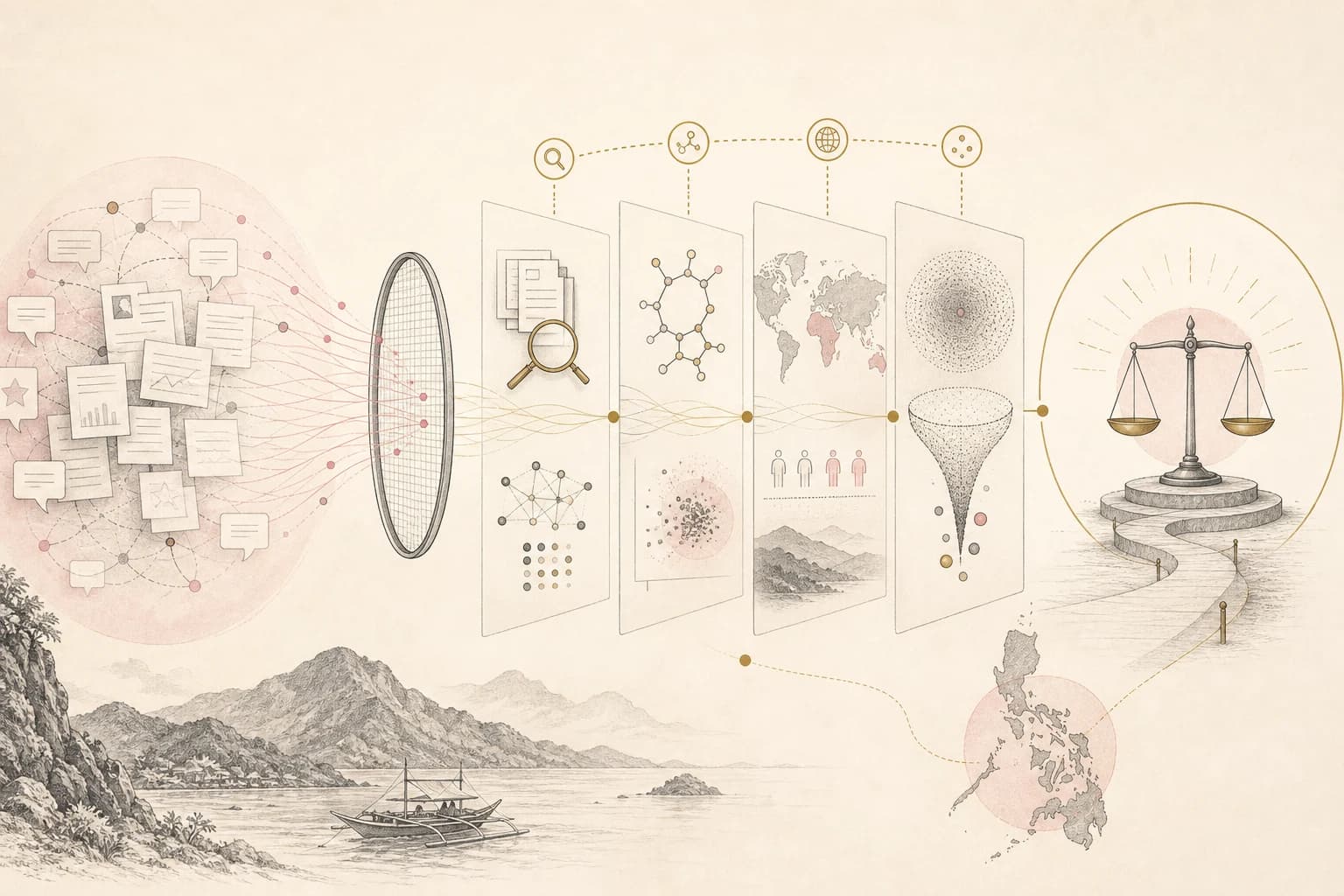
For Filipino readers, a foreign approval claim can feel safe, especially when it sits beside science terms. The key question is not whether another country has a regulator. It is whether the claim answers the Philippine question in front of you. “Studied,” “registered abroad,” and “authorized here” are different ideas.4 Keeping them apart makes a crowded product page much easier to read.
Approval always has an address
Marketing authorization is a legal record from a drug regulator for a product in that country.1 That last phrase carries the whole lesson. A Russian decision belongs to Russia, just as a Philippine decision belongs to the Philippines.1 Neither label floats above state systems as a global badge.1
The Department of Health says FDA market approval comes before set acts involving a health product.5 So “approved in Russia” may answer a Russian rule question, if the claim has proof.1 It does not answer whether a matching product has Philippine approval.4 The two questions need records from two agencies, not one translated slogan.4
The place named on the claim sets its reach.1
Semax is named here only as the neutral catalog reference below.4
What Philippine approval actually means
For this audience, the best anchor is the Philippine FDA record.2 The agency tells readers to check approved drugs through its Verification Portal.2 The portal lists health products with a Certificate of Product Registration or notice.2 Its drug pages can also carry approved product facts for health staff and consumers.2
A certificate says more than a loose molecule name.6 Philippine FDA rules tie registration to an exact drug product.6 They can require a new filing when the same brand comes from a different plant.6 That is why a screenshot saying “Semax approved” is incomplete.6 A sound check needs the product name, registration number, company, maker, form, and valid dates shown by the agency.2 An unclear word search calls for a new query or a direct FDA request.2
A name on its own is too broad for that check.6
Foreign reviews can inform, not teleport
Regulators do not always repeat each part of another agency’s work.7 WHO calls the set use of another regulator’s review “regulatory reliance.”7 Even then, the home agency owns the final decision.7 Reliance is shared work with rules, not approval by teleportation.7
The Philippine FDA has shorter review paths for some products approved by named reference regulators.3 Those paths can use trusted past work, but they are still local new-drug filings.3 Prior foreign approval is an input under set rules, not the Philippine output.3
This split also guards readers from a common shortcut. “Accepted somewhere” does not show if anyone filed here, which path applied, or what the local decision covered.3 Only the matching Philippine record can answer those exact product questions.5
The home regulator still has the last word.7
A name is not a registration record
Drug talk often shrinks a product into one name. The rules work at a finer level.6 Philippine FDA rules treat each product on its own and can require a new filing for a different plant under the same brand.6 A shared ingredient name cannot show that two items are the same approved product.6
That split matters before anyone debates results. A registration record links a named product with a firm, maker, form, label, and approval details.2 A paper may instead name a study sample and plan.4 A catalog card marks a store entry. All three may use the same name while they answer different questions.
The Department of Health says FDA market approval comes before set acts involving health products.8 The rule is broad, not a shortcut to the status of one listing.8 Product status still needs a matching current Philippine record.2
Start with the full record, not the bold name.6
What the Semax papers actually say
The Semax literature shows why “has studies” and “approved here” should not be merged.4 One 2018 report followed 110 people after ischemic stroke.9 It separated earlier and later rehabilitation groups, then compared Semax and non-Semax subgroups.9 Researchers measured plasma BDNF, motor performance, and Barthel scores.9
The authors linked Semax exposure with higher plasma BDNF and better Barthel-score findings in their groups.10 That result belongs to this population, rehabilitation setting, grouping method, and set of outcomes.10 The abstract does not describe a blinded placebo-controlled design.9
A published result can support a sentence about what that study observed.4 It cannot issue a Philippine certificate, define a catalog item, or carry its result into another product.4 Regulatory records and research papers answer different questions.4
Keep the study close to the facts it reports.4
A negative finding belongs in the picture
Another Semax report asked a different question in 27 people with motor neuron disease.11 It used an open-label, sequential-group design and assessed chronic partial denervation, clinical estimates, and quality of life.11 The paper reported no influence on denervation or clinical estimates.11 It also reported a quality-of-life change linked mainly to emotional state and motivation.11
That is not a contradiction to erase. Different conditions, designs, participants, and endpoints can produce records that should remain separate.4 The responsible summary preserves the negative clinical findings beside the reported quality-of-life observation.11
Placing a paper near an approval claim does not strengthen that paper.4 Each report supports only its own study-level statements.4 Likewise, a foreign authorization claim does not settle another jurisdiction’s decision.7
Both parts of the report need to stay in view.11
Selank shows the same boundary
The neighboring name Selank offers the same reading exercise. A Russian-language study enrolled 62 people with generalized anxiety disorder or neurasthenia.12 It compared 30 participants assigned Selank with 32 assigned medazepam.12 Researchers used psychometric scales and measured serum enkephalin activity.12
The comparator matters. This was not a placebo-controlled design, so its results answer a comparison with medazepam under that protocol.12 The population and outcomes also remain attached to that report.12 None of those details documents a Philippine registration decision.4
This is the useful habit: read the noun after the impressive verb. Researchers “reported” study observations; regulators “authorized” identified products.4 Those acts can inform one another through a formal process, but they are not interchangeable.7
The verb tells you which kind of record to seek.4
Selank is named here only as the neutral catalog reference below.4
Read every approval claim in four passes
First, name the authority and jurisdiction. WHO’s definition places marketing authorization in the respective country.1 If the sentence says Russia, it answers a Russian question only.
Second, identify the product, not merely the ingredient. Philippine FDA materials show why the responsible company, manufacturer, form, and registration details matter.6 Third, check the current Philippine FDA Verification Portal using those exact details.2 Treat a spelling mismatch or empty search as a reason to refine the query or ask the agency, not as proof of absence.2
Fourth, separate the supporting material. A clinical paper describes participants, methods, comparators, and measured outcomes.4 A Philippine authorization is an FDA decision on a registration application.5 When a post slides from one category to the other, pause at the gap. The missing bridge is a matching Philippine regulatory record, not another confident adjective.2
Four short checks can cut through a very long sales pitch.
Bottom line
“Approved in Russia” is not a complete answer for a reader in the Philippines because marketing authorization belongs to a named jurisdiction.1 The Philippine question is answered through the Philippine FDA’s authorization system and product records.5 Foreign assessments may be considered through formal reliance pathways, yet the national authority still makes its own decision.7
Semax and Selank research papers remain useful when their participants, comparators, outcomes, and limits stay visible.4 They do not identify a catalog item or replace a Philippine certificate.4 Read every approval claim by asking: which authority, which country, which exact product, and which record? That short checklist turns a vague badge into a question that can be verified.2
This article is educational research context, not medical advice. Catalog links are neutral references and do not imply a treatment or human-use recommendation.
Frequently asked questions
Does “approved in Russia” mean the claim is false?
Not automatically. It is a claim about one jurisdiction and should be checked against that authority’s current record.1 The mistake is treating it as a worldwide status. For a Philippine decision, look for a matching authorization from the Philippine FDA rather than stretching a foreign statement beyond its country.5
How can Filipino readers check Philippine approval?
The Philippine FDA directs readers to its Verification Portal for approved pharmaceutical products.2 Search with exact product details, including the name and any registration number shown. Compare the responsible company, manufacturer, form, and validity information.6 If the search is unclear, refine it or ask the agency instead of inferring absence.2
Can the Philippine FDA use another regulator’s work?
Yes, through defined reliance routes. WHO explains that a national authority may use another regulator’s assessment while keeping responsibility for its own decision.7 The Philippine FDA also has abridged and verification pathways for qualifying applications.3 Prior foreign approval can inform review, but it is not the Philippine authorization itself.3
Does a PubMed paper prove regulatory approval?
No. A paper documents a study’s participants, methods, comparator, and outcomes.4 Philippine authorization is a separate FDA action on a product registration application.5 A publication may become part of a regulatory submission, but the paper itself is not a Certificate of Product Registration and cannot identify a catalog item.4
What did the cited Semax studies examine?
One report examined 110 people in post-stroke rehabilitation and measured plasma BDNF, motor performance, and Barthel scores.9 Another used an open-label design in 27 people with motor neuron disease and reported negative findings for denervation and clinical estimates alongside a quality-of-life observation.11 Each result stays within its own study context.
Why mention Selank in an article about Semax?
Selank shows that the same reading rule applies to a related catalog name. The cited study compared Selank with medazepam in 62 people and used psychometric and serum measures.12 That research record answers a study question, not whether a particular Selank product holds authorization in the Philippines.4
Sources
Footnotes
-
WHO Prequalification Glossary. WHO regulatory glossary defining marketing authorization and medicines regulatory authority. The definition is jurisdiction-specific and does not establish the status of any named product in the Philippines. ↩ ↩2 ↩3 ↩4 ↩5 ↩6 ↩7 ↩8 ↩9
-
CDRR Frequently Asked Questions: Registration of Pharmaceutical/Drug Products; FDA Circular No. 2023-008: Publishing Package Inserts and Patient Information Leaflets in the FDA Verification Portal. Philippine FDA registration FAQ and portal publication circular. Portal searches should use exact product details and be supplemented by direct FDA inquiry when the result is unclear. ↩ ↩2 ↩3 ↩4 ↩5 ↩6 ↩7 ↩8 ↩9 ↩10 ↩11 ↩12 ↩13 ↩14 ↩15
-
FDA Circular No. 2022-004: Abridged and Verification Review Pathways for New Drug Registration Applications. Philippine FDA Circular No. 2022-004 on facilitated registration pathways. Eligibility for a pathway does not itself establish that an application was filed or that a Philippine authorization was granted. ↩ ↩2 ↩3 ↩4 ↩5 ↩6 ↩7
-
CDRR Frequently Asked Questions: Registration of Pharmaceutical/Drug Products; [The efficacy of semax in the tretament of patients at different stages of ischemic stroke].; [The study of chronic partial denervation and quality of life in patients with motor neuron disease treated with semax].; [Efficacy and possible mechanisms of action of a new peptide anxiolytic selank in the therapy of generalized anxiety disorders and neurasthenia].. Comparison of Philippine regulatory definitions and the cited human research records. Neither publication in a journal nor a foreign regulatory statement substitutes for a matching current Philippine FDA authorization record. ↩ ↩2 ↩3 ↩4 ↩5 ↩6 ↩7 ↩8 ↩9 ↩10 ↩11 ↩12 ↩13 ↩14 ↩15 ↩16 ↩17 ↩18 ↩19 ↩20 ↩21 ↩22 ↩23 ↩24
-
DOH Administrative Order No. 2024-0016: New Schedule of FDA Fees and Charges. Philippine Department of Health administrative order describing the FDA market-authorization mandate. The statute provides the legal framework; a named product's current status must be checked in a current Philippine FDA record. ↩ ↩2 ↩3 ↩4 ↩5 ↩6
-
CDRR Frequently Asked Questions: Registration of Pharmaceutical/Drug Products. Philippine FDA pharmaceutical registration FAQ. A familiar molecule or brand name alone is not enough to identify a particular Philippine registration record. ↩ ↩2 ↩3 ↩4 ↩5 ↩6 ↩7 ↩8 ↩9 ↩10 ↩11
-
WHO Collaborative Registration Procedure for Medical Products. WHO description of collaborative registration and regulatory reliance. Reliance is a defined regulatory process, not automatic transfer of an approval between countries. ↩ ↩2 ↩3 ↩4 ↩5 ↩6 ↩7 ↩8 ↩9
-
DOH Administrative Order No. 2024-0016: New Schedule of FDA Fees and Charges. Philippine Department of Health description of the FDA market-authorization mandate. This general rule does not determine the current status of Semax, Selank, or any particular product. ↩ ↩2
-
[The efficacy of semax in the tretament of patients at different stages of ischemic stroke].. Human post-stroke rehabilitation study indexed by PubMed. The abstract does not describe a blinded placebo-controlled design, and its findings do not establish Philippine regulatory authorization. ↩ ↩2 ↩3 ↩4 ↩5
-
[The efficacy of semax in the tretament of patients at different stages of ischemic stroke].. Reported group findings in the post-stroke rehabilitation study. The result is tied to the study design, population, outcomes, and rehabilitation timing; it is not a catalog-product claim. ↩ ↩2
-
[The study of chronic partial denervation and quality of life in patients with motor neuron disease treated with semax].. Small human motor-neuron-disease study indexed by PubMed. The open-label design, small sample, condition, and outcomes limit the statement to this report. ↩ ↩2 ↩3 ↩4 ↩5 ↩6 ↩7
-
[Efficacy and possible mechanisms of action of a new peptide anxiolytic selank in the therapy of generalized anxiety disorders and neurasthenia].. Comparative human study indexed by PubMed. The abstract does not establish Philippine authorization, does not use a placebo comparator, and should not be generalized beyond its population and methods. ↩ ↩2 ↩3 ↩4 ↩5 ↩6